
Victoria, 1900, AR45
$249.00
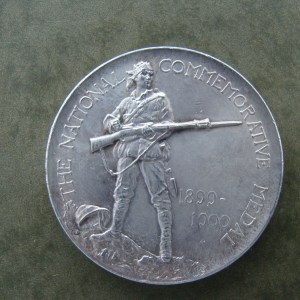
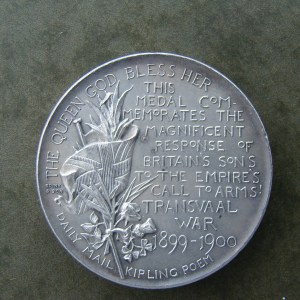
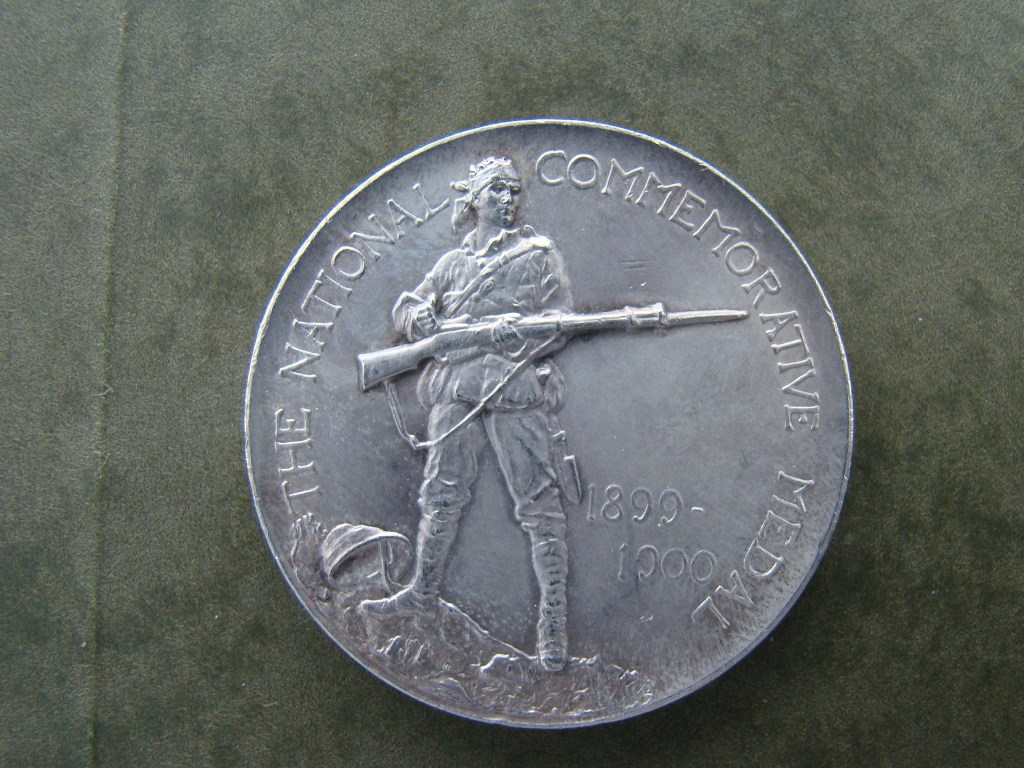
BHM3680 Eimer 1851 wt 59.18 gr South African War National Commemorative by F. Bowcher. Obv: Soldier standing rifle in hand dates 1899-1900 in lower right field around is the inscription “THE NATIONAL COMMEMORATIVE MEDAL”. Rev: To the left is the Union Jack with a palm branch tied to the standard along with a rose, thistle and shamrock. On the central right the medal is the inscription “THIS MEDAL COMMEMORATES THE MAGNIFICENT RESPONSE OF BRITAIN’S SONS TO THE EMPIRES CALL TO ARMS TRANSVALL WAR 1899-1900”. Inscription around is “THE QUEEN GOD BLESS HER”, along the bottom edge ‘DAILY MAIL KIPLING POEM” . Although gold had been discovered in the territory of the Boer republics in 1851, the finds were small until 1884 when a vast reef of gold was discovered. Tens of thousands of miners from all over the world flocked to these new fields causing alarm for the Boer government which initially thought that the deposits were small and would eventually dry out. By 1895, Cecil Rhodes seeking domination over the gold fields, funded a coup against the Boer government of Transvaal which failed. The Boer response was to crack down on the miners and take greater control over the gold fields which were largely run by British nationals. Fighting started in 1899 with Boer forces attacking British outposts in the Cape and the Natal colonies. Initially things went well for the Boers who drove back the British and besieged them in three cities. However, British reinforcements under Lord Roberts broke these sieges and then invaded the Boer territories of the Transvaal and the South African Republic, capturing the capital, Pretoria in 1900. Unable to defeat a 100000-man British army in open battle, the Boer army broke up into smaller units and started a very effective guerilla campaign. In response British troops now under Lord Kitchener began a scorched earth campaign, destroying Boer farms and livestock and rounding up Boer women and children, placing them in concentration camps. Of the 120000 Boer civilians placed in the camps round 26000 died. For nearly two years the guerilla war dragged on with more soldiers dying from disease than actual battle. In 1901 Lord Kitchener started a more conciliatory approach offering generous terms of surrender to guerilla units who agreed to lay down their arms. Hostilities gradually ended and a treaty formalized on 31 May 1902. A choice medal struck with a matte finish. MS65
BHM3680 Eimer 1851 wt 59.18 gr South African War National Commemorative by F. Bowcher. Obv: Soldier standing rifle in hand dates 1899-1900 in lower right field around is the inscription “THE NATIONAL COMMEMORATIVE MEDAL”. Rev: To the left is the Union Jack with a palm branch tied to the standard along with a rose, thistle and shamrock. On the central right the medal is the inscription “THIS MEDAL COMMEMORATES THE MAGNIFICENT RESPONSE OF BRITAIN’S SONS TO THE EMPIRES CALL TO ARMS TRANSVALL WAR 1899-1900”. Inscription around is “THE QUEEN GOD BLESS HER”, along the bottom edge ‘DAILY MAIL KIPLING POEM” . Although gold had been discovered in the territory of the Boer republics in 1851, the finds were small until 1884 when a vast reef of gold was discovered. Tens of thousands of miners from all over the world flocked to these new fields causing alarm for the Boer government which initially thought that the deposits were small and would eventually dry out. By 1895, Cecil Rhodes seeking domination over the gold fields, funded a coup against the Boer government of Transvaal which failed. The Boer response was to crack down on the miners and take greater control over the gold fields which were largely run by British nationals. Fighting started in 1899 with Boer forces attacking British outposts in the Cape and the Natal colonies. Initially things went well for the Boers who drove back the British and besieged them in three cities. However, British reinforcements under Lord Roberts broke these sieges and then invaded the Boer territories of the Transvaal and the South African Republic, capturing the capital, Pretoria in 1900. Unable to defeat a 100000-man British army in open battle, the Boer army broke up into smaller units and started a very effective guerilla campaign. In response British troops now under Lord Kitchener began a scorched earth campaign, destroying Boer farms and livestock and rounding up Boer women and children, placing them in concentration camps. Of the 120000 Boer civilians placed in the camps round 26000 died. For nearly two years the guerilla war dragged on with more soldiers dying from disease than actual battle. In 1901 Lord Kitchener started a more conciliatory approach offering generous terms of surrender to guerilla units who agreed to lay down their arms. Hostilities gradually ended and a treaty formalized on 31 May 1902. A choice medal struck with a matte finish. MS65
| Attributes | Value |
|---|---|
| Weight | 59.18 oz |
Related products
-
Admiral Howe, 1794, AE42
$259.00 -

Anne, 1707, AR47, Mint State Union Medal
$4,950.00 -
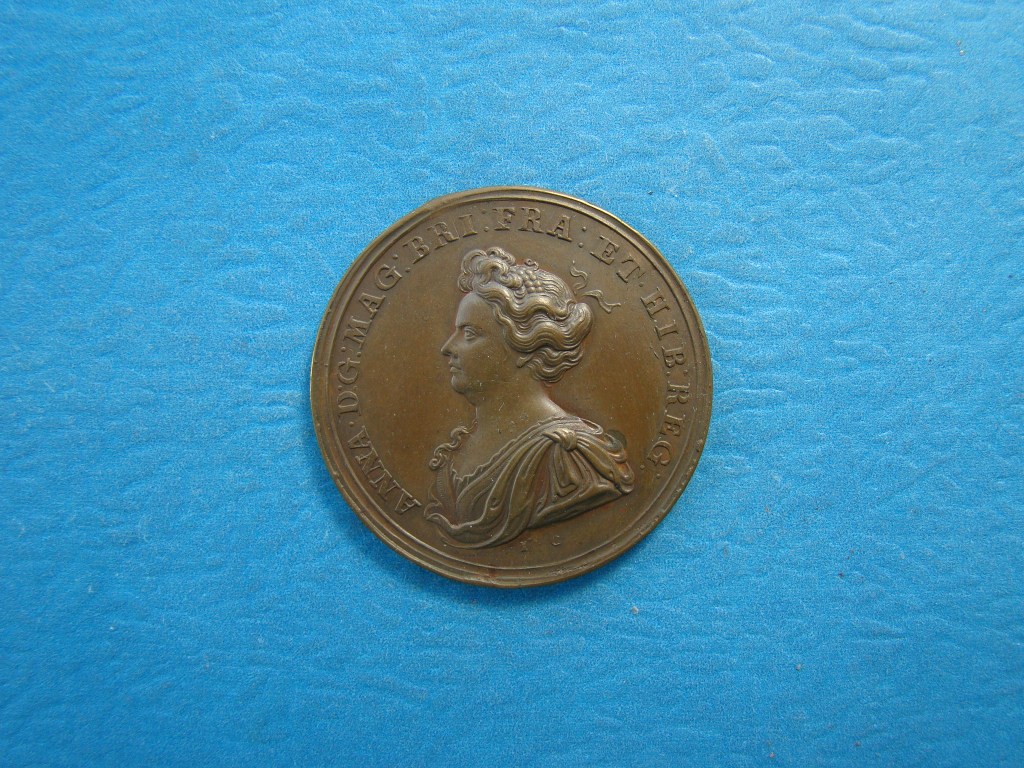
Anne, 1709, Tournai Captured SOLD
$425.00 -
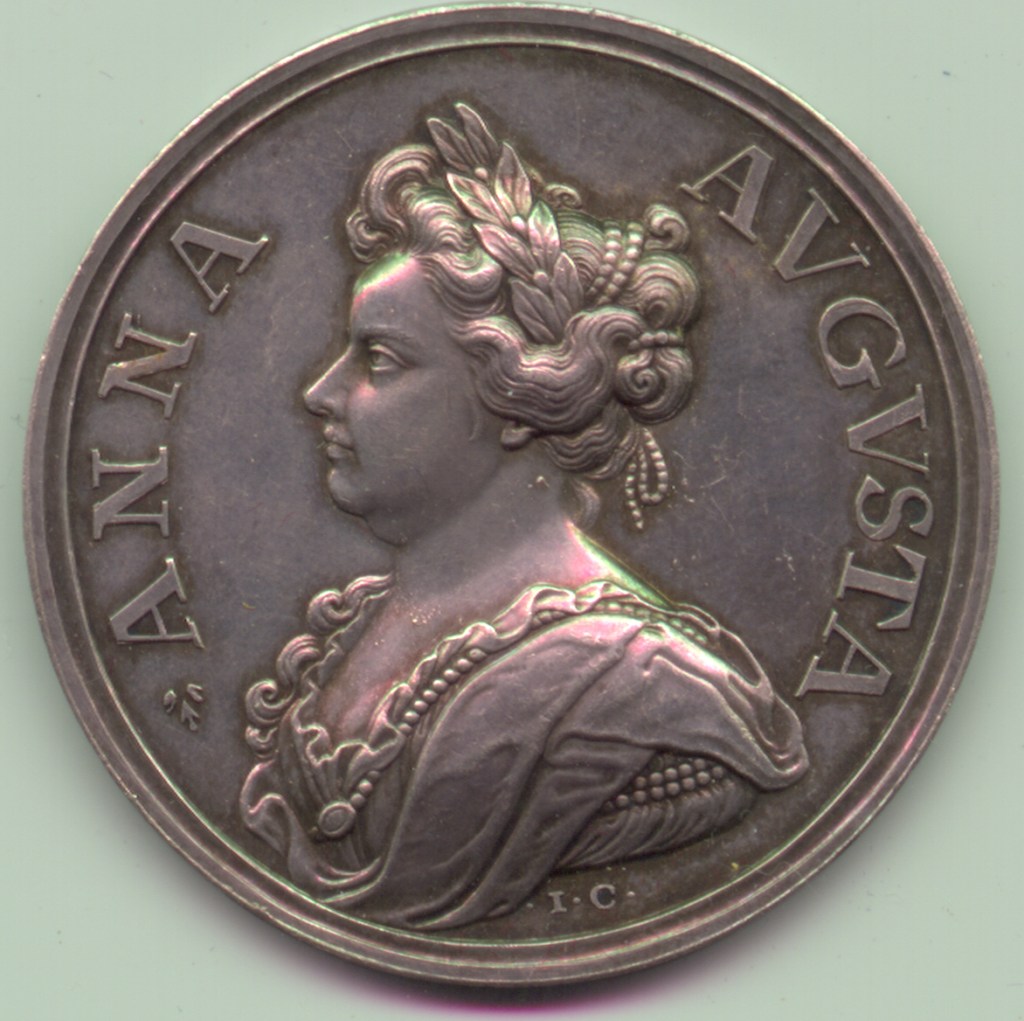
Anne, 1710, AR48, Battle of Saragossa
$2,880.00