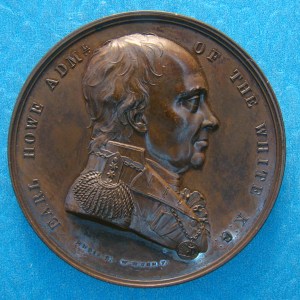
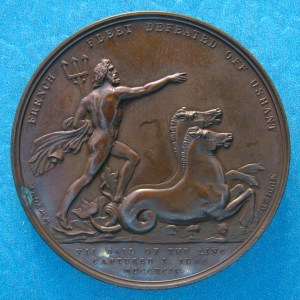
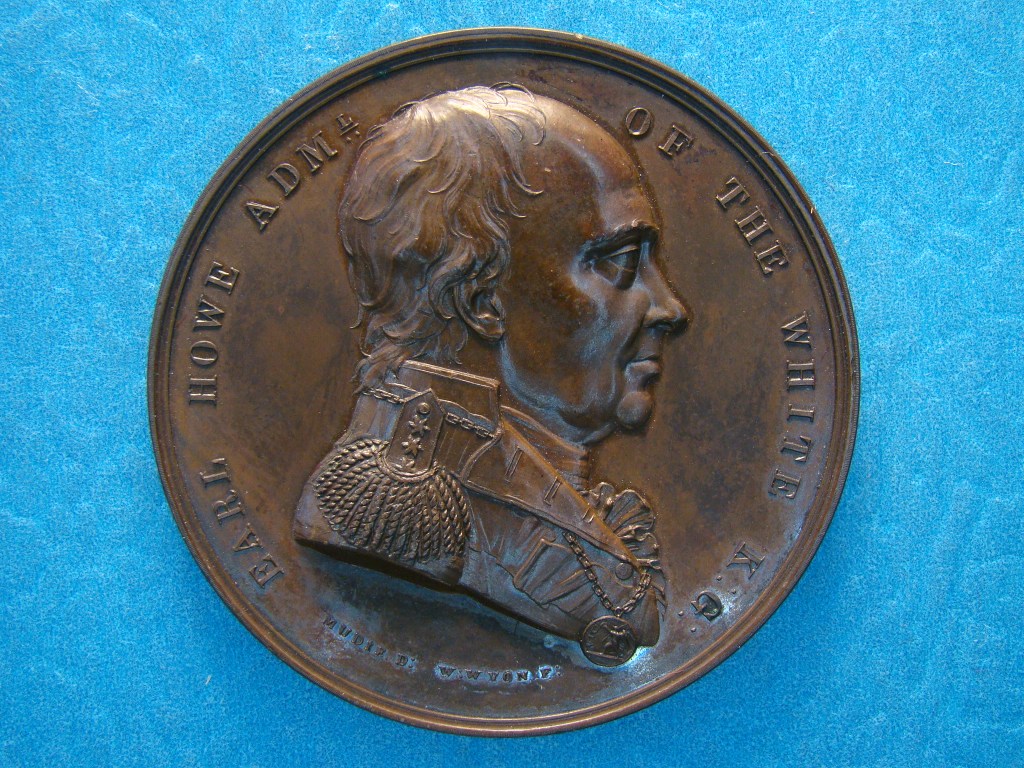
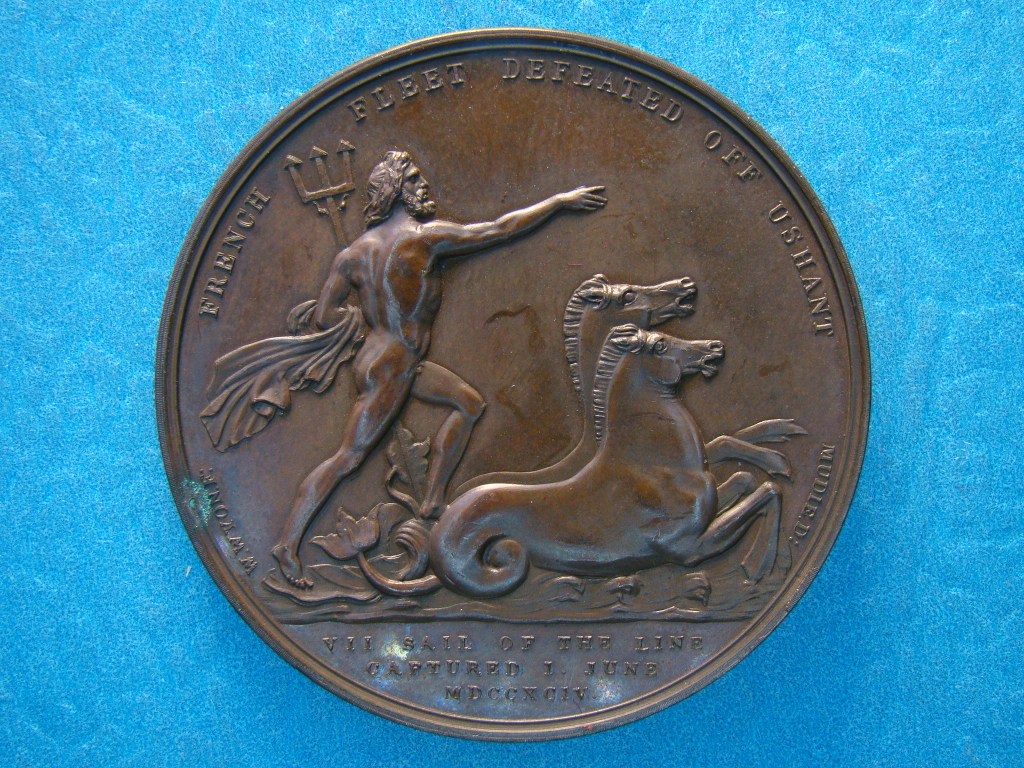
Admiral Howe, 1794, AE42
$259.00
BHM0387 40.32gr. Victory over the French fleet at Ushant on the “Glorious 1st of June”. By 1794 the continental land war between revolutionary France and the monarchies of Europe had been going on for two years. Revolutionary France was intent on spreading the poison of republicanism to the rest of Europe, but opposing them was every other nation who wanted to stop this cancer, plus take a little piece of a weakened France for themselves. After some initial setbacks, French armies started to score some victories on their continental opponents regaining territory along its borders initially lost to the invaders, but then, in 1793, France foolishly declared war on Britain. The British promptly responded by attempting a blockade of the French coast and by the middle of 1794 it was having an effect. In the summer of 1793 the French harvest failed and by the spring of 1794 widespread famine threatened to destroy the new Republic. The only thing saving France from starvation was their fleet convoying supplies and being able to break thru the British blockade. One such convoy was on its way from the young United States, who was supporting France as repayment for French help in the American Revolution. The relief convoy formed in the Chesapeake Bay and consisted of over 120 ships loaded with mainly food supplies along with a small armed French escort. This fleet departed American waters on the 2nd of April 1794. At this same time there were at least three British squadrons patrolling off the coast of France determined to intercept the convoy, including one commanded by Admiral Lord Howe. On the 28th of May 1794, Howe located the French fleet which had sailed from France to intercept and escort the convoy from America on its final leg. Howe engaged this fleet in an action that was fierce, but inconclusive. The French Admiral Villaret broke off the engagement and headed west, leading the British away from the convoy rendezvous point. Howe pursued and caught up with the French on June 1st off the coast of Brittany near the French island of Ushant. The fleets were evenly matched in terms of guns and the number of ships, but the British held the advantage in experience. Howe’s battle plan fell apart almost immediately when most of his fleet either misunderstood his signals or just failed to obey. In any event the engagement turned into a melee with heavy damage inflicted on both fleets. The French turned back to France, but Howe was unable to pursue due to the damage to his own ships. In strict terms the battle was a draw. However, with Howe’s fleet damaged and withdrawn from French waters, the supply convoy from America was able to arrive in France unmolested. In England however, “The Glorious First of June” was celebrated by the populace and declared a great British victory by Parliament. This medal was stuck in 1820 as part of Mudie’s 40 medal series commemorating British Naval Victories during the French Revolution and Napoleonic wars. Struck to specimen standards with reflective fields. No marks or spots. Contained in its red roundel case. Normally a common medal, this example’s superb condition together with its case is an very rare find. FDC
BHM0387 40.32gr. Victory over the French fleet at Ushant on the “Glorious 1st of June”. By 1794 the continental land war between revolutionary France and the monarchies of Europe had been going on for two years. Revolutionary France was intent on spreading the poison of republicanism to the rest of Europe, but opposing them was every other nation who wanted to stop this cancer, plus take a little piece of a weakened France for themselves. After some initial setbacks, French armies started to score some victories on their continental opponents regaining territory along its borders initially lost to the invaders, but then, in 1793, France foolishly declared war on Britain. The British promptly responded by attempting a blockade of the French coast and by the middle of 1794 it was having an effect. In the summer of 1793 the French harvest failed and by the spring of 1794 widespread famine threatened to destroy the new Republic. The only thing saving France from starvation was their fleet convoying supplies and being able to break thru the British blockade. One such convoy was on its way from the young United States, who was supporting France as repayment for French help in the American Revolution. The relief convoy formed in the Chesapeake Bay and consisted of over 120 ships loaded with mainly food supplies along with a small armed French escort. This fleet departed American waters on the 2nd of April 1794. At this same time there were at least three British squadrons patrolling off the coast of France determined to intercept the convoy, including one commanded by Admiral Lord Howe. On the 28th of May 1794, Howe located the French fleet which had sailed from France to intercept and escort the convoy from America on its final leg. Howe engaged this fleet in an action that was fierce, but inconclusive. The French Admiral Villaret broke off the engagement and headed west, leading the British away from the convoy rendezvous point. Howe pursued and caught up with the French on June 1st off the coast of Brittany near the French island of Ushant. The fleets were evenly matched in terms of guns and the number of ships, but the British held the advantage in experience. Howe’s battle plan fell apart almost immediately when most of his fleet either misunderstood his signals or just failed to obey. In any event the engagement turned into a melee with heavy damage inflicted on both fleets. The French turned back to France, but Howe was unable to pursue due to the damage to his own ships. In strict terms the battle was a draw. However, with Howe’s fleet damaged and withdrawn from French waters, the supply convoy from America was able to arrive in France unmolested. In England however, “The Glorious First of June” was celebrated by the populace and declared a great British victory by Parliament. This medal was stuck in 1820 as part of Mudie’s 40 medal series commemorating British Naval Victories during the French Revolution and Napoleonic wars. Struck to specimen standards with reflective fields. No marks or spots. Contained in its red roundel case. Normally a common medal, this example’s superb condition together with its case is an very rare find. FDC
| Attributes | Value |
|---|---|
| Weight | 40.32 oz |
Related products
-
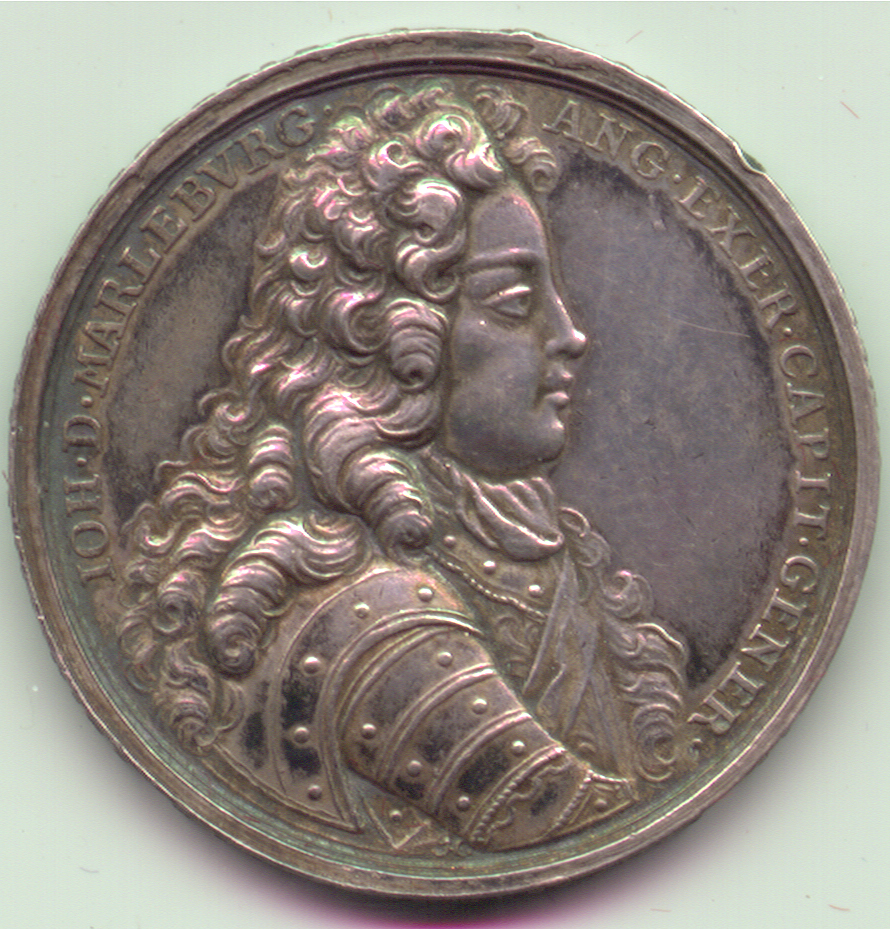
Anne, 1704, AR37, Battle of Blenheim
$960.00 -

Anne, 1707, AR47, Mint State Union Medal
$4,950.00 -
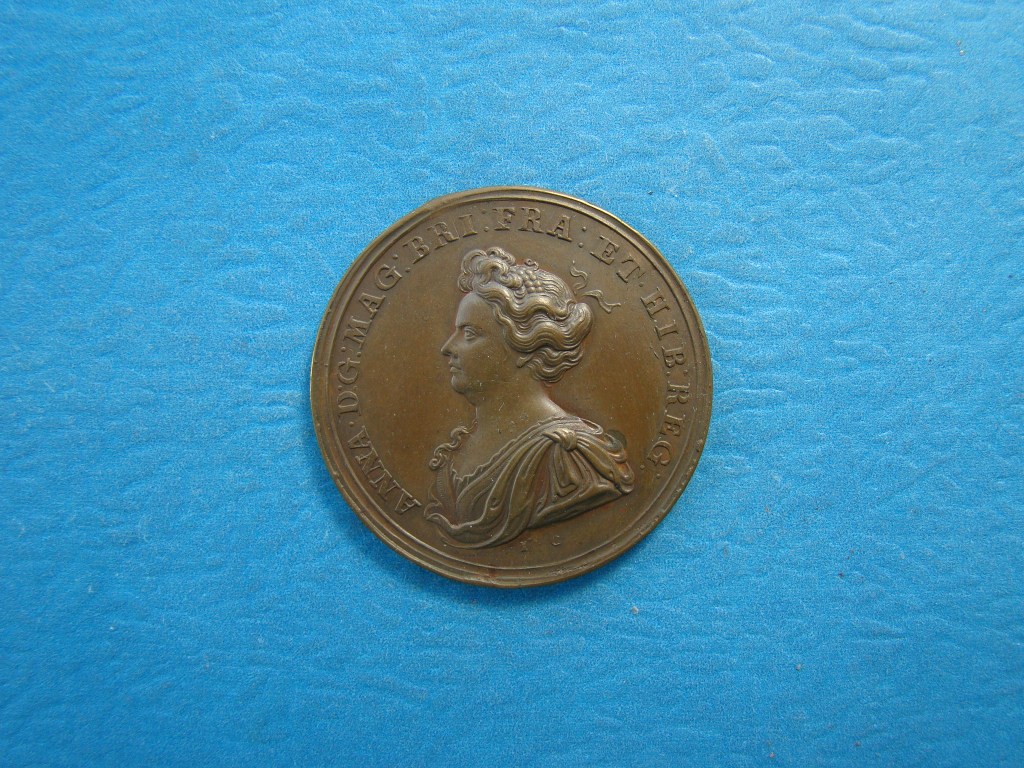
Anne, 1709, Tournai Captured SOLD
$425.00 -
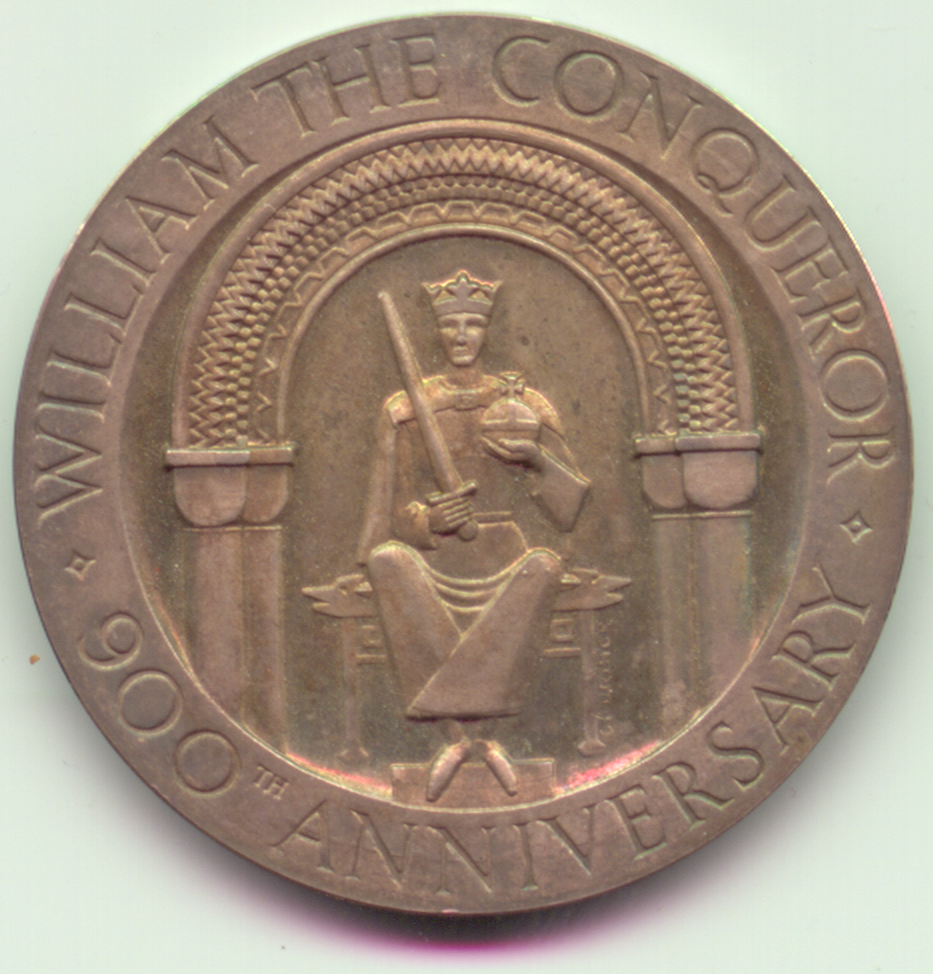
Battle of Hastings, 1966, AR39
$139.00