
Selby Abbey, 1969, AR39
$59.00
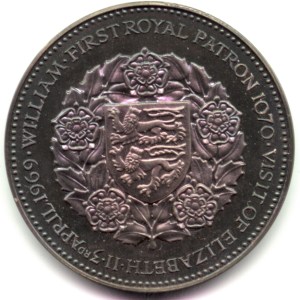
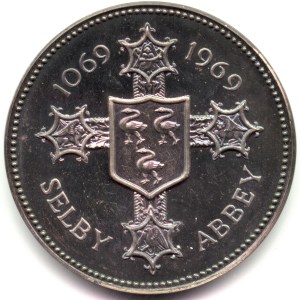
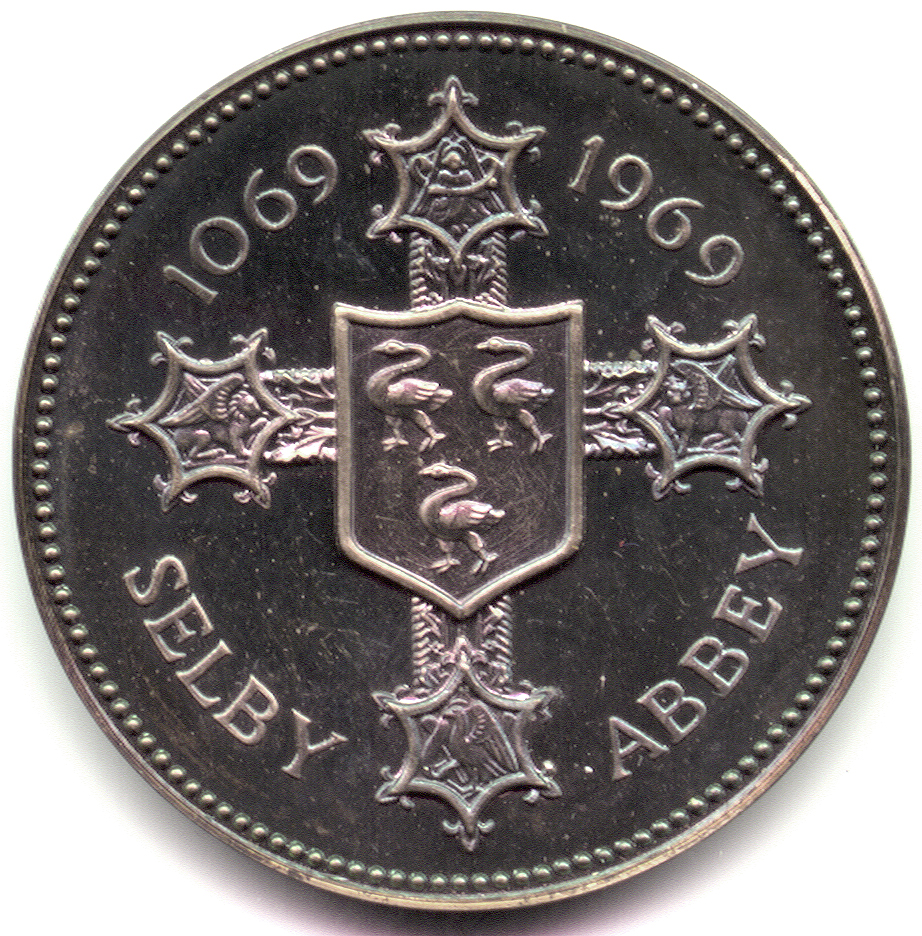
Wt 26.91 gr. Cased, commemorates the 900th anniversary of the Abbey in 1069. The Abbey was founded by Benedict of Auxerre, an obscure monk who left his monastery in Germany after receiving visions from St. Germain instructing him to go north to England. At the time England had been recently conquered by William of Normandy but not pacified. Revolts had broken out three times with the last being in 1069. William put down that revolt by burning and destroying large parts of the north. The devastation was so great that fifty years later the Domesday book merely listed once thriving villages as wasteland. Into this milieu walks Benedict, guided by visions, unable to speak the language and constantly getting lost in the recently devasted north. He finally sees the sign for which he was looking, three swans coming together. On a slight rise next to the Ouse river in Yorkshire, Benedict planted his Abbey which at that time was merely the hut he was living in. However, he came to the notice and patronage of King William who was wintering in York. The King provided materials and manpower to build his Abbey. Later the DeLacy family would contribute stone and manpower to construct a large monastic church and outbuildings. The abbey church survived Henry VIII’s dissolution of the monasteries only because it functioned as the local parish church, but pretty much nothing else of the monastery remains. Struck on the occasion of Queen Elizabeth II visit on the 3rd of April 1969. A lovely medal struck in sterling silver with gorgeous rainbow tones especially a deep cobalt blue. Cased. FDC
Wt 26.91 gr. Cased, commemorates the 900th anniversary of the Abbey in 1069. The Abbey was founded by Benedict of Auxerre, an obscure monk who left his monastery in Germany after receiving visions from St. Germain instructing him to go north to England. At the time England had been recently conquered by William of Normandy but not pacified. Revolts had broken out three times with the last being in 1069. William put down that revolt by burning and destroying large parts of the north. The devastation was so great that fifty years later the Domesday book merely listed once thriving villages as wasteland. Into this milieu walks Benedict, guided by visions, unable to speak the language and constantly getting lost in the recently devasted north. He finally sees the sign for which he was looking, three swans coming together. On a slight rise next to the Ouse river in Yorkshire, Benedict planted his Abbey which at that time was merely the hut he was living in. However, he came to the notice and patronage of King William who was wintering in York. The King provided materials and manpower to build his Abbey. Later the DeLacy family would contribute stone and manpower to construct a large monastic church and outbuildings. The abbey church survived Henry VIII’s dissolution of the monasteries only because it functioned as the local parish church, but pretty much nothing else of the monastery remains. Struck on the occasion of Queen Elizabeth II visit on the 3rd of April 1969. A lovely medal struck in sterling silver with gorgeous rainbow tones especially a deep cobalt blue. Cased. FDC
Related products
-
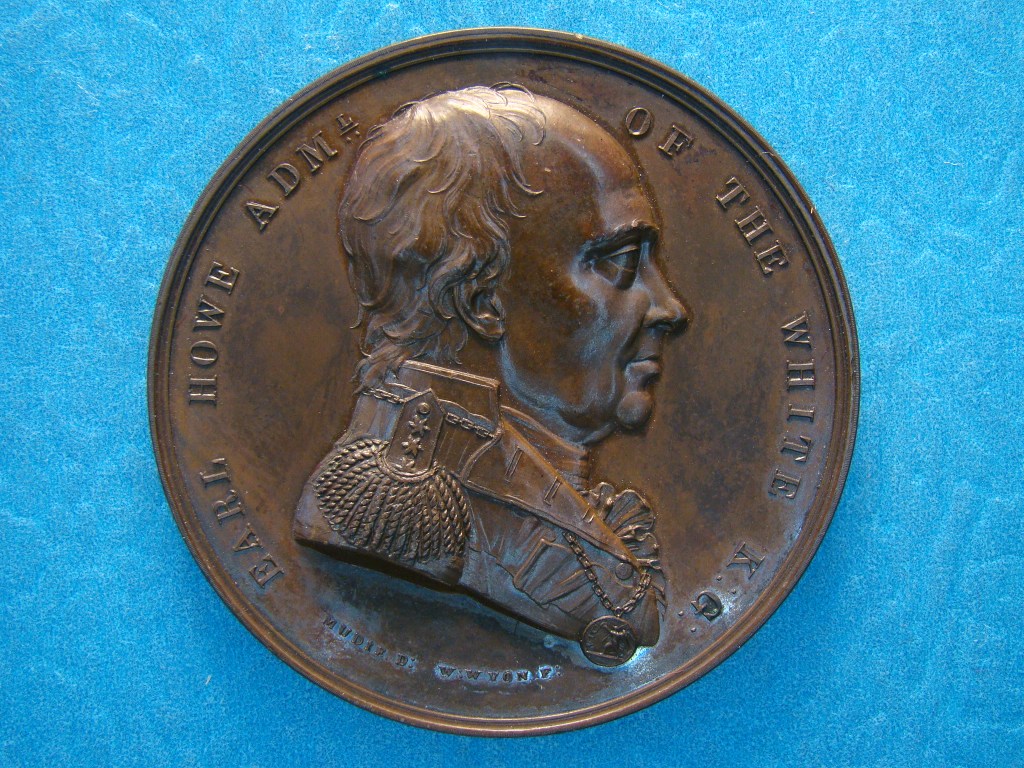
Admiral Howe, 1794, AE42
$259.00 -
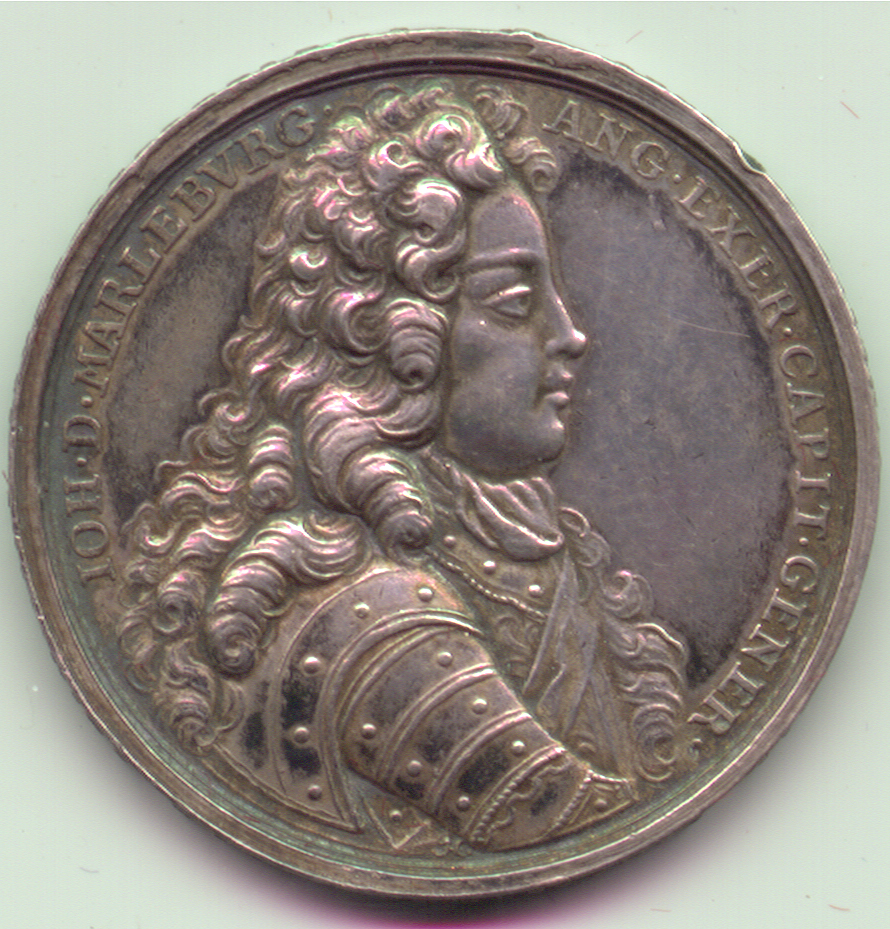
Anne, 1704, AR37, Battle of Blenheim
$960.00 -

Anne, 1707, AR47, Mint State Union Medal
$4,950.00 -
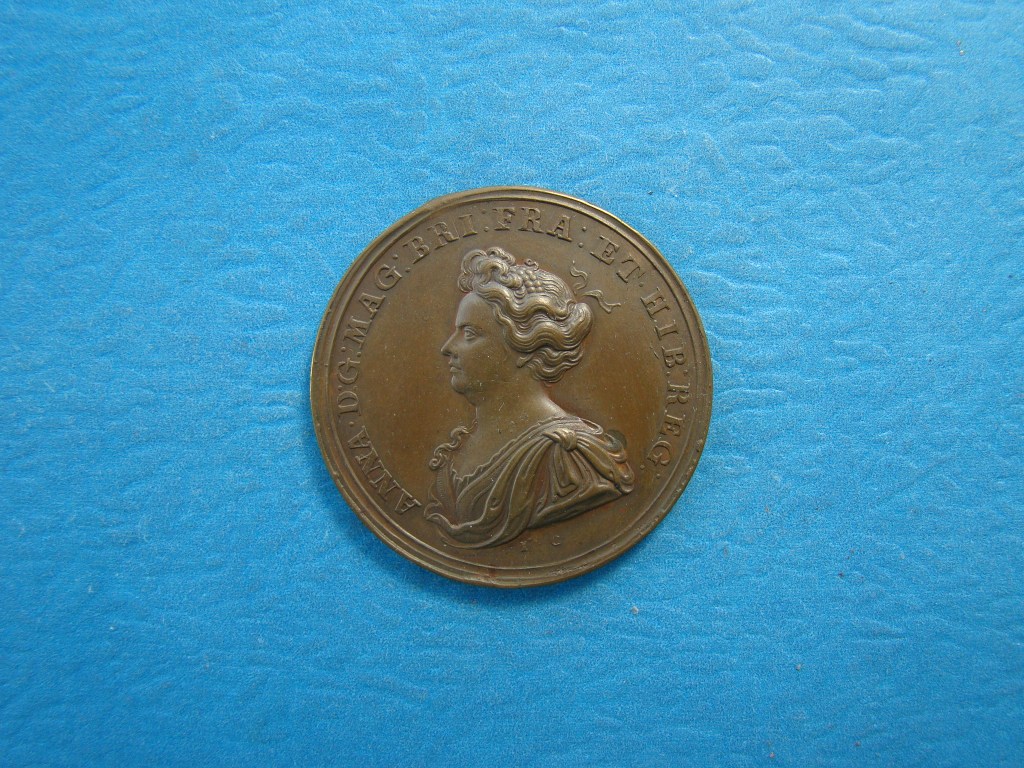
Anne, 1709, Tournai Captured SOLD
$425.00