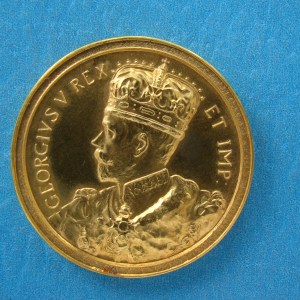
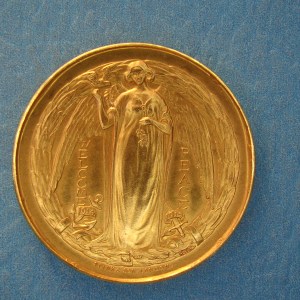
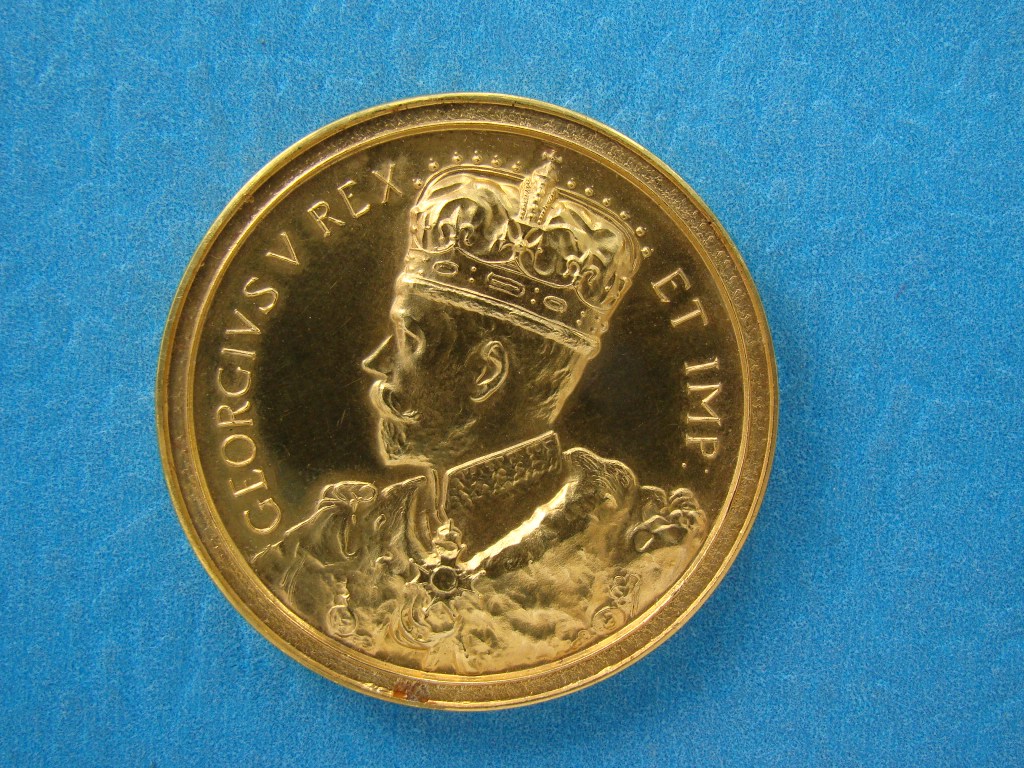

GEORGE V, AU34, 1919, UNIQUE? MEDAL IN GOLD
$14,620.00
BHM4146 WT 31.1gr During World War I, fighting on the Western Front ended on the 11th hour of November 11th, 1918. But this armistice was a cessation of the killing, not a permanent peace treaty. In January 1919 a conference of 27 nations gathered in Paris to hammer one out. The five nations controlling the outcome were Great Britain, France, the United States, Italy and Japan; the defeated nations were to have no say in the treaty. The “big five” allied nations all had different expectations of what spoils the treaty would deliver. The two nations which suffered the most during the Great War were Britain and France. The British wanted primarily to preserve their empire and expand their overseas possessions. For this they needed the Royal Navy to be supreme which meant the destruction of the German fleet and stripping Germany of its overseas colonies. France needed money to rebuild and to suck the life out of Germany so that it would never again be a military or economic threat. So, France demanded territory, reparation money and the control of German manufacturing in the Ruhr. The US wanted a seat at the table of European politics, so President Woodrow Wilson, who attended the conference personally, was primarily motivated in establishing the League of Nations. However, Wilson also wasn’t adverse to picking up some stray German overseas territories for the US especially in the Pacific where Japan had already seized some German colonies.
The Great War had truly destroyed the social fabric of many nations. Four empires collapsed (Germany, Austria-Hungary, Ottoman, Russia). The many ethnic groups that had chafed under these empires found themselves seemingly free to invent their own nations from the rubble. However, many of these nationalistic aspirations clashed with the intent of the five powers who sought to restore order and maintain a balance of power in their favor. With all these conflicting goals it is amazing that the first treaty was finally concluded in June 1919 (there would be a total of five separate treaties dealing with each of the countries allied with Germany) . The Treaty of Versailles which dealt specifically with Germany was so harsh that the German delegation balked at signing it, but did so only when the allies threatened to resume hostilities.
This medal celebrates the signing of the Treaty of Versailles which officially ended the war with Germany, but at the same time planted the seeds of grievance that would lead to World War II. From the Rogers M. Fred collection sold by Bowers and Merena auction, Nov, 13th 1995, lot 4224 and created by Spink and Sons. British Historical Medals lists a 64mm version in 15 carat gold, one of which recently sold as part of the Sincona Collection (lot 480) for over $38000 and also lists a 35mm medal in silver and bronze, but not a gold medal of this size. The edges of this piece are plain with 18ct stamped on the edge. Likely, this is a unique one off strike which Spinks was known to do in order to display a wider selection of size and metallic content available for striking to potential customers . A stunning medal in superb condition, graded by NGC as MS67.
NGC 2879935-003
Related products
-
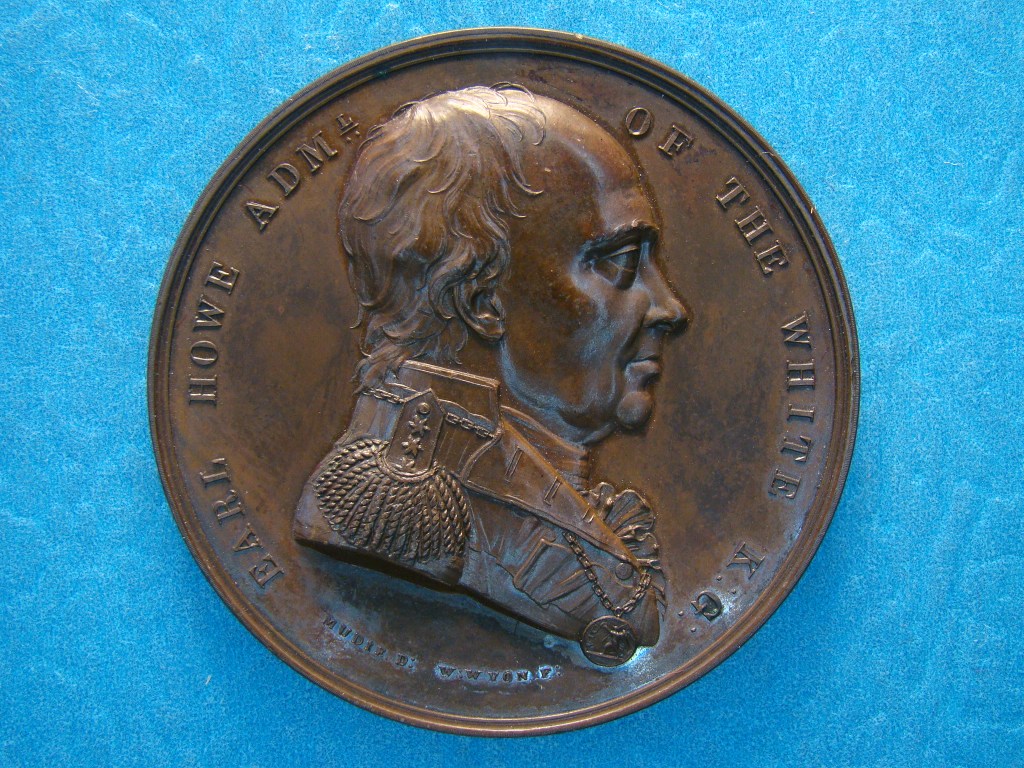
Admiral Howe, 1794, AE42
$259.00 -
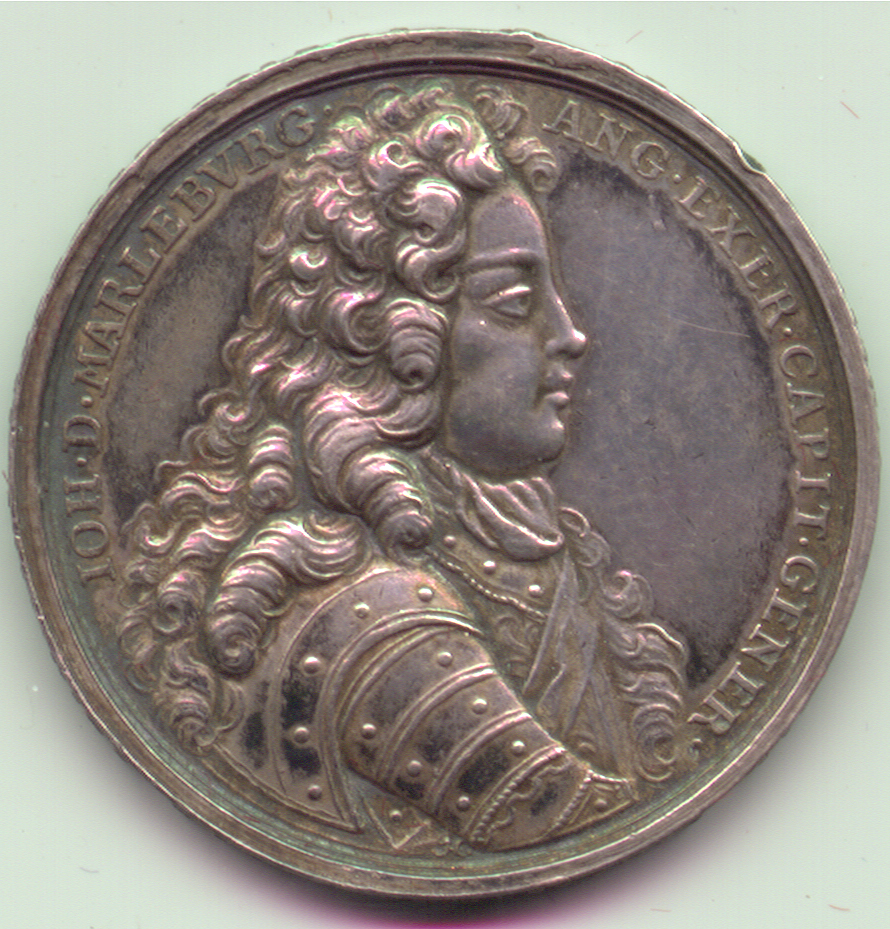
Anne, 1704, AR37, Battle of Blenheim
$960.00 -

Anne, 1707, AR47, Mint State Union Medal
$4,950.00 -
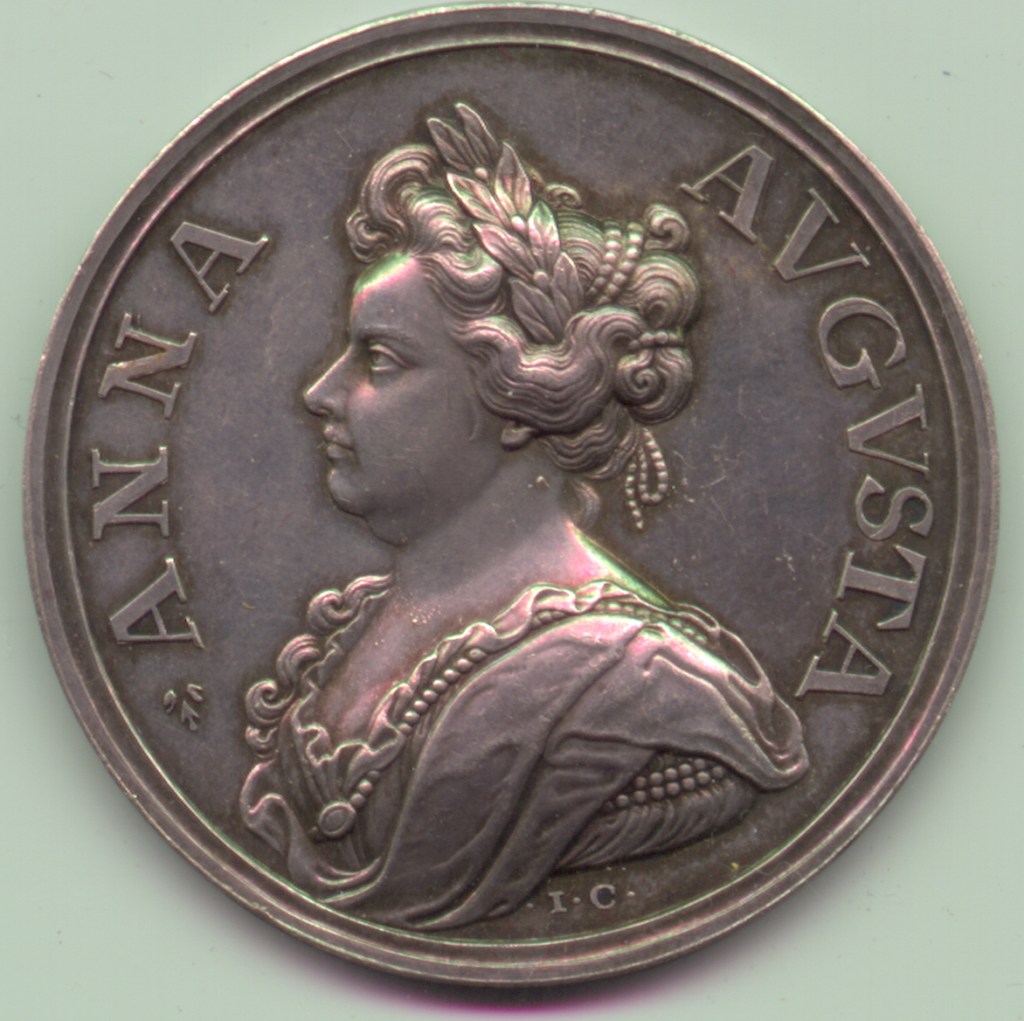
Anne, 1710, AR48, Battle of Saragossa
$2,880.00