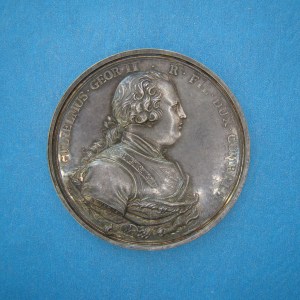

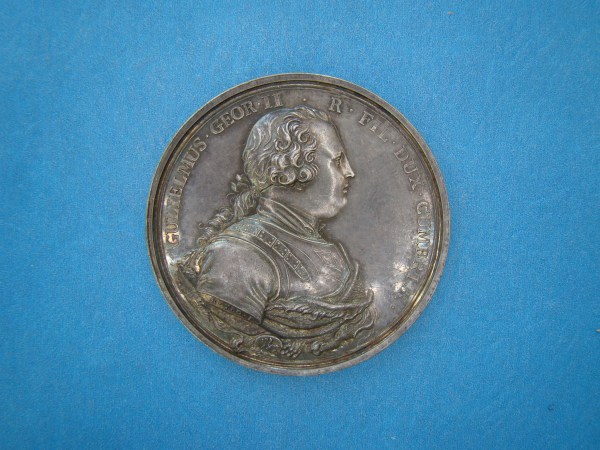
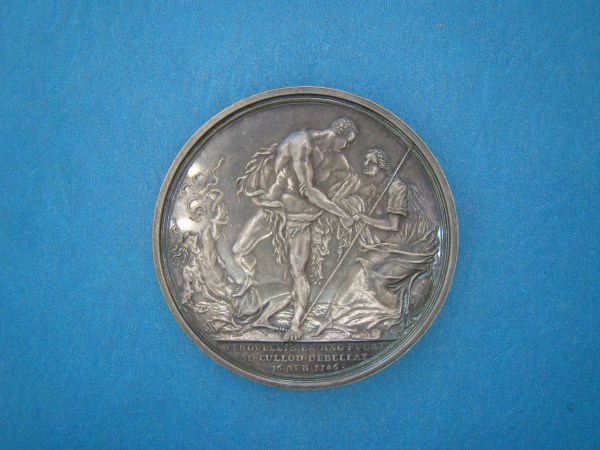
George II, 1746, AR51
$1,530.00
MI613/278, Wgt. 51.7gr Battle of Culloden. In 1745 a Jacobite uprising in Scotland was triggered by the arrival of the Stuart claimant to the British throne, Charles Edward Stuart (Bonnie Prince Charlie) son of the deposed James II. The rebel army had some initial success, Edinburgh was taken and they then continued south into England reaching as far as Derby. However, Charles Stuart and the Scottish nobles with him had failed to formulate a real strategy to seize England. After some looting and burning which started to turn the entire countryside of England against the Stuart cause, Charles retreated back to the north. The British government recalled 12000 troops from the continent where they were involved in the Seven Years War and sent them north with the Duke of Cumberland in command. On 16 April 1746 the well provisioned, professional, combat experienced, British force met a largely ragtag army of lightly armed highlanders. After a sharp two hour battle some 1800-2200 Jacobites lay dead or wounded with the rest of the Scottish rebel army scattered to the winds. It was a decisive victory for Cumberland who continued north mopping up what little resistance remained. The obverse shows a bust of the Duke of Cumberland, and the reverse Hercules trampling Discord while raising Britannia. The Latin inscription on the reverse translates as “The rebels driven from England and defeated at Culloden, 16 April 1746” A number of medals were struck to commemorate the Culloden victory. This one was designed by Yeo and was produced at the Royal Mint. Examples were struck in gold, silver and bronze. Some light marks in the fields, nice old cabinet toning over reflective fields. Ex Baldwins Auction #3 October 5, 1994 Lot 732 MS63
MI613/278, Wgt. 51.7gr Battle of Culloden. In 1745 a Jacobite uprising in Scotland was triggered by the arrival of the Stuart claimant to the British throne, Charles Edward Stuart (Bonnie Prince Charlie) son of the deposed James II. The rebel army had some initial success, Edinburgh was taken and they then continued south into England reaching as far as Derby. However, Charles Stuart and the Scottish nobles with him had failed to formulate a real strategy to seize England. After some looting and burning which started to turn the entire countryside of England against the Stuart cause, Charles retreated back to the north. The British government recalled 12000 troops from the continent where they were involved in the Seven Years War and sent them north with the Duke of Cumberland in command. On 16 April 1746 the well provisioned, professional, combat experienced, British force met a largely ragtag army of lightly armed highlanders. After a sharp two hour battle some 1800-2200 Jacobites lay dead or wounded with the rest of the Scottish rebel army scattered to the winds. It was a decisive victory for Cumberland who continued north mopping up what little resistance remained. The obverse shows a bust of the Duke of Cumberland, and the reverse Hercules trampling Discord while raising Britannia. The Latin inscription on the reverse translates as “The rebels driven from England and defeated at Culloden, 16 April 1746” A number of medals were struck to commemorate the Culloden victory. This one was designed by Yeo and was produced at the Royal Mint. Examples were struck in gold, silver and bronze. Some light marks in the fields, nice old cabinet toning over reflective fields. Ex Baldwins Auction #3 October 5, 1994 Lot 732 MS63
Related products
-
Admiral Howe, 1794, AE42
$349.00 -
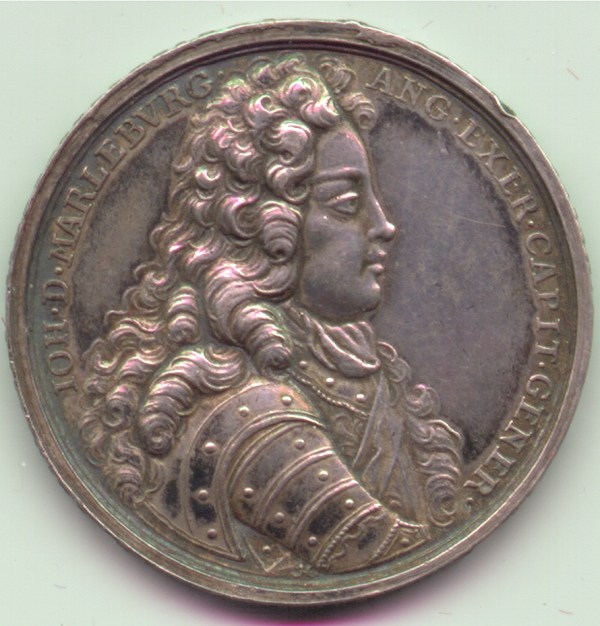
Anne, 1704, AR37, Battle of Blenheim
$960.00 -
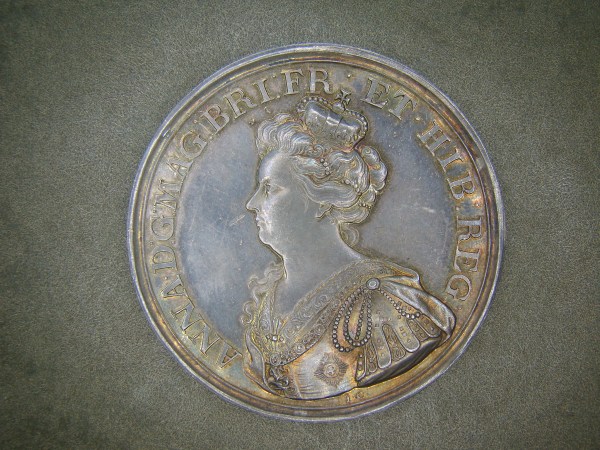
Anne, 1707, AR47, Mint State Union Medal
$5,350.00 -

Anne, 1710, AR48
$2,880.00