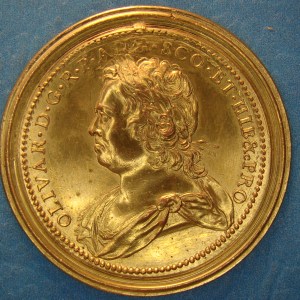
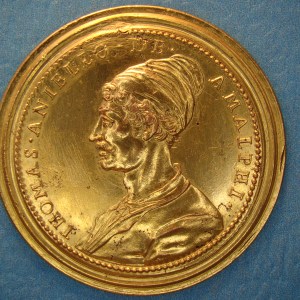

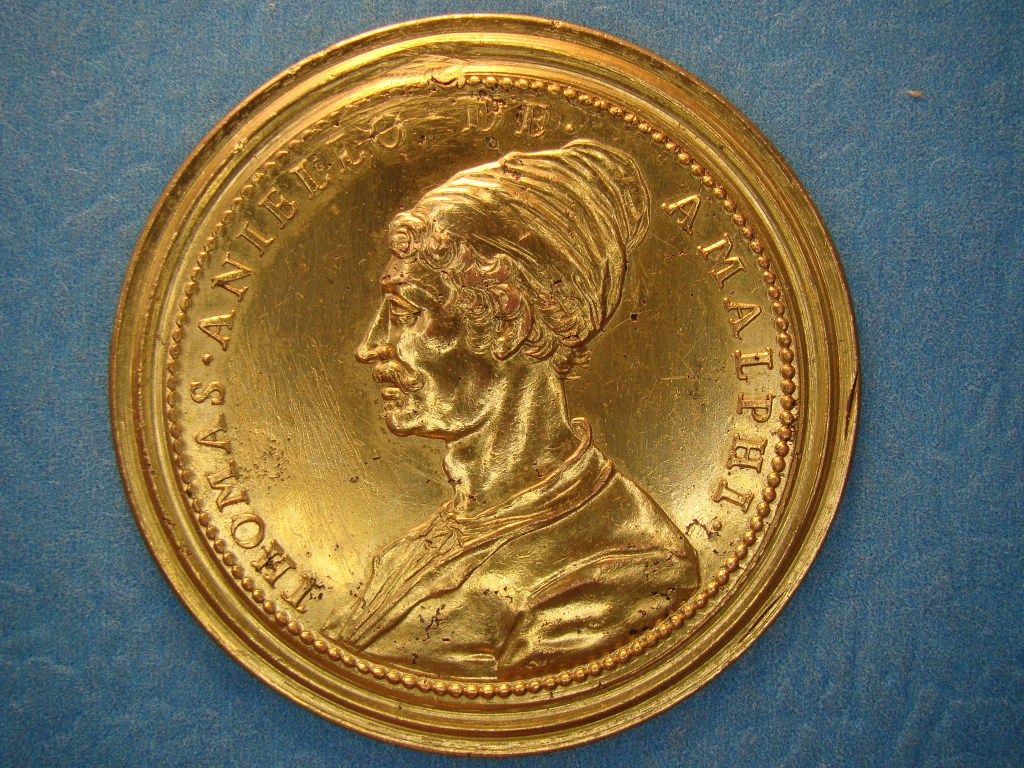
Cromwell, C1700, AEGilt47
$595.00
MI 432/79 Wt. 33.52gr. Rare medal featuring Oliver Cromwell on the obverse and Thomaso Aniello on the reverse. Both Cromwell and Aniello were famous revolutionaries of the 17th century. In 1649, after a protracted civil war, Cromwell executed King Charles I and established a commonwealth in England, while in 1647 Aniello, a fishmonger, led a popular revolt in Naples over new taxes on fruit. Both uprising against the established authorities only lasted a short while. The Naples revolt was put down after about a year and a half of unrest while Cromwell’s commonwealth died with him in 1658. Both men suffered a somewhat similar fate. Aniello was murdered by a band of mercenary thugs with his head being displayed and his body burned. Cromwell died in his bed but after the monarchy was re-established in 1660 his body was dug up. His rotting corpse was hanged in chains at Tyburn, then beheaded with his head displayed on a pike at Westminster. This medal is thought to have been struck in the first decade of the 18th century. Heavily gilt and showing traces of a being in a mount, this medal was clearly on proud display arounds someone’s neck. Very rare in gilt; in fact the only example I have ever seen. EF
MI 432/79 Wt. 33.52gr. Rare medal featuring Oliver Cromwell on the obverse and Thomaso Aniello on the reverse. Both Cromwell and Aniello were famous revolutionaries of the 17th century. In 1649, after a protracted civil war, Cromwell executed King Charles I and established a commonwealth in England, while in 1647 Aniello, a fishmonger, led a popular revolt in Naples over new taxes on fruit. Both uprising against the established authorities only lasted a short while. The Naples revolt was put down after about a year and a half of unrest while Cromwell’s commonwealth died with him in 1658. Both men suffered a somewhat similar fate. Aniello was murdered by a band of mercenary thugs with his head being displayed and his body burned. Cromwell died in his bed but after the monarchy was re-established in 1660 his body was dug up. His rotting corpse was hanged in chains at Tyburn, then beheaded with his head displayed on a pike at Westminster. This medal is thought to have been struck in the first decade of the 18th century. Heavily gilt and showing traces of a being in a mount, this medal was clearly on proud display arounds someone’s neck. Very rare in gilt; in fact the only example I have ever seen. EF
Related products
-
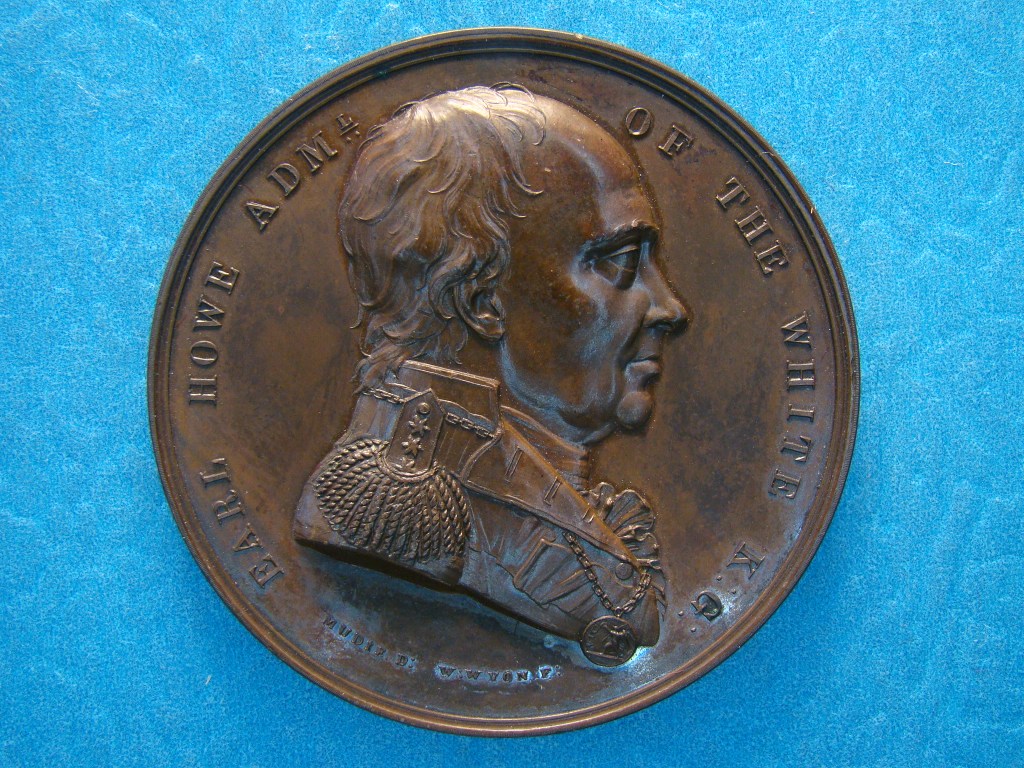
Admiral Howe, 1794, AE42
$259.00 -
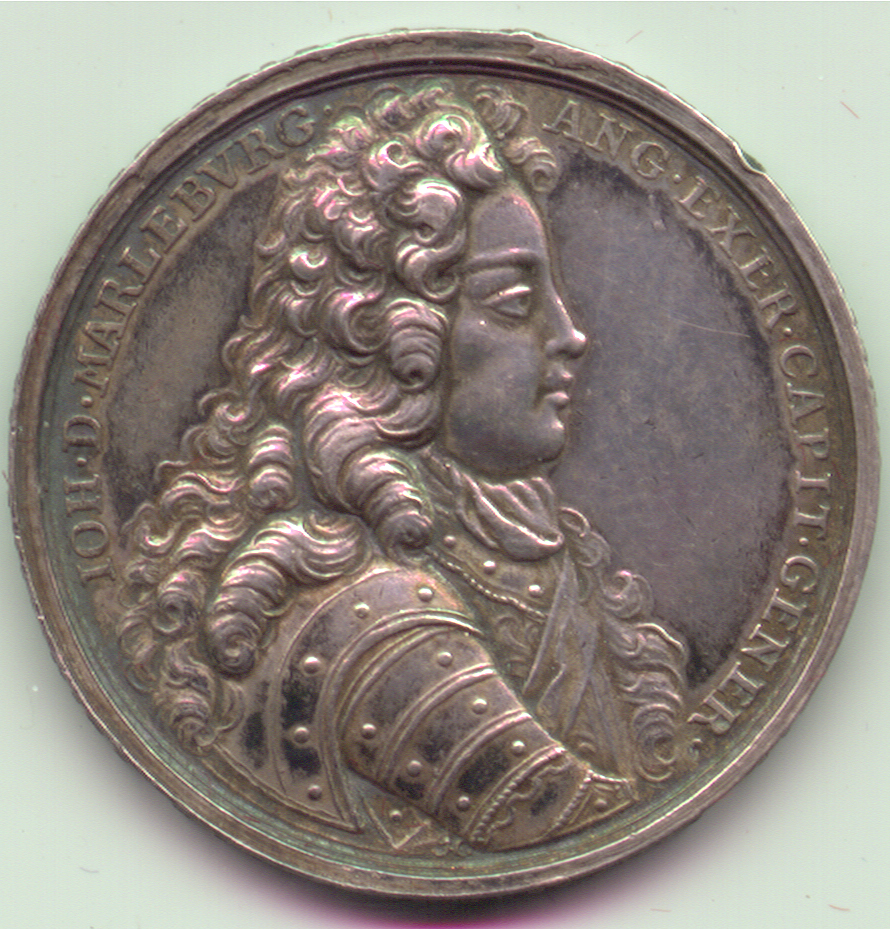
Anne, 1704, AR37, Battle of Blenheim
$960.00 -

Anne, 1707, AR47, Mint State Union Medal
$4,950.00 -
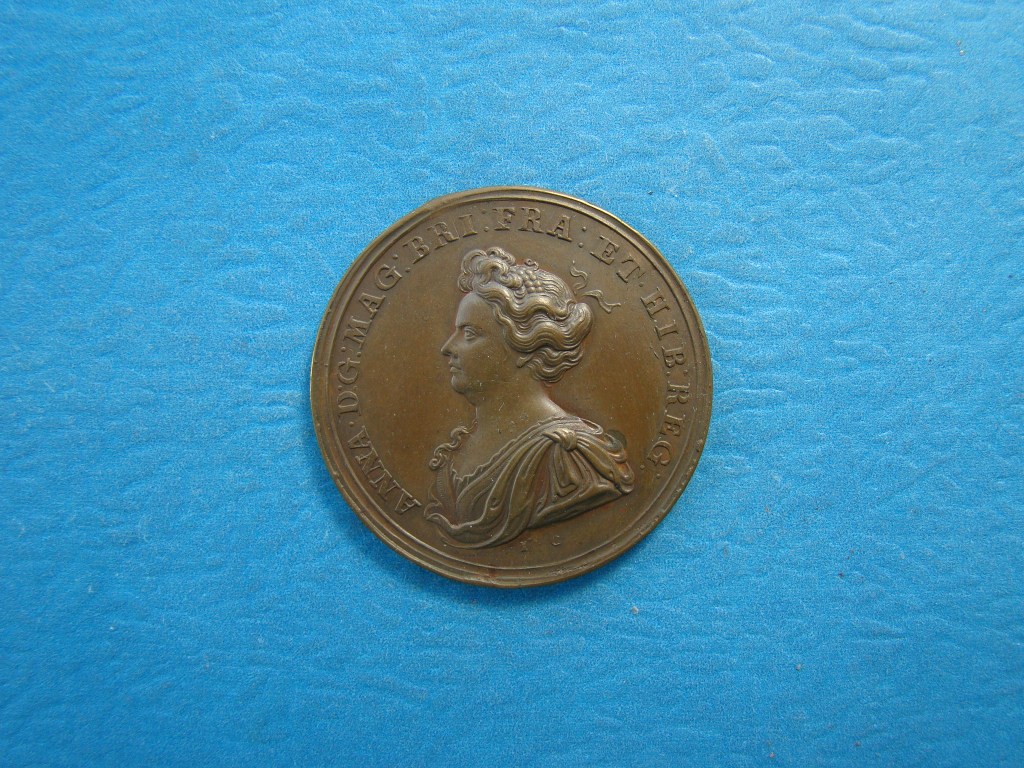
Anne, 1709, Tournai Captured SOLD
$425.00