
William II, 1087-90, 1D, Ex Emory Collection
$5,940.00
Rare First Issue Penny of William II
S1258/N851 Profile right type, rare. , Moneyer Godric, Thetford mint. William II or William Rufus was the second son of William the Conqueror. He was a successful general and warrior, twice defeating the Scots and placing the Scottish kingdom under his vassalage. Upon the Conqueror’s death on September 9, 1087, his possessions were divided amoung his sons, with Robert Curthose, the eldest son, receiving the lordship to the richest territories which were in France. William inherited the crown of England, while a third son, Henry, received cash. There was a lot of tension between the brothers. Robert had previously made forays against William’s French possessions and attacked nobles loyal to William, while Henry was always scheming, switching his loyalty and financial backing between his brothers. The situation finally escalated to a point where William was collecting a rather large army to seize Robert’s dukedom of Normandy and end the fraternal struggle once and for all. However, before the war between brothers could begin in earnest, William Rufus conveniently died. On August 2nd 1100, William was hunting and pursuing a stag he had previously wounded. During the chase, William became separated from the rest of the hunting party when he was suddenly struck by an arrow mistakenly fired by his hunting partner Walter Tirel. Walter quickly fled the scene not stopping until he reached the safety of his castle in France, while William’s brother Henry rushed to seize the royal treasury at Winchester and then proclaim himself as king of England. All the while these events were happening, William’s body was abandoned where it lay. The corpse was eventually picked up by a charcoal burner scavenging the forest for wood and brought to the monks at Winchester Cathedral where he was buried. To this day, William’s death remains one of history’s great murder mysteries. Contemporary chroniclers were skeptical that it was an accident, as both brothers had a strong motive for killing William; Robert to forestall an invasion which would have likely cost him his dukedom and Henry, the throne of England. To add to the mystery, no one was ever brought to justice for the death of King William, accident or not.
A nice example of a William II penny which are usually found poorly/unevenly struck. All coins of William are rather crudely engraved which diminishes their eye appeal. This coin features a very nice portrait along with readable legends. A rare combination of a perfectly centered strike with ALL of the portrait and ALL of the lettering struck up. The coin exhibits no real wear. A type which rarely comes up for sale, although Baldwins recently (2024) auctioned a type considered less rare for L5750 plus buyers fee and the Irving Schneider example of this same type (Numismatica Ars Classica Auction May 2025, lot 3141) brought CHF 7000 or $11,100 with buyers fee. Ex Emory Collection, sold Spinks Auction #84, 21 May 1991, lot 56. NGC AU55
NGC 2925706-002
Rare First Issue Penny of William II
S1258/N851 Profile right type, rare. , Moneyer Godric, Thetford mint. William II or William Rufus was the second son of William the Conqueror. He was a successful general and warrior, twice defeating the Scots and placing the Scottish kingdom under his vassalage. Upon the Conqueror’s death on September 9, 1087, his possessions were divided amoung his sons, with Robert Curthose, the eldest son, receiving the lordship to the richest territories which were in France. William inherited the crown of England, while a third son, Henry, received cash. There was a lot of tension between the brothers. Robert had previously made forays against William’s French possessions and attacked nobles loyal to William, while Henry was always scheming, switching his loyalty and financial backing between his brothers. The situation finally escalated to a point where William was collecting a rather large army to seize Robert’s dukedom of Normandy and end the fraternal struggle once and for all. However, before the war between brothers could begin in earnest, William Rufus conveniently died. On August 2nd 1100, William was hunting and pursuing a stag he had previously wounded. During the chase, William became separated from the rest of the hunting party when he was suddenly struck by an arrow mistakenly fired by his hunting partner Walter Tirel. Walter quickly fled the scene not stopping until he reached the safety of his castle in France, while William’s brother Henry rushed to seize the royal treasury at Winchester and then proclaim himself as king of England. All the while these events were happening, William’s body was abandoned where it lay. The corpse was eventually picked up by a charcoal burner scavenging the forest for wood and brought to the monks at Winchester Cathedral where he was buried. To this day, William’s death remains one of history’s great murder mysteries. Contemporary chroniclers were skeptical that it was an accident, as both brothers had a strong motive for killing William; Robert to forestall an invasion which would have likely cost him his dukedom and Henry, the throne of England. To add to the mystery, no one was ever brought to justice for the death of King William, accident or not.
A nice example of a William II penny which are usually found poorly/unevenly struck. All coins of William are rather crudely engraved which diminishes their eye appeal. This coin features a very nice portrait along with readable legends. A rare combination of a perfectly centered strike with ALL of the portrait and ALL of the lettering struck up. The coin exhibits no real wear. A type which rarely comes up for sale, although Baldwins recently (2024) auctioned a type considered less rare for L5750 plus buyers fee and the Irving Schneider example of this same type (Numismatica Ars Classica Auction May 2025, lot 3141) brought CHF 7000 or $11,100 with buyers fee. Ex Emory Collection, sold Spinks Auction #84, 21 May 1991, lot 56. NGC AU55
NGC 2925706-002
Related products
-

Aethelred II Unraed, 999-1002, 1d
$895.00 -
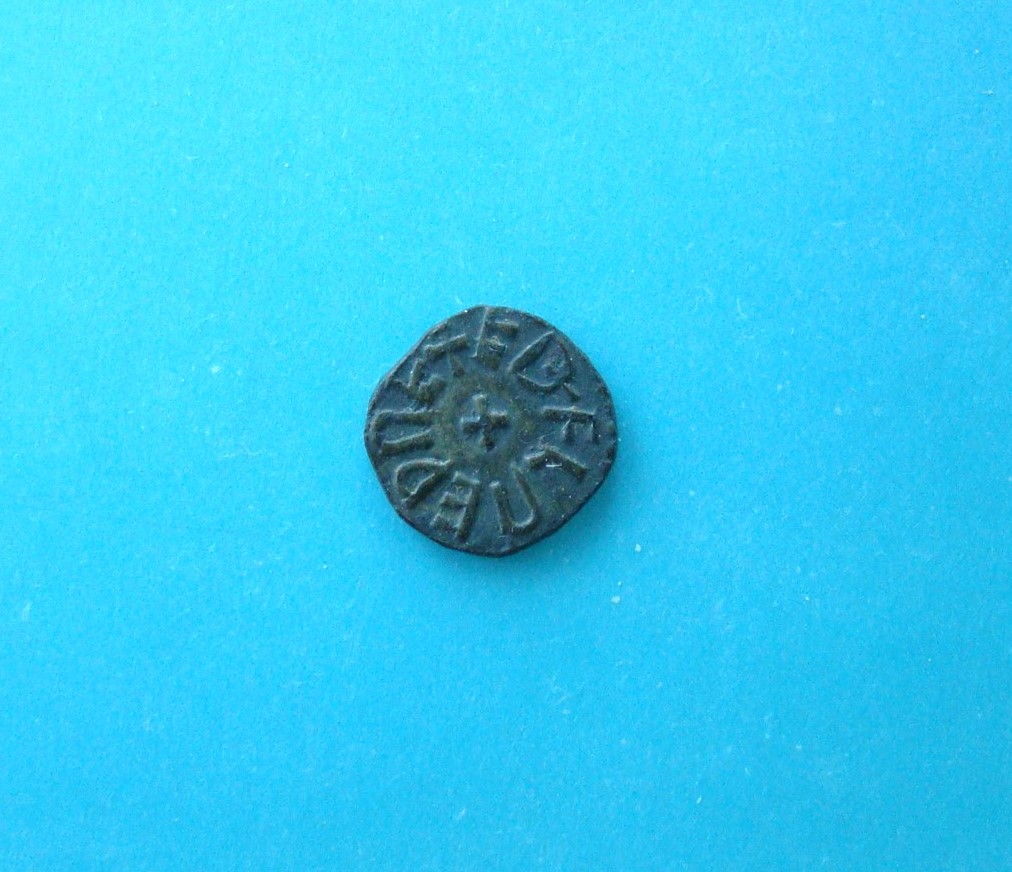
Aethelred II, 858-62, Styca
$157.00 -

Aethelweard, 845-55, 1D, near MINT STATE EXAMPLE
$7,450.00 -

Berhtwulf, 840-52, 1d, PEDIGREE COIN
$19,700.00