Waterloo, 1967, AR65
$359.00
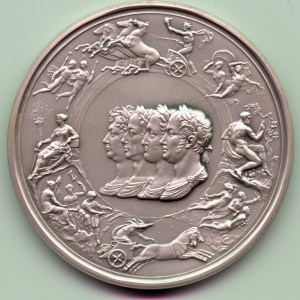
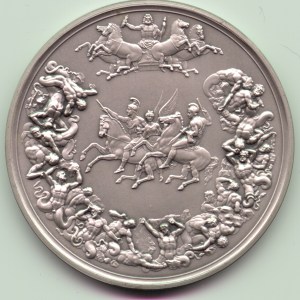
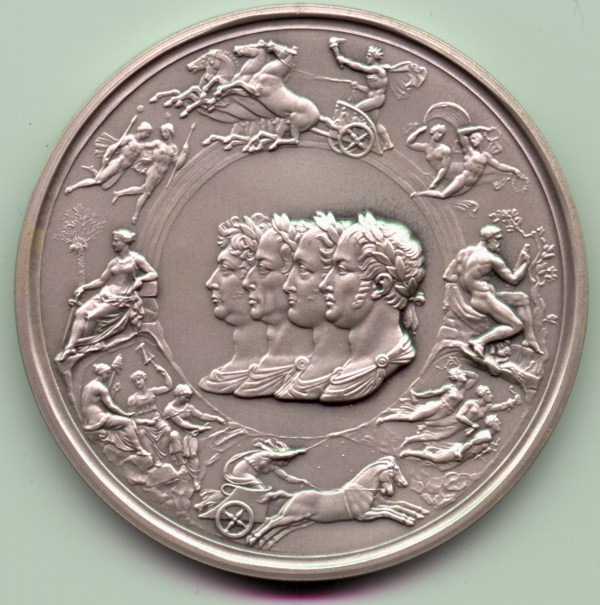
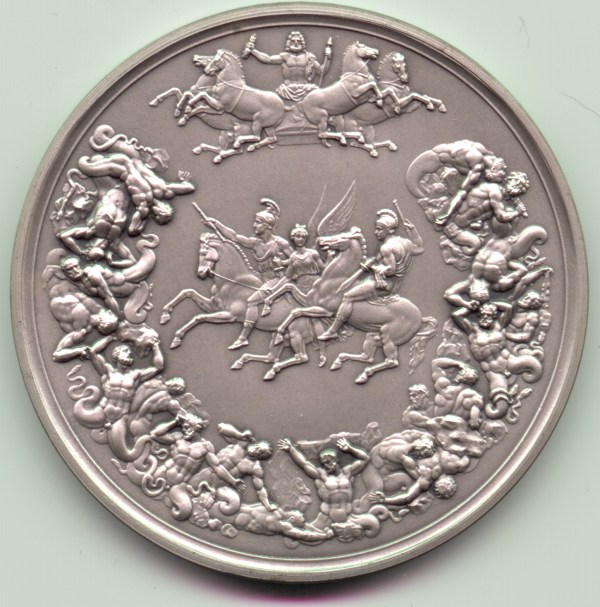
Wt. 119.87gr. Pinches restrike of Pistrucci’s Waterloo medal. In 1819 the Prince Regent proposed a commemorative gold medal be awarded to each general and head of state that participated in the final defeat of Napoleon at Waterloo in 1815. The job was given to Benedetto Pistrucci to engrave the dies based on the drawings of another artist, but Pistrucci refused and came up with his own design. The future George IV liked Pistrucci’s wax model and gave him the commission to produce dies for the huge (139mm) medal. Pistrucci was to be paid L2200 in installments and allowed to bring his family from Italy to settle in England. Pistrucci got to work but soon found that the process of creating such large dies posed certain technical challenges. Things got worse a few years later when Pistrucci ran afoul of King George IV who really disliked Pistrucci’s “bloated” depiction of him on the coinage. Pistrucci was ordered to engrave new coinage dies based on the drawings of another artist, but as before with the Waterloo medal, Pistrucci refused. The master of the Royal Mint removed Pistrucci from die engraving for the coinage but kept Pistrucci working on medal engraving. Work on the dies progressed slowly especially as Pistrucci’s eyesight was failing, but the mint did not remove Pistrucci as they had already paid him the 2200 pounds for the job and didn’t want to write off the money. The years dragged on and finally in 1849 the matrices for the dies were completed. Unfortunately, most of the intended recipients were already long dead and the mint had little appetite to strike a medal that would test the limits of their die making and presses. Instead, only a few electrotypes were made from the matrices; proper dies were never made. In 1990, the Royal Mint struck a reduced-size collector’s version in sterling silver and bronze for the 175th anniversary of the battle. Another reduced size issue was struck by the Royal mint in 2015 for the bicentennial. These latter medals restored the legends that Pistrucci had on his original wax models but had dropped for the final die matrices; they weighed in at 250gr of .999 silver and measured 80mm. Also in 2014, the Royal mint struck a number of full-size examples in silver for presentation to the governments of Russia, Germany, and Austria as well as to Queen Elizabeth. An unknown amount of these full size examples were also offered to the public for L3900. This medal weighed in at 2.0kg. This medal being sold here was struck by Pinches in 1967. It is 65mm and weighs 120gr; struck in sterling silver with a matte specimen finish and a numbered plain edge. Contains 3.569 ounces of pure silver. Number 137 of 5000 struck. Sold in its original blue satin case trimmed in gold with original papers. FDC
Wt. 119.87gr. Pinches restrike of Pistrucci’s Waterloo medal. In 1819 the Prince Regent proposed a commemorative gold medal be awarded to each general and head of state that participated in the final defeat of Napoleon at Waterloo in 1815. The job was given to Benedetto Pistrucci to engrave the dies based on the drawings of another artist, but Pistrucci refused and came up with his own design. The future George IV liked Pistrucci’s wax model and gave him the commission to produce dies for the huge (139mm) medal. Pistrucci was to be paid L2200 in installments and allowed to bring his family from Italy to settle in England. Pistrucci got to work but soon found that the process of creating such large dies posed certain technical challenges. Things got worse a few years later when Pistrucci ran afoul of King George IV who really disliked Pistrucci’s “bloated” depiction of him on the coinage. Pistrucci was ordered to engrave new coinage dies based on the drawings of another artist, but as before with the Waterloo medal, Pistrucci refused. The master of the Royal Mint removed Pistrucci from die engraving for the coinage but kept Pistrucci working on medal engraving. Work on the dies progressed slowly especially as Pistrucci’s eyesight was failing, but the mint did not remove Pistrucci as they had already paid him the 2200 pounds for the job and didn’t want to write off the money. The years dragged on and finally in 1849 the matrices for the dies were completed. Unfortunately, most of the intended recipients were already long dead and the mint had little appetite to strike a medal that would test the limits of their die making and presses. Instead, only a few electrotypes were made from the matrices; proper dies were never made. In 1990, the Royal Mint struck a reduced-size collector’s version in sterling silver and bronze for the 175th anniversary of the battle. Another reduced size issue was struck by the Royal mint in 2015 for the bicentennial. These latter medals restored the legends that Pistrucci had on his original wax models but had dropped for the final die matrices; they weighed in at 250gr of .999 silver and measured 80mm. Also in 2014, the Royal mint struck a number of full-size examples in silver for presentation to the governments of Russia, Germany, and Austria as well as to Queen Elizabeth. An unknown amount of these full size examples were also offered to the public for L3900. This medal weighed in at 2.0kg. This medal being sold here was struck by Pinches in 1967. It is 65mm and weighs 120gr; struck in sterling silver with a matte specimen finish and a numbered plain edge. Contains 3.569 ounces of pure silver. Number 137 of 5000 struck. Sold in its original blue satin case trimmed in gold with original papers. FDC
Related products
-
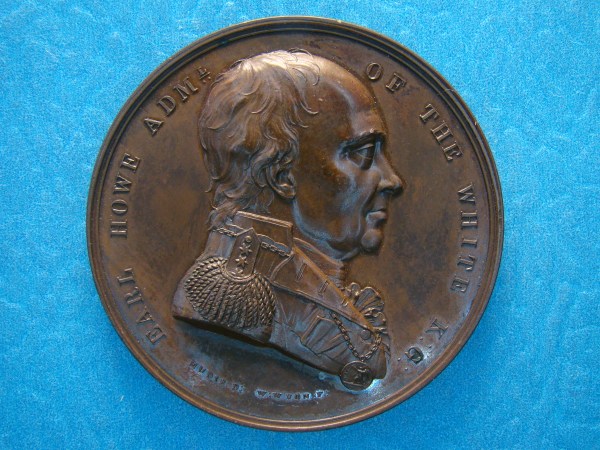
Admiral Howe, 1794, AE42
$349.00 -
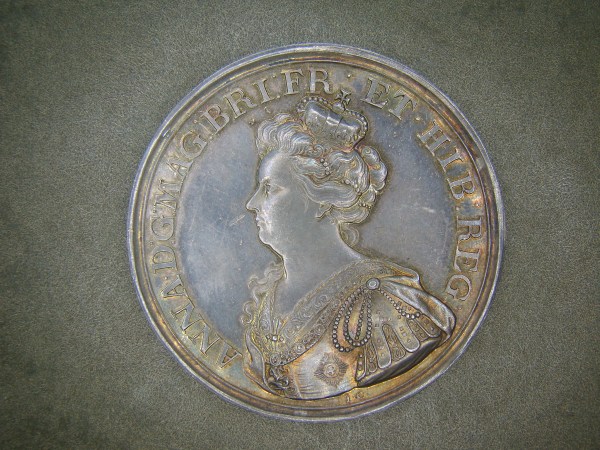
Anne, 1707, AR47, Mint State Union Medal
$5,350.00 -

Anne, 1709, Tournai Captured SOLD
$425.00 -

Anne, 1710, AR48
$2,880.00