
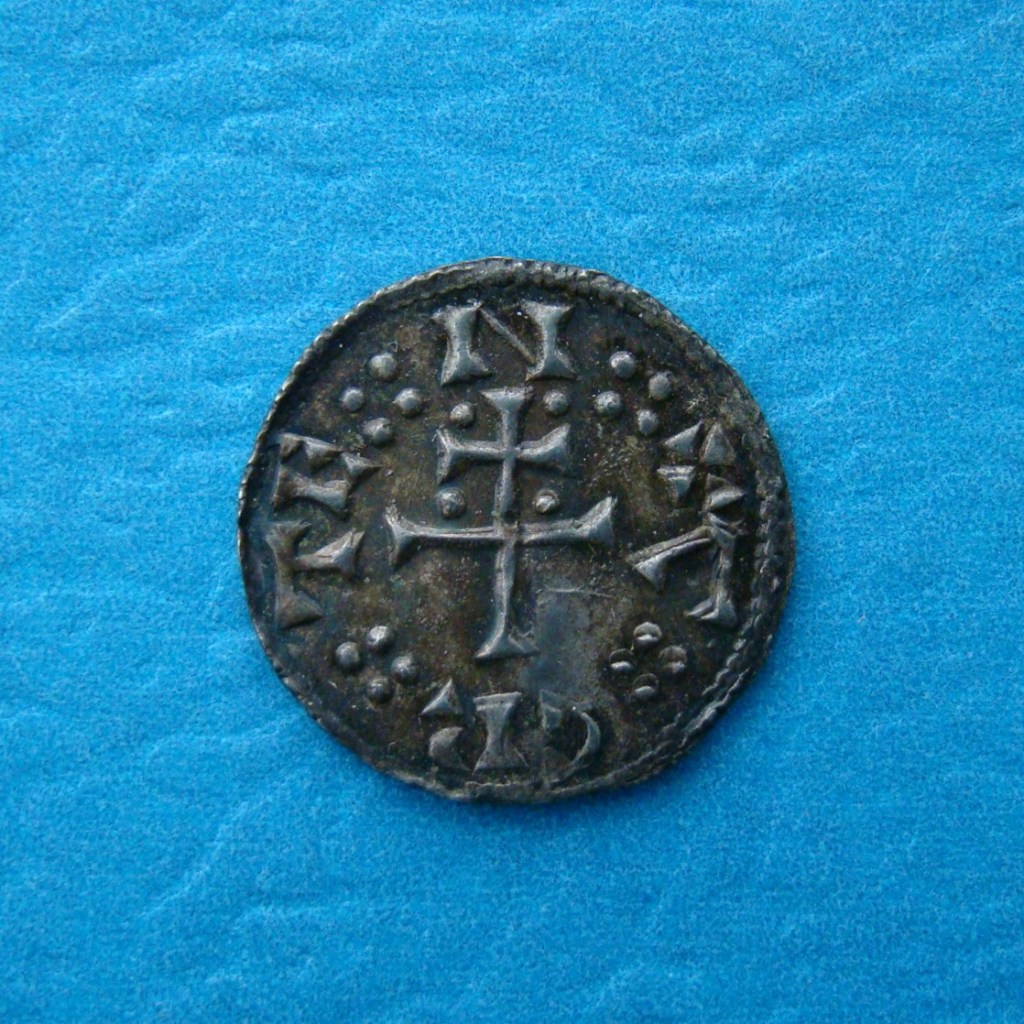
Vikings of York, 895-902 1d EX CUERDALE HOARD
$5,290.00
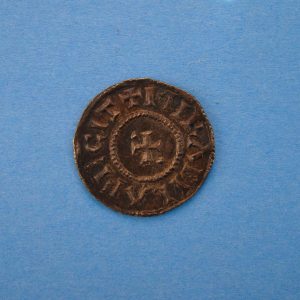
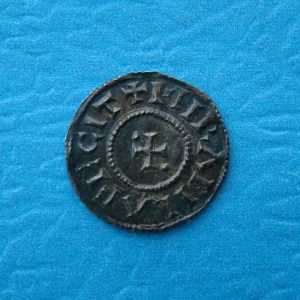
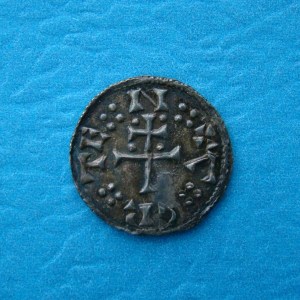
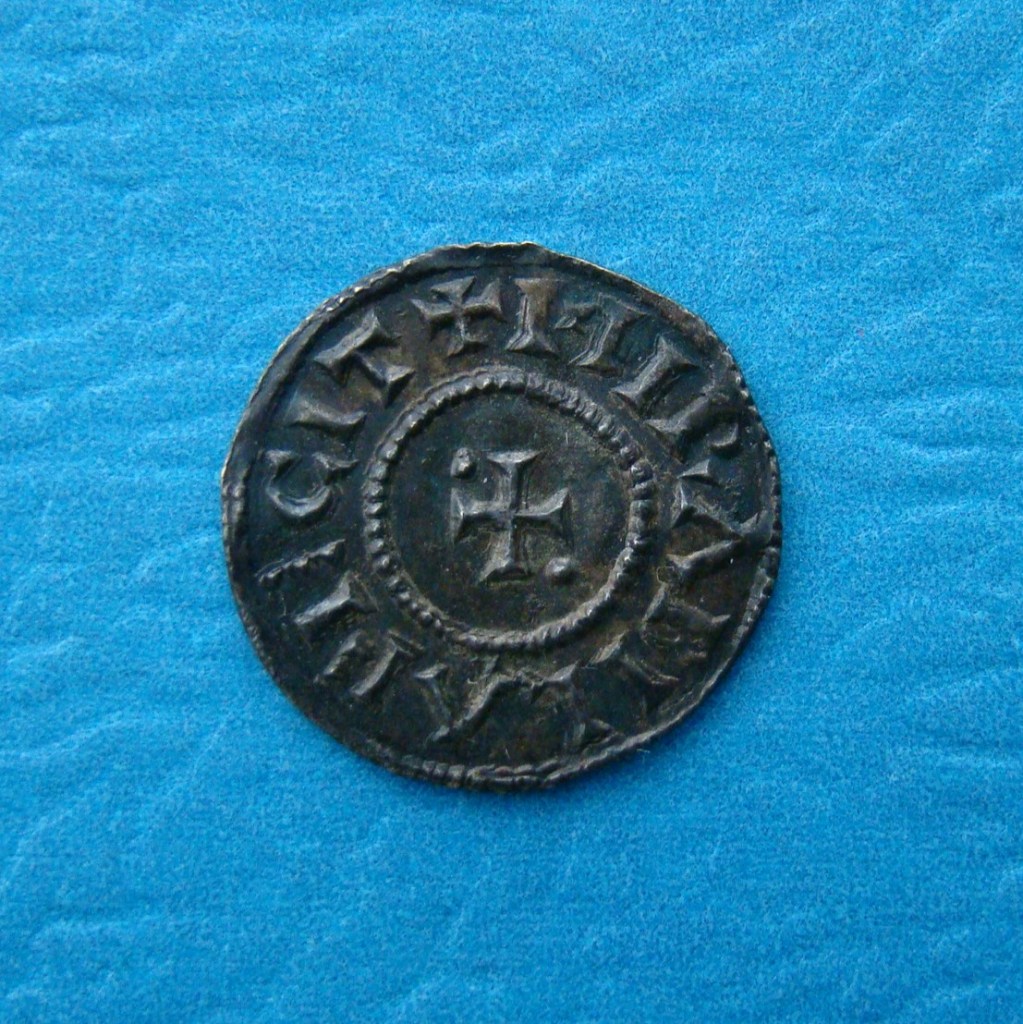
S0998 WT 1.41gr Obv: (As North 496), +V+CRTEN around a patriarchal cross with four pellets. Cross stops in legend. Rev: “+ MIRABILA FECIT” Within a beaded inner circle, a cross pattee with pellets in the first and third quarter between the arms of the cross. Single cross pattee at start of legend in legend. The obverse legend is a corruption of CNVT REX spelt by illiterate moneyers. The letters C V N T are arranged at the ends of each cross limb but are out of order. The extra R and E are meant to spell REX. Put it all together and you have CVNT RE(X) Very rare in this state of preservation. As struck with a hint of lustre flashing through a deep old patina. A very choice coin and very conservatively graded. Ex Cuerdale Hoard.
The Cuerdale hoard consisted of more than 8,600 items, including silver coins, English and Continental coins and jewelry, hack silver as well as coins and ingots from the Viking Kingdom of Dublin. It was discovered on 15 May 1840 on the southern bank of a bend of the Ribble River near Preston Lancs. It remains to this day the largest hoard of Viking silver coins ever discovered in Britain. Theories abound as to the origin of the hoard, but in my opinion the most likely theory is that the hoard was buried by a wealthy individual who fled Viking Dublin when it fell to the native Irish in 902. This individual likely built or occupied a large dwelling or hall at Cuerdale, the ruins of which sits astride the ancient trade route between the Viking Kingdoms of York and Dublin. This would explain the horde being formed from groups of coins from the Continent, Viking York and Viking Dublin. When the hoard was discovered by workmen working on the bank of the Ribble River, it was quickly scooped up by officials of the Lancaster Duchy (which was a royal possession) and presented to Queen Victoria. So, unlike other early coin finds, the Cuerdale Hoard remained largely intact and now mostly rests in the British and Ashmolean Museums.
A similar coin, lacking the Cuerdale Hoard provenance, sold in the Numismatica Ars Classica auction of the fabulous Irving Schneider collection of early Saxon coins held on 25 May 2025 for CHF 3500 plus 22.5% buyers fee. or $5575. Bought CNG Auction December 5-6 2013. The highest graded example of this rare type by NGC and PCGS. NGC MS61
NGC 2925708-003
Related products
-

AETHELHEARD, 798-805, 1D, A PEDIGREE COIN
$6,529.00 -

Aethelred II Unraed, 999-1002, 1d
$895.00 -
Aethelred II, 858-62, Styca
$157.00 -

Aethelweard, 845-55, 1D, near MINT STATE EXAMPLE
$7,450.00