
Stephen, 1138, 1D SOLD
$7,400.00
VERY RARE PENNANT ISSUE OF STEPHEN
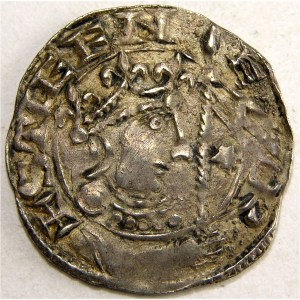
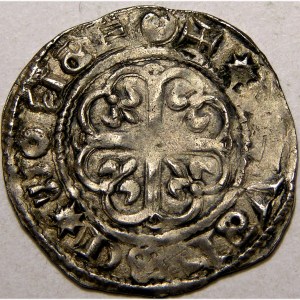
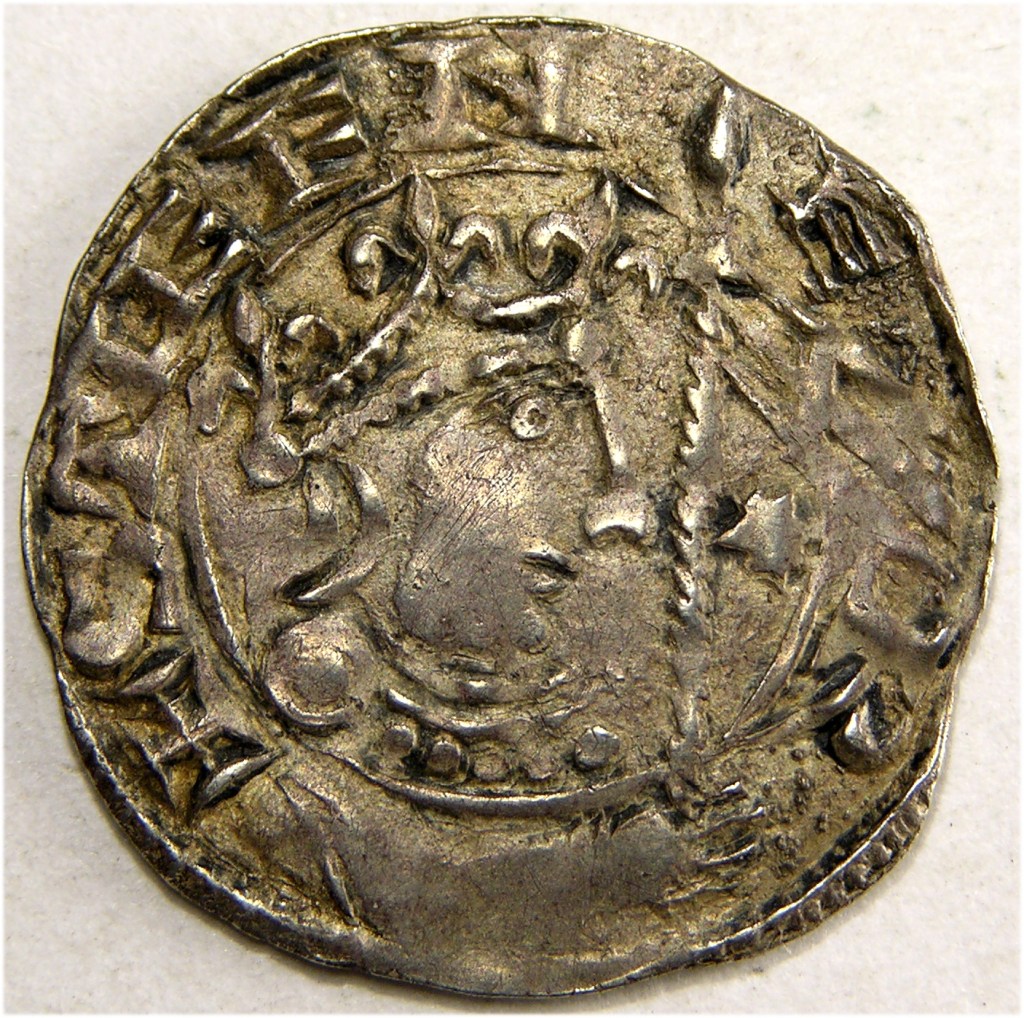
S1313 Wt 1.2 gr York mint, Flag type. It is believed by some that this coin’s design is meant to celebrate Stephen’s victory at the Battle of the Standard fought on 22 August 1138. The death of King Henry I in 1135 left two contenders to the English throne, Matilda, the daughter of Henry and widow of the Holy Roman Emperor Henry V, and Stephen of Blois, a nephew of Henry. Stephen had grown up in the court of Henry I and was well respected as a brave knight and a tested military leader. He was favored by many Anglo-Norman magnates to succeed Henry as according to Norman law a female could not sit on the English throne. However, Henry required his nobles to sign a charter stating that they would support Matilda as their ruler in accordance with the Saxon laws on succession. The nobles of course always intended to support whichever ruler would interfere less in their fiefdoms. So on one hand there was Stephen who was one of their own and a known quantity and on the other was Matilda, a woman but a woman who was now married to the ambitious and detested, Geoffrey, Count of Anjou. Henry died on December 1st 1135 while campaigning against his daughter and son in law who were supporting a revolt of some Norman barons against Henry. Upon hearing of the king’s death Stephen of Blois promptly crossed the channel and on December 22nd 1135 was crowned King of England by his younger brother who just happened to be the Bishop of Winchester. Of course Matilda wasn’t going to stand for this usurpation and promptly appealed to the pope. When that didn’t work Matilda and Geoffrey concentrated on consolidating power in Normandy. From 1135-1138 Matilda bided her time raising her army and bring some of the nobility to her side. The civil war began in 1138 when Robert of Gloucester, the half brother of Matilda and the most powerful noble in the west of England declared for Matilda. Simultaneously Geoffrey of Anjou invaded Normandy while King David of Scotland invaded the North. The summer of 1138 found the Scottish army of about 16,000 laying waste to many towns and villages in the north, while slowly making their way south. By summer they were in Yorkshire and on the 21st of August found their way blocked by an English force of about 10,000 led by the northern magnates and Archbishop Thurstan of York. To assure heavenly assistance in the coming battle, Thurstan mounted a mast on a cart, proudly flying the consecrated banners of the minsters of Beverley, Ripon and York, giving the battle its name. After some hard fighting the Scots were defeated and fled back to the Tweed. The civil war would grind on until 1154 when a peace was finally made on terms which made Geoffrey’s and Matilda’s son Henry, heir upon Stephen’s death. There are about 36 of these coins known with about a dozen frozen in museum collections. It features a well struck portrait of Stephen facing right crowned and holding a staff. Tied to this staff are three thin, banners. To the right of the staff is a star signifying victory. Although not quite fully round the coins is of full weight. Obverse reads “+STIEFN E R”. Reverse consists of a series of ornamental letters and symbols. Ex. Baldwins Auction #40 lot 145 NGC AU58
NGC 2867791-002
Related products
-

AETHELHEARD, 798-805, 1D, A PEDIGREE COIN
$6,529.00 -

Aethelred II Unraed, 999-1002, 1d
$895.00 -
Aethelred II, 858-62, Styca
$157.00 -

Aethelweard, 845-55, 1D, near MINT STATE EXAMPLE
$7,450.00