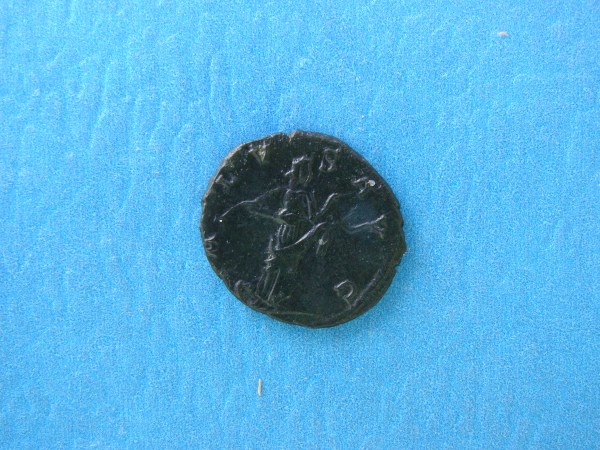
ROME, VICTORINVS, Antoninianus, 268-70 UNCIRCULATED
$89.00
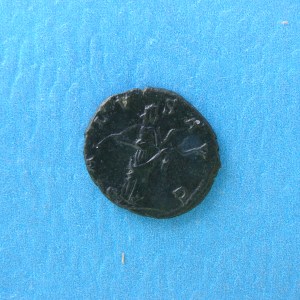
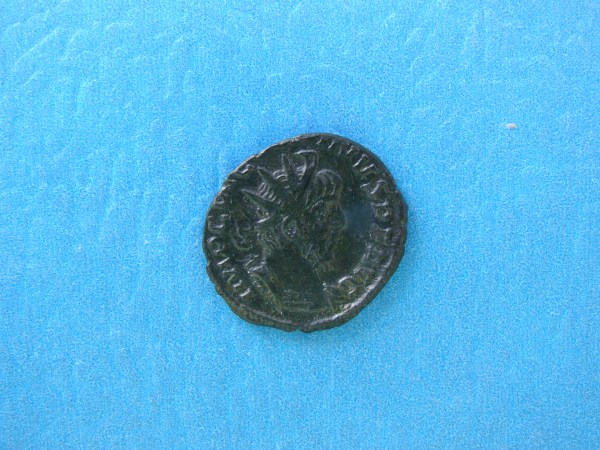
SEAR3069 Obv: Radiate, cuirassed bust right “IMP C VICTORINVS P F AVG. Rev: Salus stg. “SALVS AVG” In 260 the Roman Empire completely fractured. In that year, the Emperor Gallienus was busy in the East attempting to shore Roman defenses after the disastrous defeat and capture of his father, the Emperor Valerian, by the Sasanians. In the West, Gallienus left his young son Saloninus, along with a number of Roman generals in charge of repulsing the Germanic tribal invasions. One of these generals, Postumus, was successful in defeating a barbarian army laden with plunder from raiding Roman territory. Postumus seized the booty for himself and generously rewarded his legions. This didn’t sit well with Saloninus, who demanded that Postumus return all the treasure to the Imperial government. Postumus refused and promptly besieged Saloninus at his headquarters at Colonia Claudia Ara Agrippinesium, modern day Cologne. The siege was successful, Saloninus and his supporters were executed and Postumus declared emperor by his troops. Having executed the son of the emperor, there was clearly no going back for Postumus who carved out the provinces of Gaul, Germania, Britannia and northern Hispania to form what historians call the Gallic Empire. Gallienus, busy fighting in the East and barely holding onto the eastern Roman provinces, was forced to accept this creation. Postumus himself was killed by mutinous troops in 268. In his place Marius was elevated to emperor only to be murdered a short time later by troops loyal to a rival general, Victorinus. Victorinus in turn ruled the Gallic Empire for two years before being murdered by one of his officers whose wife Victorinus had seduced. The Gallic Empire eventually collapsed in 274 and was reabsorbed into the rest of the Roman empire by the emperor Aurelian. Lovely glossy black patina. Some of the obverse lettering struck off the flan. A choice portrait. From this period until the reforms of Diocletian the much debased silver antoninianus was struck in bronze sometimes with a silver wash applied. UNCIRCULATED
SEAR3069 Obv: Radiate, cuirassed bust right “IMP C VICTORINVS P F AVG. Rev: Salus stg. “SALVS AVG” In 260 the Roman Empire completely fractured. In that year, the Emperor Gallienus was busy in the East attempting to shore Roman defenses after the disastrous defeat and capture of his father, the Emperor Valerian, by the Sasanians. In the West, Gallienus left his young son Saloninus, along with a number of Roman generals in charge of repulsing the Germanic tribal invasions. One of these generals, Postumus, was successful in defeating a barbarian army laden with plunder from raiding Roman territory. Postumus seized the booty for himself and generously rewarded his legions. This didn’t sit well with Saloninus, who demanded that Postumus return all the treasure to the Imperial government. Postumus refused and promptly besieged Saloninus at his headquarters at Colonia Claudia Ara Agrippinesium, modern day Cologne. The siege was successful, Saloninus and his supporters were executed and Postumus declared emperor by his troops. Having executed the son of the emperor, there was clearly no going back for Postumus who carved out the provinces of Gaul, Germania, Britannia and northern Hispania to form what historians call the Gallic Empire. Gallienus, busy fighting in the East and barely holding onto the eastern Roman provinces, was forced to accept this creation. Postumus himself was killed by mutinous troops in 268. In his place Marius was elevated to emperor only to be murdered a short time later by troops loyal to a rival general, Victorinus. Victorinus in turn ruled the Gallic Empire for two years before being murdered by one of his officers whose wife Victorinus had seduced. The Gallic Empire eventually collapsed in 274 and was reabsorbed into the rest of the Roman empire by the emperor Aurelian. Lovely glossy black patina. Some of the obverse lettering struck off the flan. A choice portrait. From this period until the reforms of Diocletian the much debased silver antoninianus was struck in bronze sometimes with a silver wash applied. UNCIRCULATED