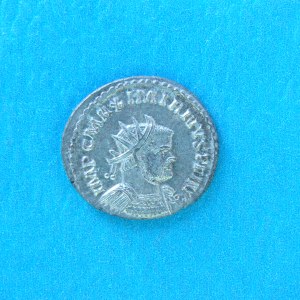
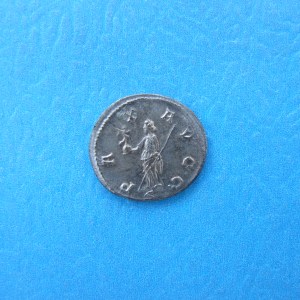
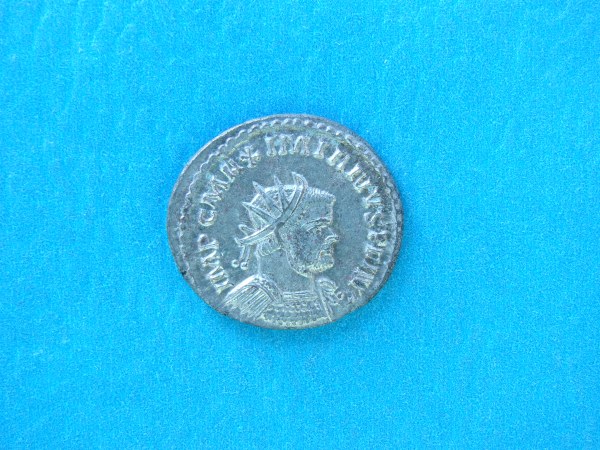
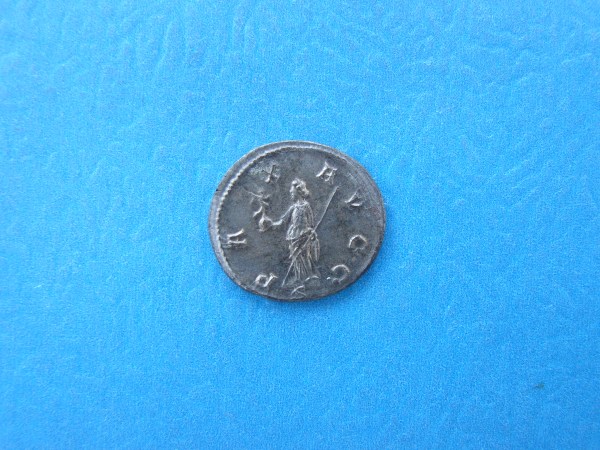
ROME, MAXIMIANVS, Antoninianvs, 286-305, A CHOICE UNC EXAMPLE
$389.00
RIC399 Radiate cuirassed bust facing rgt, “IMP C MAXIMIANVS P P AVG “, Rev: pax stg lft holding Victory and staff. “PAX AVGG”. In exergue “S” , Siscia mint. Marcus Aurelius Valerius Maximianus was co-emperor with Diocletian. Technically, he was the Augustus in charge of the Western half of the Roman Empire while Diocletian was Augustus of the eastern half, but in reality, Diocletian called most of the shots while Maximianus was the enforcer. Maximianus was able to push back invading barbarian tribes while Diocletian was able to restore some measure of economic order to Rome. It was a partnership that worked well and brought some much needed stabilization to the Empire. On May 1st 305, as planned by Diocletian, both Diocletian and Maximianus voluntarily relinquished their respective titles as Augustus and retired. Constantius became Augustus in the west, while Galerius became Augustus in the east. Unfortunately, like most men of action, retirement just didn’t agree with Maximianus. The entire span of Maximianus’s rule involved continuous warfare with barbarian tribes from the Berbers in North Africa to the Franks and Saxons in the north, so sitting around in a villa was definitely not his cup of tea. Besides Maximianus had expected that his son, Maxentius, along with Constantius’s son, Constantine, would each be appointed as Caesar (second in command and heirs) under the two new Augusti, but that didn’t happen. Instead, Galerius (Augustus in the east) managed to have his own nephew, Maximinus, and a former army buddy, Severus, appointed as the two new Caesars. With these appointments, the balance of power suddenly shifted. This was not to the liking of Maximianus, who felt that he should have had a say in the matter. A further complication arose on July 26th 306, when Constantius, Augustus of the West, died in York. Constantius’s legions declared his son Constantine, as the new Augustus. However, Galerius struck a deal with Constantine to make him Caesar if he agreed to the elevation of Severus as Augustus in the West. This upset the entire structure that Diocletian had set up to transfer power. Constantius’ son was now Caesar but Maxentius was denied his elevation to Caesar. Feeling cheated, Maxentius rose in revolt and declared himself as Augustus in the west. This brought his father, Maximianus, out of retirement. From this point the story gets even more complicated. Suffice to say that over the next three years, the “former emperor” Maximianus came out of retirement twice, rebelled twice, was defeated twice and was finally forced to commit suicide. In July 310 he hanged himself or someone did it for him.
A choice uncirculated example retaining full brilliant silvering highlighted with bits of gold tone. Rare this nice. CHBU
RIC399 Radiate cuirassed bust facing rgt, “IMP C MAXIMIANVS P P AVG “, Rev: pax stg lft holding Victory and staff. “PAX AVGG”. In exergue “S” , Siscia mint. Marcus Aurelius Valerius Maximianus was co-emperor with Diocletian. Technically, he was the Augustus in charge of the Western half of the Roman Empire while Diocletian was Augustus of the eastern half, but in reality, Diocletian called most of the shots while Maximianus was the enforcer. Maximianus was able to push back invading barbarian tribes while Diocletian was able to restore some measure of economic order to Rome. It was a partnership that worked well and brought some much needed stabilization to the Empire. On May 1st 305, as planned by Diocletian, both Diocletian and Maximianus voluntarily relinquished their respective titles as Augustus and retired. Constantius became Augustus in the west, while Galerius became Augustus in the east. Unfortunately, like most men of action, retirement just didn’t agree with Maximianus. The entire span of Maximianus’s rule involved continuous warfare with barbarian tribes from the Berbers in North Africa to the Franks and Saxons in the north, so sitting around in a villa was definitely not his cup of tea. Besides Maximianus had expected that his son, Maxentius, along with Constantius’s son, Constantine, would each be appointed as Caesar (second in command and heirs) under the two new Augusti, but that didn’t happen. Instead, Galerius (Augustus in the east) managed to have his own nephew, Maximinus, and a former army buddy, Severus, appointed as the two new Caesars. With these appointments, the balance of power suddenly shifted. This was not to the liking of Maximianus, who felt that he should have had a say in the matter. A further complication arose on July 26th 306, when Constantius, Augustus of the West, died in York. Constantius’s legions declared his son Constantine, as the new Augustus. However, Galerius struck a deal with Constantine to make him Caesar if he agreed to the elevation of Severus as Augustus in the West. This upset the entire structure that Diocletian had set up to transfer power. Constantius’ son was now Caesar but Maxentius was denied his elevation to Caesar. Feeling cheated, Maxentius rose in revolt and declared himself as Augustus in the west. This brought his father, Maximianus, out of retirement. From this point the story gets even more complicated. Suffice to say that over the next three years, the “former emperor” Maximianus came out of retirement twice, rebelled twice, was defeated twice and was finally forced to commit suicide. In July 310 he hanged himself or someone did it for him.
A choice uncirculated example retaining full brilliant silvering highlighted with bits of gold tone. Rare this nice. CHBU
Related products
-

Aethelred II Unraed, 999-1002, 1d
$895.00 -
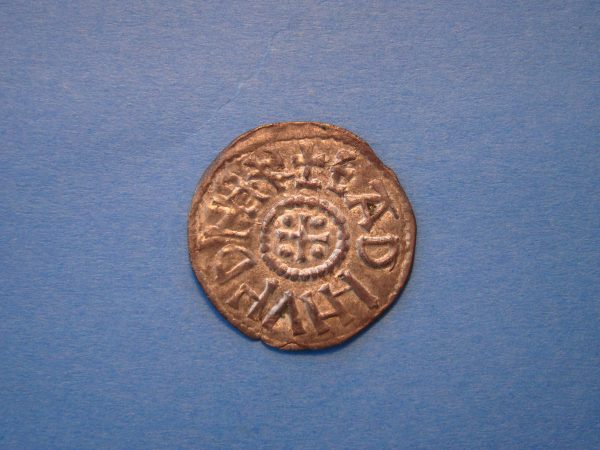
Aethelweard, 845-55, 1D, near MINT STATE EXAMPLE
$7,450.00 -
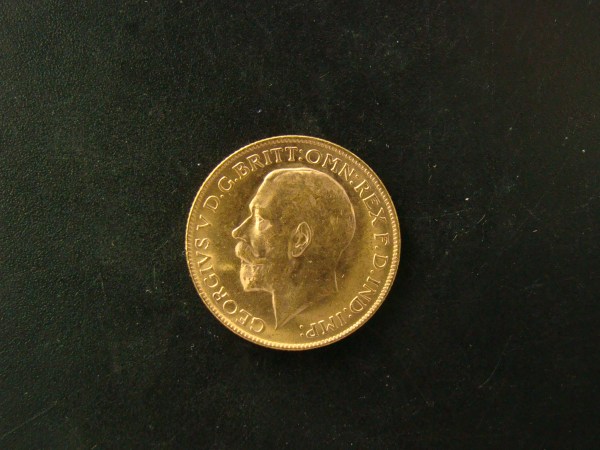
Australia Sovereign 1927P*
$1,315.00 -
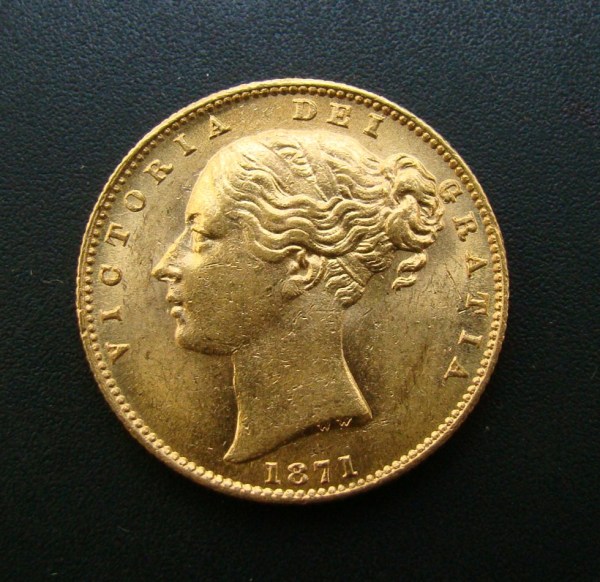
Australia, 1871S, Sovereign
$1,359.00