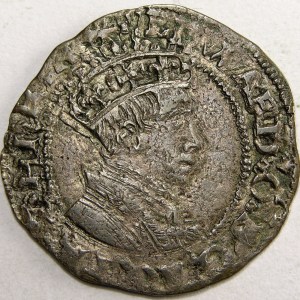
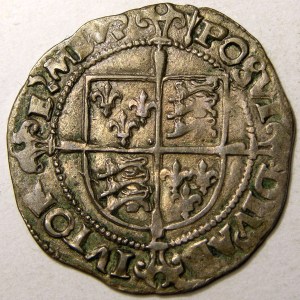
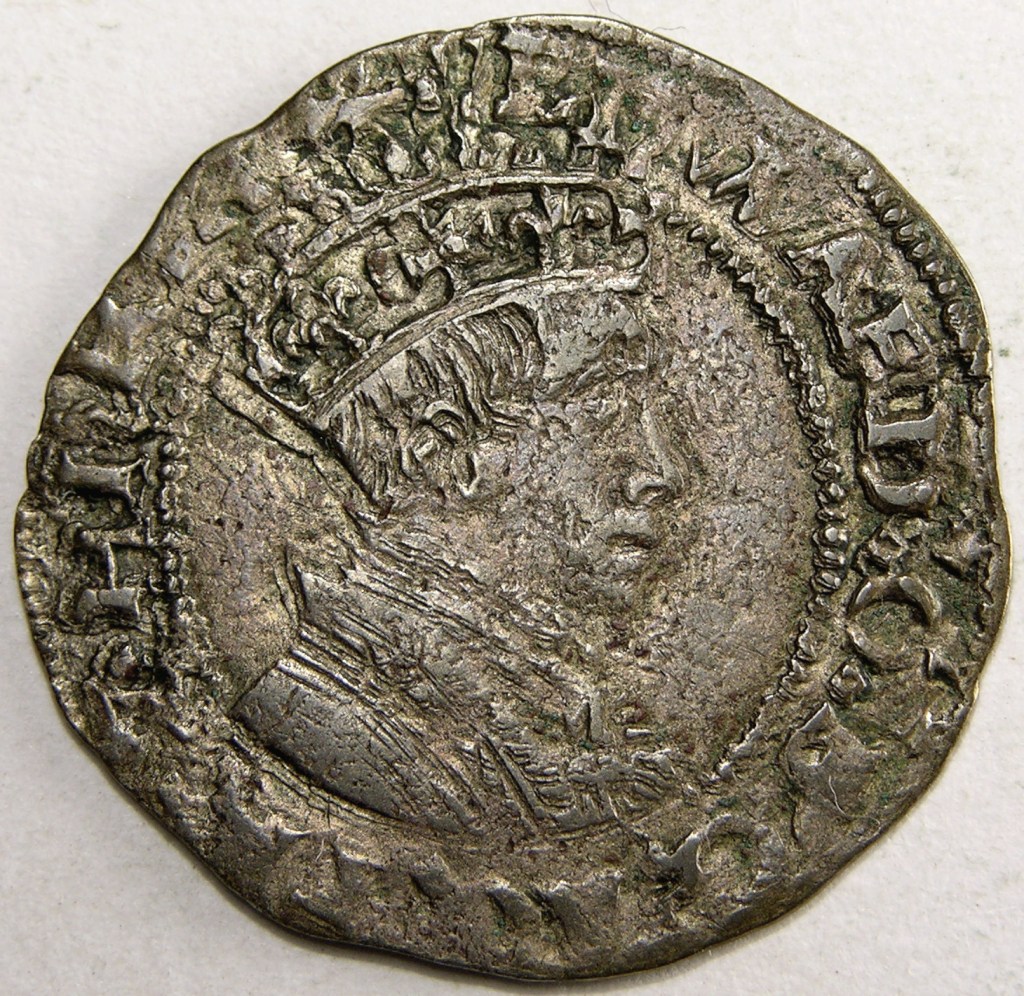
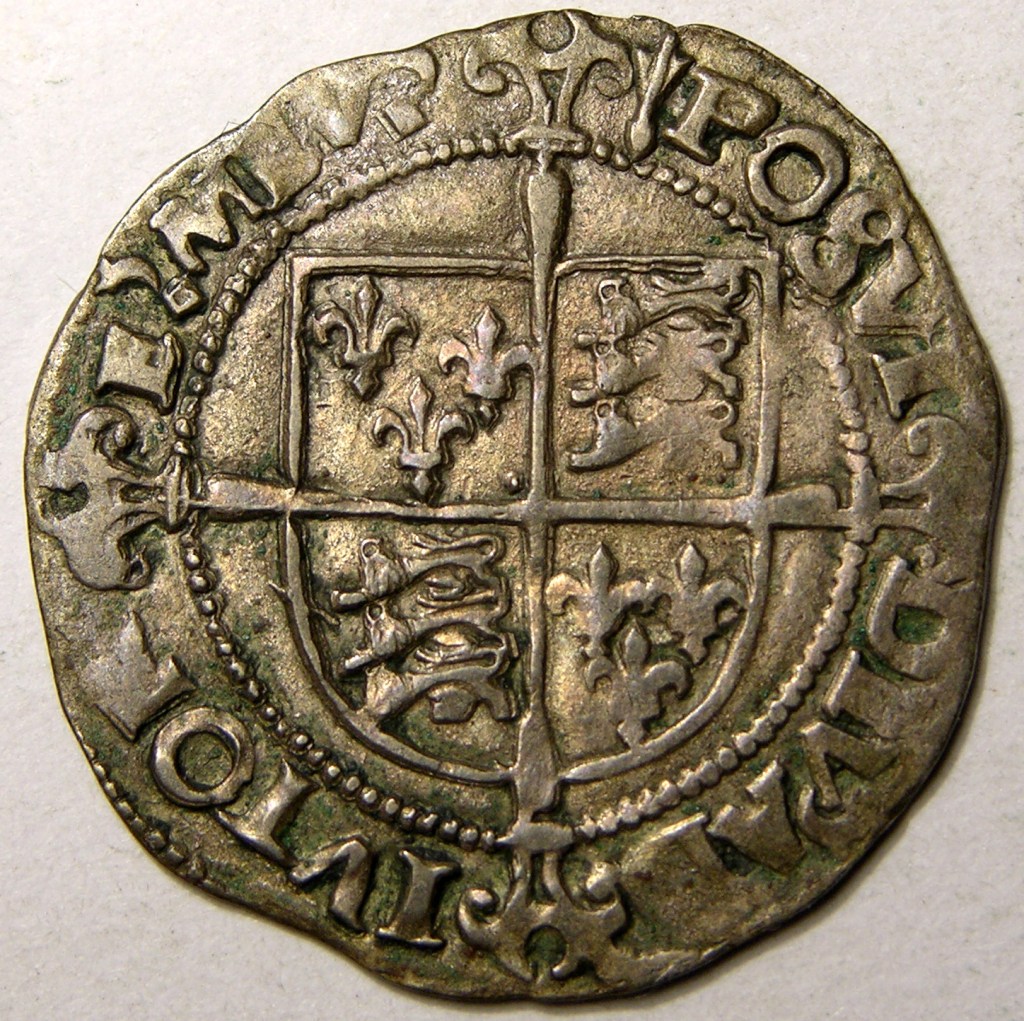
Edward VI, 1547-48, 4D, RARE PEDIGREE GROAT Ex Carlyon-Britton, Parsons Collection
$5,650.00
S2454/N1897 Wt 2.40 gr. MM Arrow, Tower Mint, Very rare. Henry VIII inherited a brimming treasury from his father, but Henry’s desire to compete with the luxury exhibited by courts of Europe, as well as indulge his fantasy of military glory by engaging in wars with Scotland and France, led to unbridled spending. Even the huge funds garnished from the seizure and resale of Church lands and goods in the 1530s was gone by the end of that decade. In 1542, Henry turned to the debasement of the currency to raise funds. He secretly issued an indenture reducing the fineness of English gold and silver and then coined silver coin coming into the mint as lower grade testoons. The indenture only became public when merchants in Holland realized the switch and refused to accept English coinage at face value. In March 1545 coins were debased further with silver eventually reaching only 33% fineness. Edward’s accession to the throne in 1547 did little to change things. The nine year old king was ruled by a council headed by his uncle, the Duke of Somerset. Somerset continued the spending priorities of Henry VIII; funding an army fighting in the continental religious wars and maintaining expensive garrisons in Scotland. As a result, Edward’s first issues, such as this groat, were struck in very debased silver. The debased silver was less malleable and usually resulted in weaker strikes and porous/cracked flans.
This coin is one of the finest in private hands. The reverse of this particular coin is nicely executed and unusually sharp for the issue which is usually found flat as a pancake. The portrait is also sharp and possesses far more detail in Edward’s face as well as in his robe, than is normally encountered. The obverse exhibits bits of surface unevenness due to a flan imperfections and is slightly double struck. Nevertheless, one of the nicer examples in existence with a sharp, detailed and most importantly a portrait which has NOT been tooled and a flan that does not suffer from striking cracks. NGC has given this coin an XF details, environmental damage, due to the flan condition, but with one or two exceptions such “damage” is present on every example that has come on the market in the past forty years. Notably this coin does not appear in the NGC census and presumably is the only example graded by NGC. Possibly the nicest example of an Edward VI groat was from the Geoffrey Cope collection which was graded as a good VF and sold for nearly $24,000 in May 2024. Ex Carlyon -Britton, Parsons collections. Bgt Glendinning’s Auction #4, Nov 1987 lot 194. Sold with an old collectors ticket.
NGC 2925708-005
Related products
-
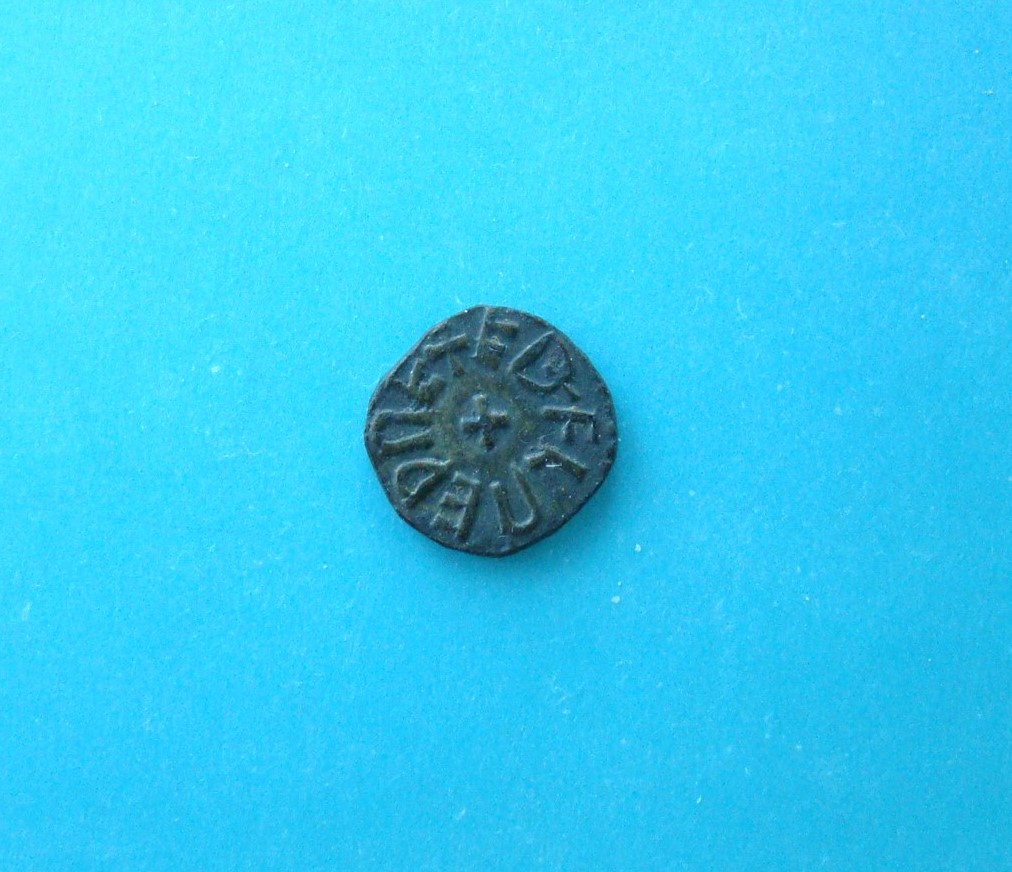
Aethelred II, 858-62, Styca
$157.00 -

Aethelweard, 845-55, 1D, near MINT STATE EXAMPLE
$7,450.00 -

Berhtwulf, 840-52, 1d, PEDIGREE COIN
$19,700.00 -
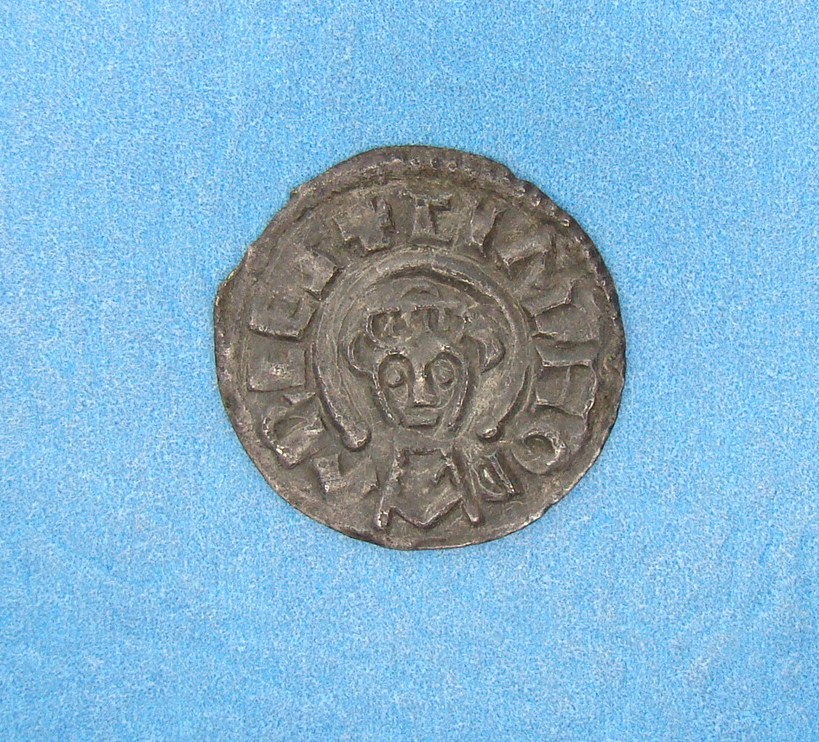
Ceolnoth, 833-70, 1D, EX STACK COLLECTION
$6,150.00