
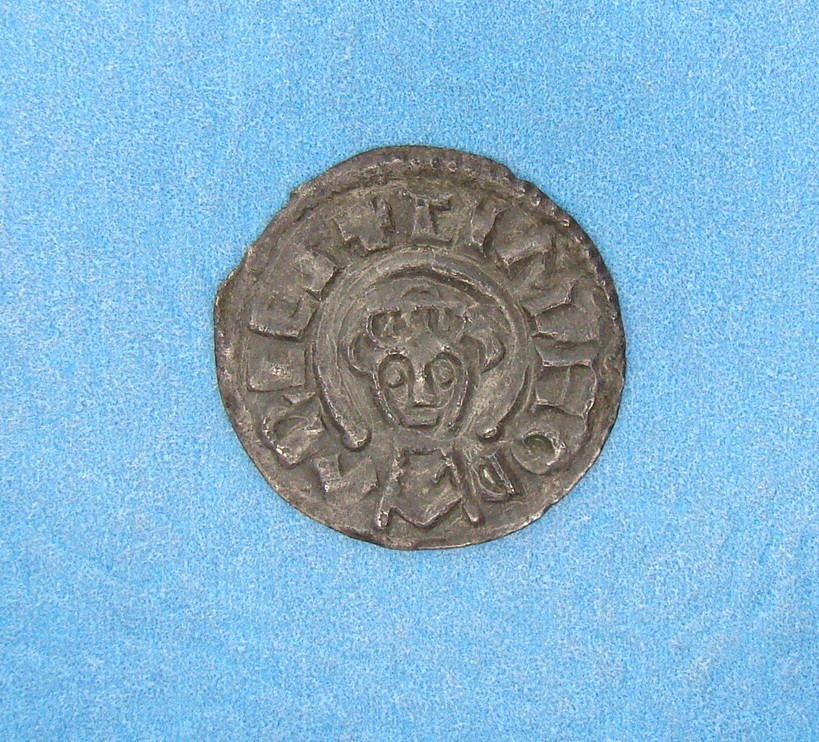
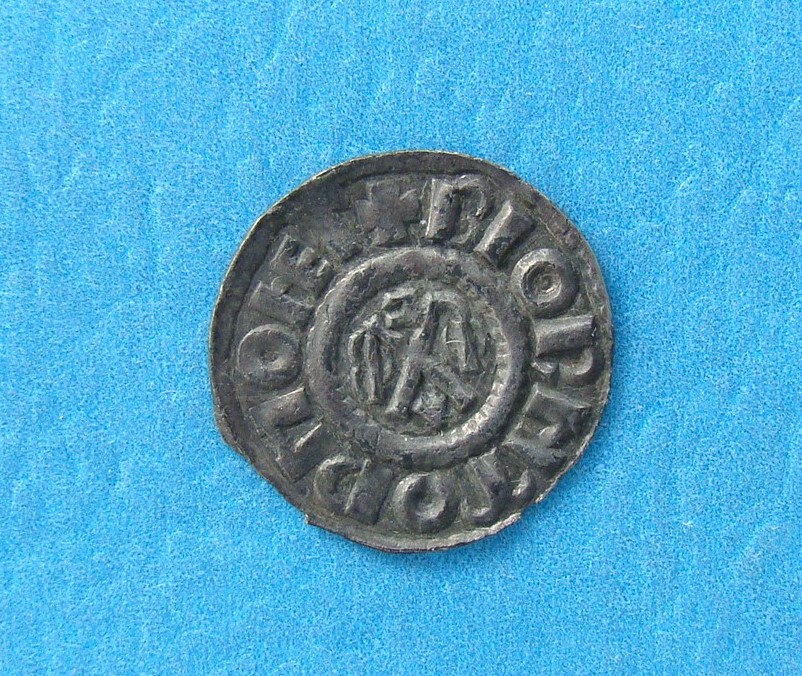
Ceolnoth, 833-70, 1D, EX STACK COLLECTION
$6,150.00
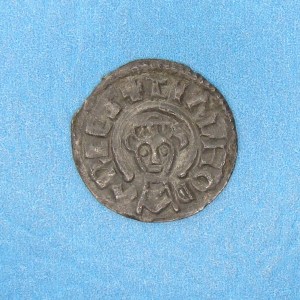
North 242, S893 Group 1 Portrait type facing reads “CIALNOD ARCEP” . Reverse reads “+BIORNMOD MONET”. Chi-Rho reverse, very rare.
Ceolnoth was consecrated Archbishop of Canterbury on July 27th 833. During this period southern England was split into seven Saxon kingdoms and subkingdoms, Kent, Essex, Surrey, Sussex,, Wessex, Mercia, and East Anglia all vying for dominance. For some years Mercia was the dominant power and its kings influenced the selection of bishops, but in 825 Ecgberth, King of Wessex, ended Mercian control over southern England. The Kingdom of Kent, wherein laid th See of Canterbury, had its pro Mercian King ejected and in his stead Aethelwulf, son of Ecgberth, was appointed king. In 835 the first large scale Viking raids struck southern England causing much consternation and damage on property belonging to the church and monasteries. In 838 in return for protection from the Vikings, Archbishop Ceolnoth ceded some ecclesiastical powers to King Ecgberth of Wessex and also agreed to support the succession of Egbert’s son, Aethelwulf to the Wessex throne. This agreement settled the long power struggle between King Ecgberth and Ceolnoth’s predecessor, Archishop Wulfred, who had vehemently opposed the Ecgberth’s power to appoint abbots and other positions within the church. Wulfred also jealously guarded his right to strike coinage. To indicate just how independent the see of Canterbury was, Archishop Wulfred starting striking pennies with his portrait emblazoned on the coins, leaving off any reference to the King of Wessex. Ceolnoth continued this practice by also striking pennies with his name and likeness. Meanwhile Viking incursions continued. King Ecgberth was unable to stop Viking predations and by 850 Viking raids were having a serious effect on monastic life. Easy targets for the Vikings, many churches and monasteries in southern England were either looted, destroyed or abandoned as the frequency of these raids increased. The loss of these centers of learning and culture has a serious effect on the quality of books and other writings being copied in monastic scriptoriums.
Often found cracked with pieces missing from the edge, this coin has survived intact and has an expressive portrait. Ex Stack collection sale conducted by Sotheby’s 4/22/1999 lot 261. Auction ticket included. EF
North 242, S893 Group 1 Portrait type facing reads “CIALNOD ARCEP” . Reverse reads “+BIORNMOD MONET”. Chi-Rho reverse, very rare.
Ceolnoth was consecrated Archbishop of Canterbury on July 27th 833. During this period southern England was split into seven Saxon kingdoms and subkingdoms, Kent, Essex, Surrey, Sussex,, Wessex, Mercia, and East Anglia all vying for dominance. For some years Mercia was the dominant power and its kings influenced the selection of bishops, but in 825 Ecgberth, King of Wessex, ended Mercian control over southern England. The Kingdom of Kent, wherein laid th See of Canterbury, had its pro Mercian King ejected and in his stead Aethelwulf, son of Ecgberth, was appointed king. In 835 the first large scale Viking raids struck southern England causing much consternation and damage on property belonging to the church and monasteries. In 838 in return for protection from the Vikings, Archbishop Ceolnoth ceded some ecclesiastical powers to King Ecgberth of Wessex and also agreed to support the succession of Egbert’s son, Aethelwulf to the Wessex throne. This agreement settled the long power struggle between King Ecgberth and Ceolnoth’s predecessor, Archishop Wulfred, who had vehemently opposed the Ecgberth’s power to appoint abbots and other positions within the church. Wulfred also jealously guarded his right to strike coinage. To indicate just how independent the see of Canterbury was, Archishop Wulfred starting striking pennies with his portrait emblazoned on the coins, leaving off any reference to the King of Wessex. Ceolnoth continued this practice by also striking pennies with his name and likeness. Meanwhile Viking incursions continued. King Ecgberth was unable to stop Viking predations and by 850 Viking raids were having a serious effect on monastic life. Easy targets for the Vikings, many churches and monasteries in southern England were either looted, destroyed or abandoned as the frequency of these raids increased. The loss of these centers of learning and culture has a serious effect on the quality of books and other writings being copied in monastic scriptoriums.
Often found cracked with pieces missing from the edge, this coin has survived intact and has an expressive portrait. Ex Stack collection sale conducted by Sotheby’s 4/22/1999 lot 261. Auction ticket included. EF
Related products
-
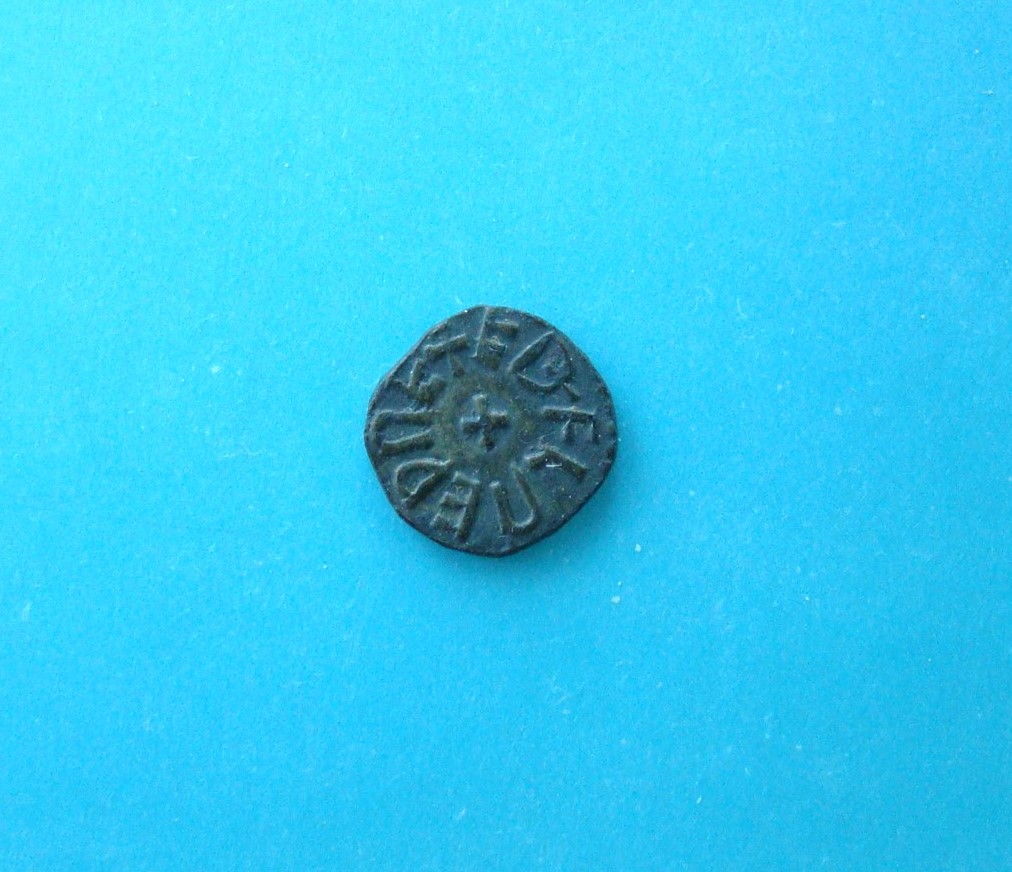
Aethelred II, 858-62, Styca
$157.00 -

Aethelweard, 845-55, 1D, near MINT STATE EXAMPLE
$7,450.00 -

Berhtwulf, 840-52, 1d, PEDIGREE COIN
$19,700.00 -
Charles I, 1641-43, Halfcrown
$349.00