
Edward I, 1282-89, 1d, EX MIDDRIDGE HOARD
$319.00
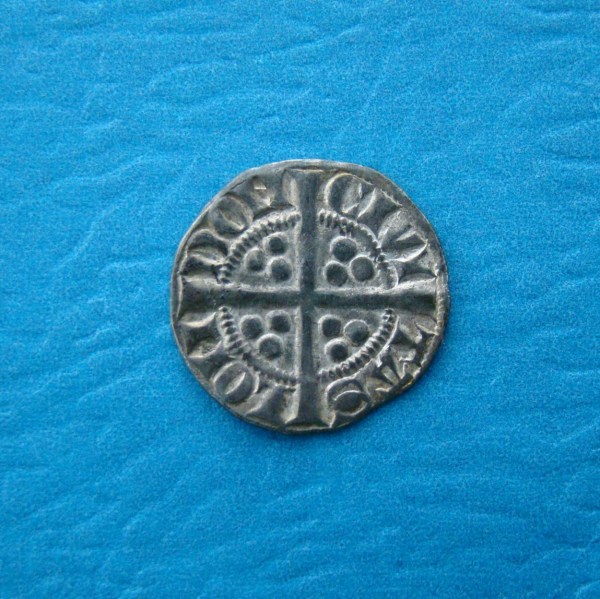
S1396 Type 4c London mint. A bit scarcer type. Much original frosty lustre remaining ex Middridge hoard.
In 1974 excavations for the foundation of the Bay Horse Pub in the town of Middridge, county Durham, uncovered a hoard of 3072 silver coins. The hoard was estimated to have been buried circa 1311, and consisted of mainly English, but also Irish, Scottish, (including 276 coins of Alexander I) and some continental coins.
Edward I (Longshanks) had died in 1307 leaving his weak and ineffectual son Edward II on the throne. Almost immediately, Scottish raiding parties led by Robert Bruce descended upon the North of England. The lack of an effectual royal response to these incursions signaled weakness and a general lack of royal support for the northern barons who attempted to hold back the onslaught. As property losses increased so did the political unrest that was forming under the Duke of Lancaster and other barons. In 1310 an English army left the stronghold of Durham (15 miles north of where the horde was found) to conduct a retaliatory strike upon the Scottish but failed to penetrate very far. In 1311 the Scots struck back burning and looting large areas of Northumberland. The following year the political chaos that had gripped England for years finally erupted into civil war. Piers Gaveston, a favorite of Edward II was executed by a group of rebellious barons, who forced Edward to give him up. A seething Edward II withdrew his court from hostile London to York in order to build an army to put down his rebellious nobles. Robert the Bruce took full advantage of the chaos and raided deep into the north of England including the area around Middridge. Middridge itself was a small Saxon village that was so completely destroyed by William I in 1067 that its inhabitants never returned. As a result, in 1311 Middridge was likely nothing more than a grange near one of the main roadways running north to south. The bulk of the horde buried there consisted of pennies from the Bristol and London mints with the majority of these being coined in the 1280s. Curiously, no coins minted in Durham were found although the mint was active during this period. The wide date range and the contents of so many Alexander pennies coupled with the lack of Durham mint coins suggest that whoever deposited the coins was likely operating in Scotland and likely received much of the English coinage in his possession by trading in a Scottish port. At least that could explain the predominance of Bristol and London minted coins over those from nearby Durham. The mint state quality of this 20+ year old coin also indicates that it was carefully plucked out of circulation and saved. Perhaps an English merchant who did business in one of the English enclaves in Scotland established by Edward I, saw the handwriting on the wall and fled to the south with what wealth he could carry only to run into Scottish raiders near Middridge.
The amount of lustre adhering to this coin would suggest that it never really circulated. Some letters are also sharp and crisp like a new coin. But other areas were not struck up that well. All in all a handsome coin, notable for being evenly struck with no weak areas, much better than coins that I have seen graded by NGC as MS62 . CHAU
S1396 Type 4c London mint. A bit scarcer type. Much original frosty lustre remaining ex Middridge hoard.
In 1974 excavations for the foundation of the Bay Horse Pub in the town of Middridge, county Durham, uncovered a hoard of 3072 silver coins. The hoard was estimated to have been buried circa 1311, and consisted of mainly English, but also Irish, Scottish, (including 276 coins of Alexander I) and some continental coins.
Edward I (Longshanks) had died in 1307 leaving his weak and ineffectual son Edward II on the throne. Almost immediately, Scottish raiding parties led by Robert Bruce descended upon the North of England. The lack of an effectual royal response to these incursions signaled weakness and a general lack of royal support for the northern barons who attempted to hold back the onslaught. As property losses increased so did the political unrest that was forming under the Duke of Lancaster and other barons. In 1310 an English army left the stronghold of Durham (15 miles north of where the horde was found) to conduct a retaliatory strike upon the Scottish but failed to penetrate very far. In 1311 the Scots struck back burning and looting large areas of Northumberland. The following year the political chaos that had gripped England for years finally erupted into civil war. Piers Gaveston, a favorite of Edward II was executed by a group of rebellious barons, who forced Edward to give him up. A seething Edward II withdrew his court from hostile London to York in order to build an army to put down his rebellious nobles. Robert the Bruce took full advantage of the chaos and raided deep into the north of England including the area around Middridge. Middridge itself was a small Saxon village that was so completely destroyed by William I in 1067 that its inhabitants never returned. As a result, in 1311 Middridge was likely nothing more than a grange near one of the main roadways running north to south. The bulk of the horde buried there consisted of pennies from the Bristol and London mints with the majority of these being coined in the 1280s. Curiously, no coins minted in Durham were found although the mint was active during this period. The wide date range and the contents of so many Alexander pennies coupled with the lack of Durham mint coins suggest that whoever deposited the coins was likely operating in Scotland and likely received much of the English coinage in his possession by trading in a Scottish port. At least that could explain the predominance of Bristol and London minted coins over those from nearby Durham. The mint state quality of this 20+ year old coin also indicates that it was carefully plucked out of circulation and saved. Perhaps an English merchant who did business in one of the English enclaves in Scotland established by Edward I, saw the handwriting on the wall and fled to the south with what wealth he could carry only to run into Scottish raiders near Middridge.
The amount of lustre adhering to this coin would suggest that it never really circulated. Some letters are also sharp and crisp like a new coin. But other areas were not struck up that well. All in all a handsome coin, notable for being evenly struck with no weak areas, much better than coins that I have seen graded by NGC as MS62 . CHAU