
Edmund, 855-870, 1D
$2,849.00
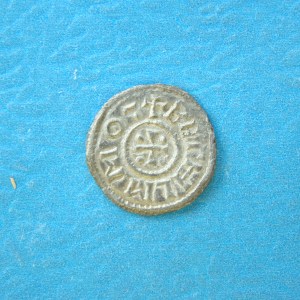
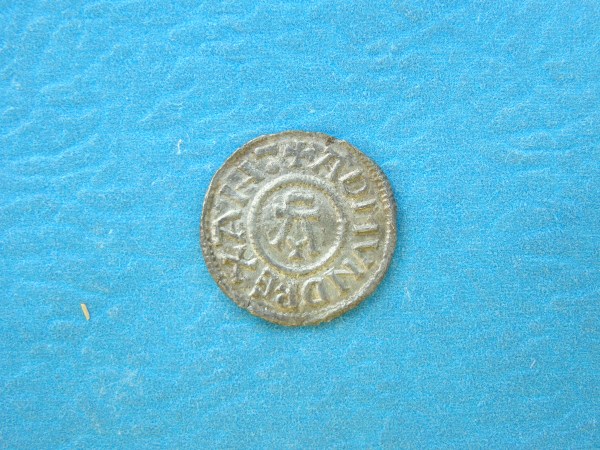
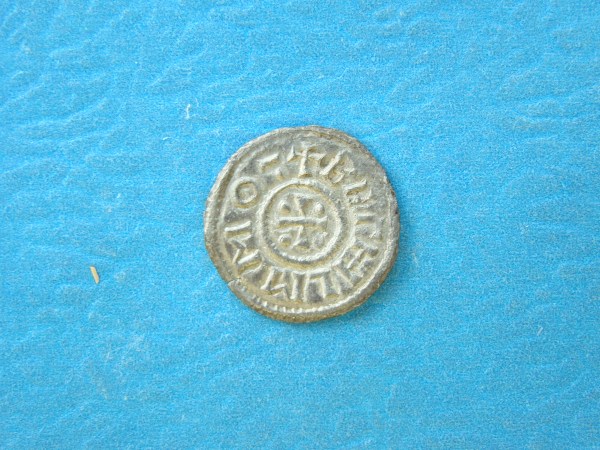
S954 /N456 wt 1.1 gr. OBV: A in center +ADMVND REX AN with a dash with a period below the dash after ending the obverse legend. Rev: Cross with pellets in the angles + BEGHELM MO (Baeghelm)
Little is known about Edmund and for that matter of his father Aethelweard who preceded him as King of East Anglia. According to chronicles which were written hundreds of years after his death, Edmund ascended the throne at the age of 15 around 855. It was a time of great turmoil in England as Viking raids became more frequent and severe. In 865 a large force of Viking warrior parties combined to form an army numbering some 4000-5000, that landed in East Anglia. This force was unopposed, so it is likely that they landed in East Anglia with pre approval from Edmund, who didn’t have the forces to oppose them. This “Great Heathen Army” then settled and wintered in East Anglia. Two of most famous Viking chieftains leading this army were Ivar the Boneless and Ubba, both said to be sons of the legendary Ragnar Lothbrok. They supposedly wanted revenge for the murder of their father by the King of Northumbria. The following spring, assisted with horses and supplies provided by Edmund, the Vikings vacated East Anglia and marched northward to loot York and Northumbria. Unfortunately, if Edmund thought that helping the enemy would rid him of the Viking threat, he was sorely mistaken. The Viking army returned in 869, but with a different objective in mind, to permanently occupy the rich farmlands of East Anglia. By this time the great heathen army had split into two groups, one of these groups, the Danish contingent, settled into winter quarters near Thetford in the Kingdom of east Anglia. This force likely numbered less than 1800 men and was now small enough for Edmund to confront. The two forces met east of Thetford on November 20th 869. The East Anglian army was completely defeated. King Edmund was either slain on the battlefield or more likely executed on the orders of the two Viking leaders, Ingware and Ubba. It was unusual to execute such a valuable prisoner, but since the Danes decided to occupy East Anglia, keeping King Edmund alive would serve no purpose. For the next 70 years East Anglia was ruled by the Danish Vikings ,who brought their families over and settled into more pastoral endeavors. Edmund was the last Saxon ruler of East Anglia as an independent kingdom. When East Anglia was eventually restored to Saxon rule by Aethelstan, King of Wessex and grandson of Alfred the Great, it was subsumed into the new creation of England. King Aethelstan established an abbey at a town today known as Bury St. Edmund and a cult to the martyred king, Saint Edmund, grew to be the largest in England, only surpassed in the 13th century by the cult of the martyred St. Thomas a Becket. Bury St. Edmund became a famously wealthy religious institution and was one of the first dissolved monasteries by King Henry VIII in 1539. Heavily looted for its dressed stones little remains of the monastery today, but the ruins are still quite impressive.
Toned an even grey tone with a hint of lustre underneath. Very scarce. AU
S954 /N456 wt 1.1 gr. OBV: A in center +ADMVND REX AN with a dash with a period below the dash after ending the obverse legend. Rev: Cross with pellets in the angles + BEGHELM MO (Baeghelm)
Little is known about Edmund and for that matter of his father Aethelweard who preceded him as King of East Anglia. According to chronicles which were written hundreds of years after his death, Edmund ascended the throne at the age of 15 around 855. It was a time of great turmoil in England as Viking raids became more frequent and severe. In 865 a large force of Viking warrior parties combined to form an army numbering some 4000-5000, that landed in East Anglia. This force was unopposed, so it is likely that they landed in East Anglia with pre approval from Edmund, who didn’t have the forces to oppose them. This “Great Heathen Army” then settled and wintered in East Anglia. Two of most famous Viking chieftains leading this army were Ivar the Boneless and Ubba, both said to be sons of the legendary Ragnar Lothbrok. They supposedly wanted revenge for the murder of their father by the King of Northumbria. The following spring, assisted with horses and supplies provided by Edmund, the Vikings vacated East Anglia and marched northward to loot York and Northumbria. Unfortunately, if Edmund thought that helping the enemy would rid him of the Viking threat, he was sorely mistaken. The Viking army returned in 869, but with a different objective in mind, to permanently occupy the rich farmlands of East Anglia. By this time the great heathen army had split into two groups, one of these groups, the Danish contingent, settled into winter quarters near Thetford in the Kingdom of east Anglia. This force likely numbered less than 1800 men and was now small enough for Edmund to confront. The two forces met east of Thetford on November 20th 869. The East Anglian army was completely defeated. King Edmund was either slain on the battlefield or more likely executed on the orders of the two Viking leaders, Ingware and Ubba. It was unusual to execute such a valuable prisoner, but since the Danes decided to occupy East Anglia, keeping King Edmund alive would serve no purpose. For the next 70 years East Anglia was ruled by the Danish Vikings ,who brought their families over and settled into more pastoral endeavors. Edmund was the last Saxon ruler of East Anglia as an independent kingdom. When East Anglia was eventually restored to Saxon rule by Aethelstan, King of Wessex and grandson of Alfred the Great, it was subsumed into the new creation of England. King Aethelstan established an abbey at a town today known as Bury St. Edmund and a cult to the martyred king, Saint Edmund, grew to be the largest in England, only surpassed in the 13th century by the cult of the martyred St. Thomas a Becket. Bury St. Edmund became a famously wealthy religious institution and was one of the first dissolved monasteries by King Henry VIII in 1539. Heavily looted for its dressed stones little remains of the monastery today, but the ruins are still quite impressive.
Toned an even grey tone with a hint of lustre underneath. Very scarce. AU
Related products
-

Aethelred II Unraed, 999-1002, 1d
$895.00 -
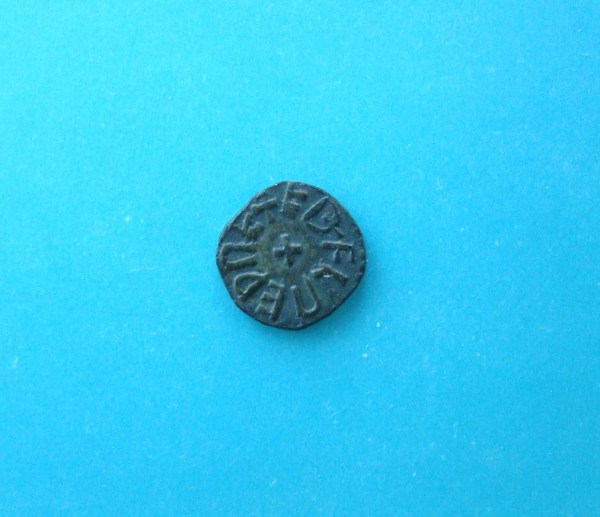
Aethelred II, 858-62, Styca
$197.00 -
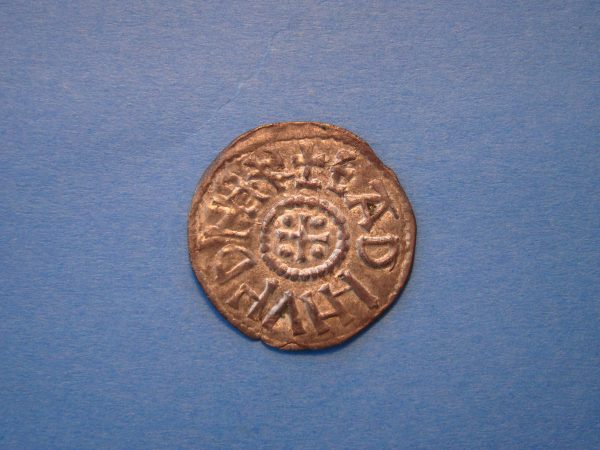
Aethelweard, 845-55, 1D, near MINT STATE EXAMPLE
$7,450.00 -
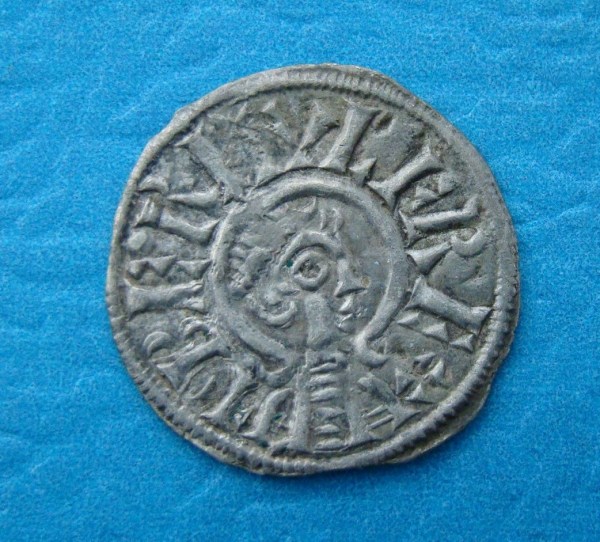
Berhtwulf, 840-52, 1d, PEDIGREE COIN
$19,700.00