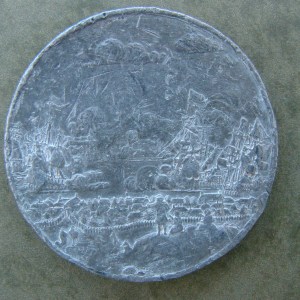


Charles II, 1665, PB55, EXTREMELY RARE TRIAL STRIKE
$110.00
MI508/149 83.38gr. Trial strike in lead of the naval action at Bergen. In July 1665 the semiannual Dutch East Indies fleet was returning to Holland laden with valuable trade goods of the Spice Islands and Africa. The cargo was the richest that the Dutch East India Company had ever gathered and was valued at more than the entire annual revenue of the Dutch Republic. However, the 2nd Anglo Dutch War had started a few months earlier and the Dutch fleet had suffered a crippling defeat at the Battle of Lowestoft. To avoid the English Royal Navy which now blockaded Dutch ports, the treasure fleet stayed out in the Atlantic and circled around the north of Scotland. Battered from such a long voyage and scattered by an Atlantic storm, the treasure fleet trickled into the neutral port of Bergen Norway over a month-long period. While there, they took shelter in the harbor of Bergen to repair and reprovision and to await reinforcements from a reconstituted Dutch fleet. At that time Norway was part of the Kingdom of Denmark and ruled by Frederick who was nominally neutral, but who was also in desperate need of cash. Charles II, King of England, was also cash strapped and soon the two like-minded monarchs hatched a plan to seize the Dutch treasure fleet and split the profits. A British fleet under the command of the Earl of Sandwich was instructed to attack the Dutch at Bergen, but Sandwich was intent on intercepting another Dutch fleet returning from the Americas after raiding British colonies. Sandwich decided to divide his fleet and sent 22 warships under the command of Admiral Tedderman to Bergen while the rest of the fleet remained to intercept the Dutch fleet returning from the New World. Sensing they would be betrayed by the cash strapped King of Norway, all through July the Dutch East India fleet in Bergen was busy making preparations for the attack they knew was coming. About ten of the most heavily armed merchantmen were chained together and strung out across a narrow neck of the harbor. These ships were stripped of the half of their guns that faced inward and these cannons were now placed behind earthen ramparts forming an onshore battery. Meanwhile much reduced English fleet (eight ships sailed too far west and were driven north of Bergen by strong winds) arrived on the 1st of August 1665 and promptly took up blocking positions opposite the Dutch. Even with this reduced number the English had an advantage in guns and manpower over the Dutch. Aware of the secret treaty between King Charles and King Frederick and believing he faced no threats from the Danish, the British Admiral Tedderman entered into negotiations with the Danish and Dutch for the surrender of the Dutch fleet. However, the Dutch refused and the Danish commander of the two forts which commanded the harbor, being unaware of the secret treaty, refused to help the English. Frustrated and angry, one of King Charles’s representatives foolishly threatened to fire on the Danish forts. Those angry threats would soon prove to be a costly mistake. On the 2nd of August the battle began. The English fleet anchored only a few hundred yards opposite the Dutch fleet began firing. The exchange of broadsides went on for three hours in a blinding rainstorm and with a wind that blew back cannon smoke into the eyes of British gunners. At some point during this exchange a stray shot exploded inside one of the Danish forts killing five. This prompted the guns of the Danish forts guarding the harbor to bombard the English ships who were in no position to return fire on the forts. Outgunned and caught in a deadly crossfire, the British cut their anchors and retreated from the harbor ending the battle. At the end of August, a strong Dutch fleet arrived to escort the treasure ships home. However, the following day a storm packing hurricane force winds scattered the Dutch fleet sending some to the bottom and others into the hands of the English. In the end most of the merchantmen straggled into the safety of Dutch harbors and King Charles II lost an opportunity to enrich himself and end the war quickly. This trial strike was made in soft lead and has multiple abrasions and shows either a weak impression or wear. The reverse inscription reads” Thus we arrest the pride of the English who extend their piracy even against their friends, and who, insulting the forts of Norway, violate the rights of the harbors of King Frederick, but as reward for this audacity, see their vessels destroyed by the cannon of the Dutch.” Extremely rare Fair.
MI508/149 83.38gr. Trial strike in lead of the naval action at Bergen. In July 1665 the semiannual Dutch East Indies fleet was returning to Holland laden with valuable trade goods of the Spice Islands and Africa. The cargo was the richest that the Dutch East India Company had ever gathered and was valued at more than the entire annual revenue of the Dutch Republic. However, the 2nd Anglo Dutch War had started a few months earlier and the Dutch fleet had suffered a crippling defeat at the Battle of Lowestoft. To avoid the English Royal Navy which now blockaded Dutch ports, the treasure fleet stayed out in the Atlantic and circled around the north of Scotland. Battered from such a long voyage and scattered by an Atlantic storm, the treasure fleet trickled into the neutral port of Bergen Norway over a month-long period. While there, they took shelter in the harbor of Bergen to repair and reprovision and to await reinforcements from a reconstituted Dutch fleet. At that time Norway was part of the Kingdom of Denmark and ruled by Frederick who was nominally neutral, but who was also in desperate need of cash. Charles II, King of England, was also cash strapped and soon the two like-minded monarchs hatched a plan to seize the Dutch treasure fleet and split the profits. A British fleet under the command of the Earl of Sandwich was instructed to attack the Dutch at Bergen, but Sandwich was intent on intercepting another Dutch fleet returning from the Americas after raiding British colonies. Sandwich decided to divide his fleet and sent 22 warships under the command of Admiral Tedderman to Bergen while the rest of the fleet remained to intercept the Dutch fleet returning from the New World. Sensing they would be betrayed by the cash strapped King of Norway, all through July the Dutch East India fleet in Bergen was busy making preparations for the attack they knew was coming. About ten of the most heavily armed merchantmen were chained together and strung out across a narrow neck of the harbor. These ships were stripped of the half of their guns that faced inward and these cannons were now placed behind earthen ramparts forming an onshore battery. Meanwhile much reduced English fleet (eight ships sailed too far west and were driven north of Bergen by strong winds) arrived on the 1st of August 1665 and promptly took up blocking positions opposite the Dutch. Even with this reduced number the English had an advantage in guns and manpower over the Dutch. Aware of the secret treaty between King Charles and King Frederick and believing he faced no threats from the Danish, the British Admiral Tedderman entered into negotiations with the Danish and Dutch for the surrender of the Dutch fleet. However, the Dutch refused and the Danish commander of the two forts which commanded the harbor, being unaware of the secret treaty, refused to help the English. Frustrated and angry, one of King Charles’s representatives foolishly threatened to fire on the Danish forts. Those angry threats would soon prove to be a costly mistake. On the 2nd of August the battle began. The English fleet anchored only a few hundred yards opposite the Dutch fleet began firing. The exchange of broadsides went on for three hours in a blinding rainstorm and with a wind that blew back cannon smoke into the eyes of British gunners. At some point during this exchange a stray shot exploded inside one of the Danish forts killing five. This prompted the guns of the Danish forts guarding the harbor to bombard the English ships who were in no position to return fire on the forts. Outgunned and caught in a deadly crossfire, the British cut their anchors and retreated from the harbor ending the battle. At the end of August, a strong Dutch fleet arrived to escort the treasure ships home. However, the following day a storm packing hurricane force winds scattered the Dutch fleet sending some to the bottom and others into the hands of the English. In the end most of the merchantmen straggled into the safety of Dutch harbors and King Charles II lost an opportunity to enrich himself and end the war quickly. This trial strike was made in soft lead and has multiple abrasions and shows either a weak impression or wear. The reverse inscription reads” Thus we arrest the pride of the English who extend their piracy even against their friends, and who, insulting the forts of Norway, violate the rights of the harbors of King Frederick, but as reward for this audacity, see their vessels destroyed by the cannon of the Dutch.” Extremely rare Fair.
Related products
-
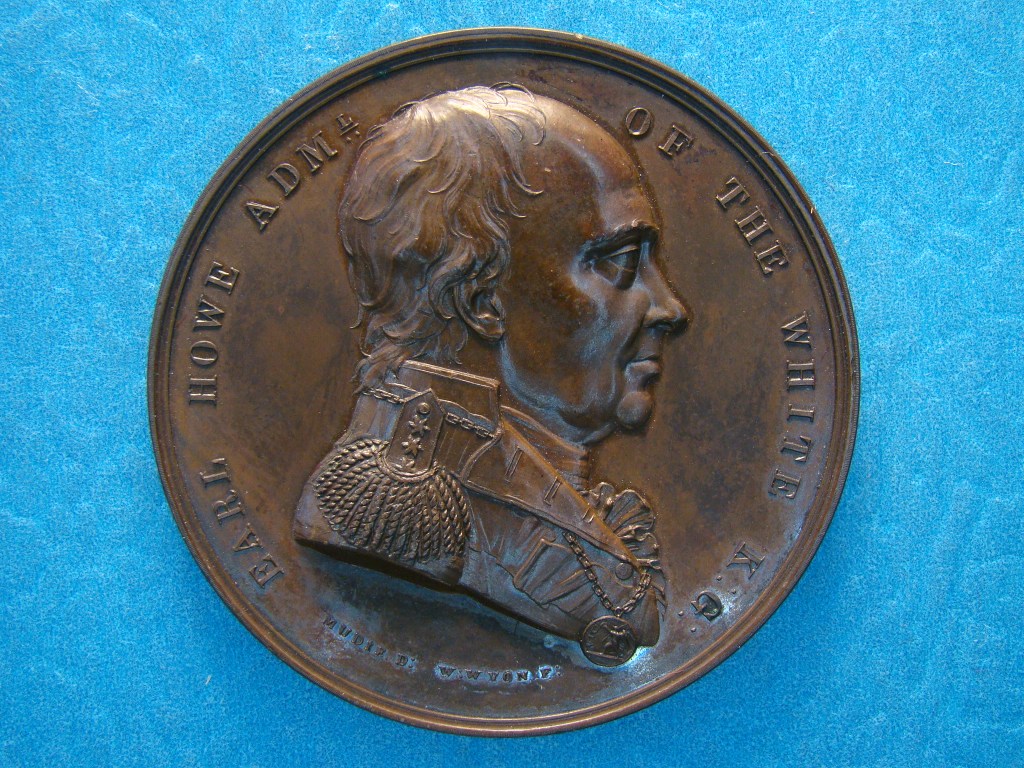
Admiral Howe, 1794, AE42
$259.00 -
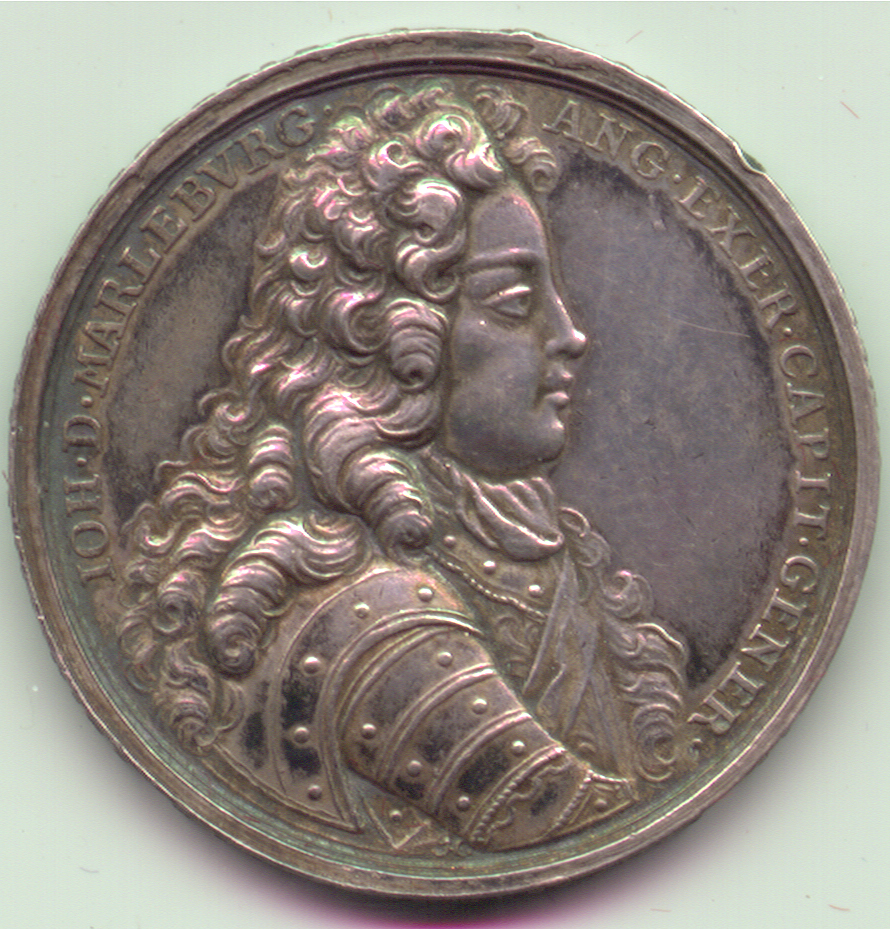
Anne, 1704, AR37, Battle of Blenheim
$960.00 -

Anne, 1707, AR47, Mint State Union Medal
$4,950.00 -
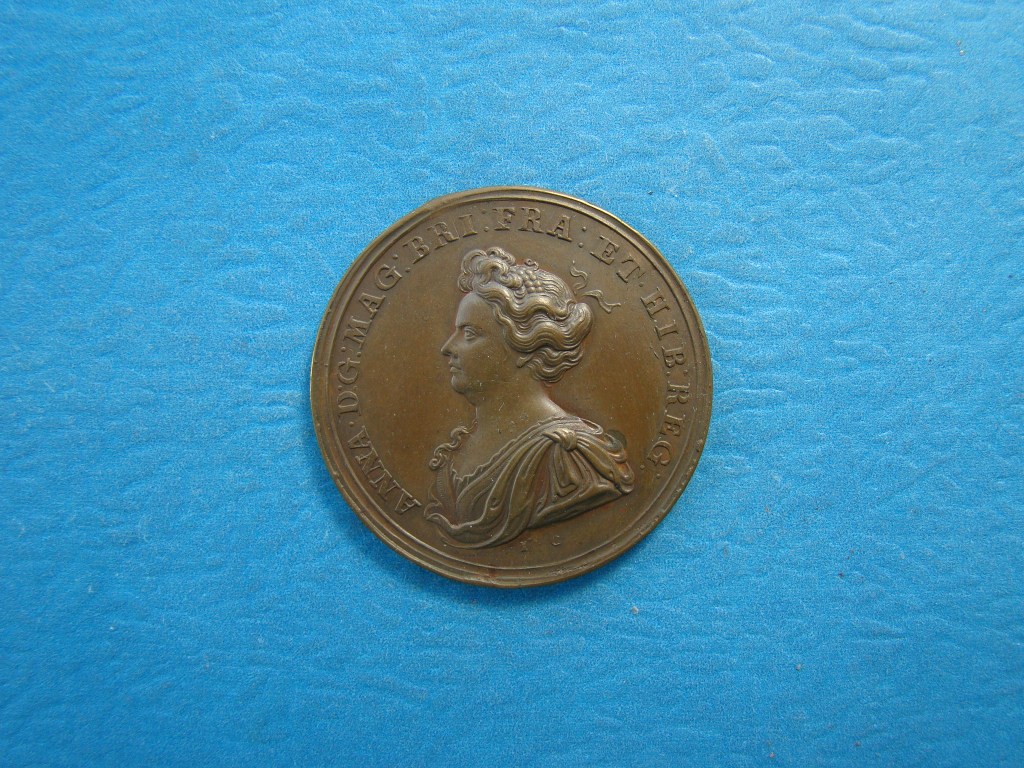
Anne, 1709, Tournai Captured SOLD
$425.00