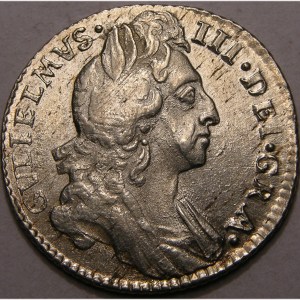
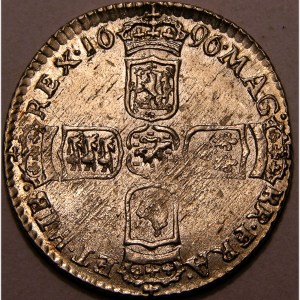


William III, 1696, Sixpence, EXTREMELY RARE (R4) SCOTTISH ARMS AT DATE, FINEST KNOWN
$3,040.00
S3520/E1534B BULL1214 This coin was purchased in 1977, at the time this variety was listed in the catalogues as extremely rare with no price given, English Silver Coinage estimating that 3-4 were known. Today a few more examples have come to light bringing the number known to seven. (Bull lists this as an R4 11-20 examples known) All of the examples I have examined come from the same pair of obverse and reverse dies. The obverse die is well worn with William’s hair flatly struck showing little detail except at the top of the head. A die crack runs from the 2nd V in GVLIELMVS to a tip of a laurel leaf in the kings hair. The second V in the king’s name appears to be barred and is likely an upside down A. The reverse die shows a characteristic weakness on part of the French and Irish shields corresponding to the area of weakness on the obverse. That being said this coin is a brilliant uncirculated example and right now, is the finest known with no other example coming close. The coin exhibits nice lustre with some areas of the coin appearing frosted.
Since the predominant heraldic shield is the one (always that of England) located at the date, there has been some discussion as to whether this error was an accident or deliberately done by a Scottish nationalist. Although we may never know the motive we do know that this is the first instance of this sort of error in the history of British coinage. The other suspicious item about this issue is that they are all have weak obverse strikes as they have been struck from a single heavily used obverse die. It’s not hard to believe that the obverse die may have been discarded and then pressed back into service for a little surreptitious midnight minting with a locally altered “Scottish” reverse. A must have coin for the sixpence specialist. NGC MS63
NGC 2867451-003
S3520/E1534B BULL1214 This coin was purchased in 1977, at the time this variety was listed in the catalogues as extremely rare with no price given, English Silver Coinage estimating that 3-4 were known. Today a few more examples have come to light bringing the number known to seven. (Bull lists this as an R4 11-20 examples known) All of the examples I have examined come from the same pair of obverse and reverse dies. The obverse die is well worn with William’s hair flatly struck showing little detail except at the top of the head. A die crack runs from the 2nd V in GVLIELMVS to a tip of a laurel leaf in the kings hair. The second V in the king’s name appears to be barred and is likely an upside down A. The reverse die shows a characteristic weakness on part of the French and Irish shields corresponding to the area of weakness on the obverse. That being said this coin is a brilliant uncirculated example and right now, is the finest known with no other example coming close. The coin exhibits nice lustre with some areas of the coin appearing frosted.
Since the predominant heraldic shield is the one (always that of England) located at the date, there has been some discussion as to whether this error was an accident or deliberately done by a Scottish nationalist. Although we may never know the motive we do know that this is the first instance of this sort of error in the history of British coinage. The other suspicious item about this issue is that they are all have weak obverse strikes as they have been struck from a single heavily used obverse die. It’s not hard to believe that the obverse die may have been discarded and then pressed back into service for a little surreptitious midnight minting with a locally altered “Scottish” reverse. A must have coin for the sixpence specialist. NGC MS63
NGC 2867451-003
Related products
-

Anne, 1707E, Halfcrown
$229.00 -

Anne, 1709, Shilling
$226.00 -
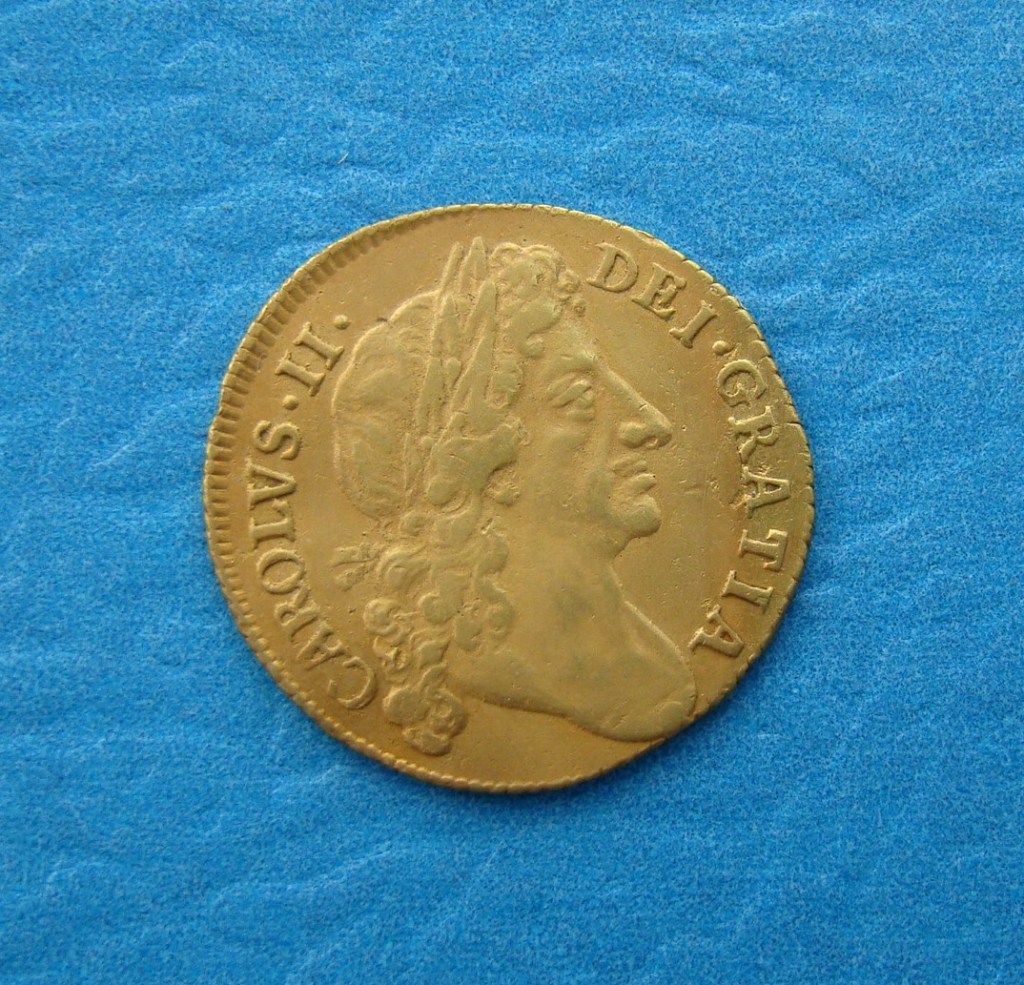
Charles II 1679 1/2 Guinea
$1,240.00 -
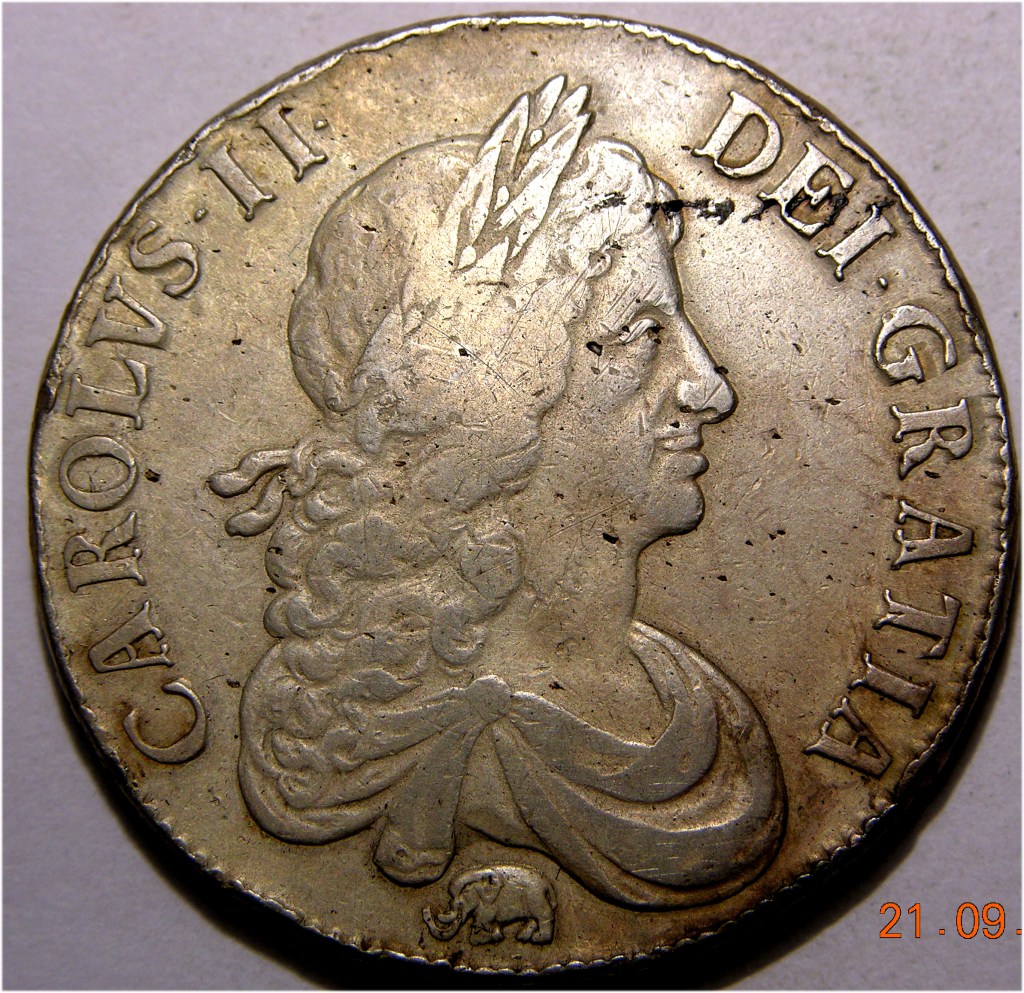
Charles II, 1666, Crown SOLD
$1,650.00