Edward the Elder, 919-24, 1d EX VATICAN HOARD An Important Numismatic Piece
$25,600.00
A Pedigree Coin
Ex Vatican horde deposited circa 927, discovered 1928, this coin sold Glendinings auction May 1929, lot 40; Ex Ryan Lot 742; ex Stack Collection, sold Sothebys Auction Apr 1999, Lot 450.
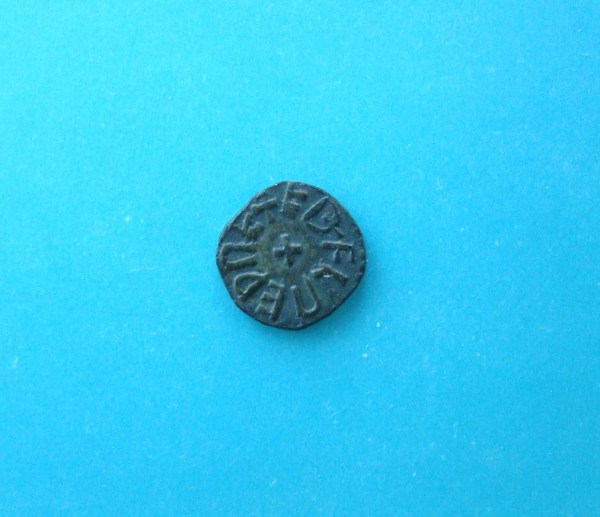
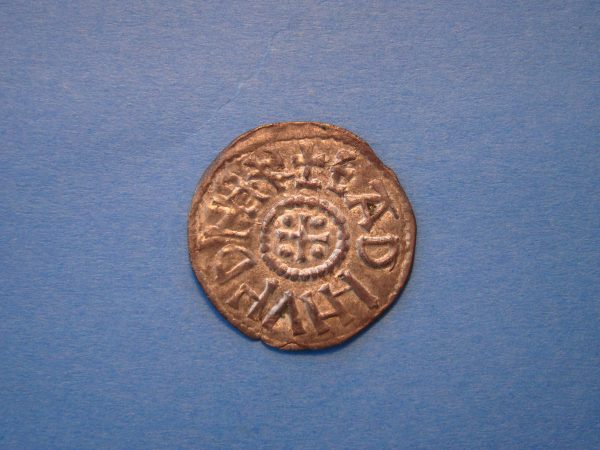
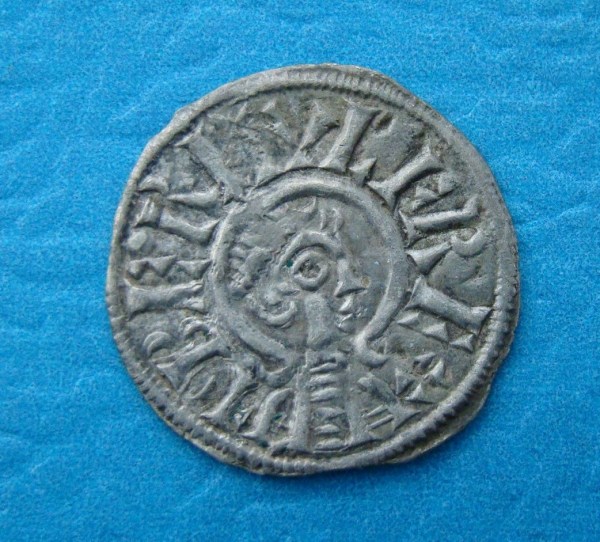
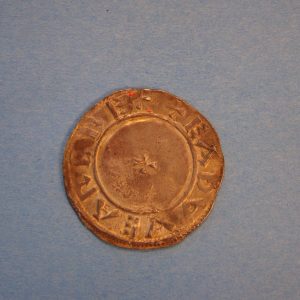
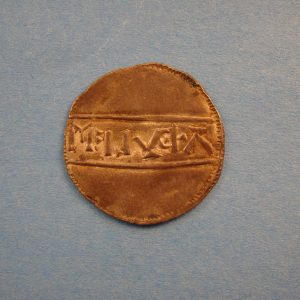
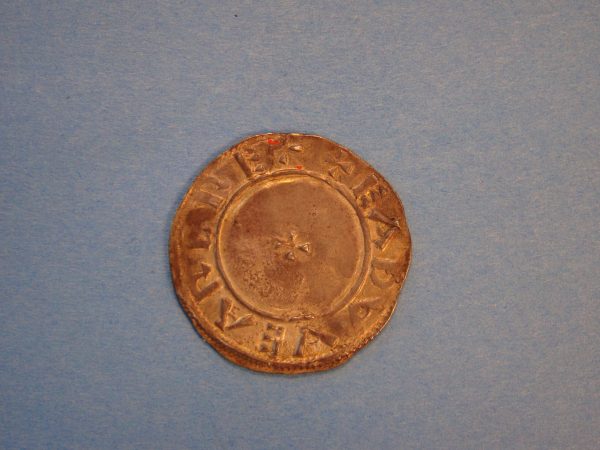
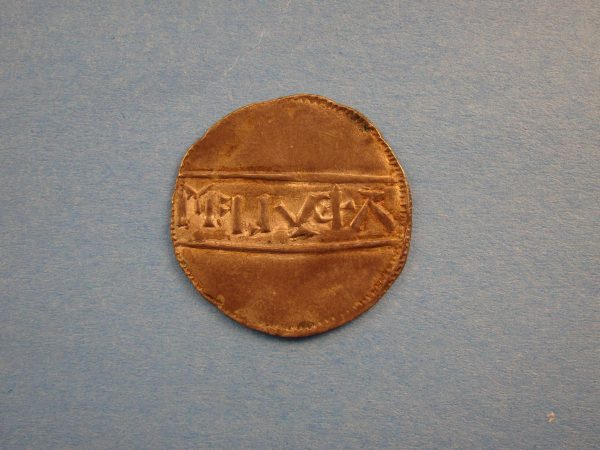
S1076 N656 BMC iv, BNJ 1963 Article “The Vatican Hoard of Anglo Saxon Pennies” by M. A. O’Donovan, see page 26 item # 470, photo Plate VII. Moneyer Athulf. See also “Coinage in Tenth-Century England” by Blunt, Stewart and Lyon, plate 5, #7. Obv: “+EADVVEARD REX” around small cross pattee within an inner circle. Rev: “ADVLF M” retrograde in a panel formed by two parallel lines. NGC graded AU55 with superb toning featuring gold and indigo highlights.
Edward the Elder was the son of Alfred the Great and at least the equal of his father in military prowess and political ability. While Alfred turned the tide of battle against the Viking invaders at Eddington in 878, after 893 it was Edward who successfully battled every Viking army thrown at the Saxons and eventually brought most of England under the control of Kingdom of Wessex. Edward continued his father’s system of creating fortified burghs and in some of these set up mints. We know that coins were struck in at least 16 towns across Saxon held territory including a number of these new burghs, but Edward did not reference the mint on any of his coins, except on one issue from Bath. During the early part of Edward’s reign, his capable sister Aethelflaed, as Queen of Mercia controlled the northwest and kept the Viking invaders at bay, but in 918 she died. Edward assumed jurisdiction over Mercia seizing and imprisoning the Mercian heirs Ælfwynn, Æthelred, along with Æthelflæd’s daughter. This West Saxon takeover of the remains of Mercia, was much resented by the Mercian nobility and eventually boiled over into a rebellion in 924. This unrest, as well as Viking incursions from the north caused Edward to establish new burghs in Mercian territory from 918-921 at Nottingham, Thelwall, Manchester and Bakewell. Its fine condition also indicates that it was likely struck in the last few years of Edward’s reign placing it around 918-24. This coin was part of a horde of 517 Anglo Saxon pennies discovered in 1928 when workmen were digging the foundations for the Vatican wireless station, which was being built over the ruins of a 10th century hostel used for papal guests. The horde contained mostly coins of Edward the Elder and early issues of his son Aethelstan and was likely sent as tribute to Pope John X in late 927. The practice of sending alms to the papacy was established by Alfred the Great and although we have no evidence that Edward or Aethelstan continued this practice it was codified as a tax (Peter’s Pence) in 942. In any event, in 927, the Anglo-Saxon chronicle recorded that the newly installed Archbishop of Canterbury, Wulfhelm, went to Rome to receive his pallium from the Pope John X. He or someone in his party likely carried the hoard with them as tribute to the see of Rome, either from King Aethelstan or as an offering from the see of Canterbury or both. The fact that this horde was never presented to the Pope, where it would have been quickly melted down and recoined, but was instead buried below the guest hostel has to do with papal politics.
When Bishop Wulfhelm’s party arrived in Rome in (the summer? of ) 927, the city was in turmoil. The seeds of unrest were sown in March 914 when John, Archbishop of Ravenna, was summoned to Rome and with the backing of Roman nobility was appointed as Pope John X. His first goal was to drive the Saracens out of central Italy and to do this he needed a highly fractured Italy to be united. John himself led a Christian coalition that successfully wiped out the Muslim invaders in the summer of 915. In December 915 he crowned Berengar as Holy Roman Emperor, as a reward for his support and in the hope that the new emperor would unite Italy. Unfortunately, Berengar was not popular among the nobility. He was considered indecisive and not very effective on the battlefield. It wasn’t long before Christian unity degenerated into petty squabbles among the nobility, made worse by pagan Magyars rampaging at will throughout Italy. In April 924, Pope John’s protege, Berengar, was murdered and what little papal control that still existed slowly collapsed. Adding to the agony, in the summer of 927, the pope’s brother, the Margrave Peter, entered Rome with a mercenary force of Magyars in an attempt to regain lands lost in battle to other Roman nobles. The Magyars soon were out of control causing mayhem in Rome and its surroundings, but their presence did intimidate the nobles opposed to the pope. The Magyars finally were bought off and moved south where they happily sacked smaller Italian cities. However, this event rekindled a long-standing power struggle between the Pope, his brother Peter and Guy of Tuscany. In early 928, egged on by his wife Marozia, a noblewoman from a powerful Roman family, Guy invaded the Lateran palace, killing margrave Peter, seizing Pope John X and throwing him into prison. (Interestingly, after Guy’s death in 929, Marozia retained power in Rome and was able to ensure that the next two popes were under her control. When they both died, she had her 21 year old son installed as Pope John XI.) Since it was bad form to have the blood of a pope on your hands, Guy of Tuscany reverted to the standard method of killing any important personage, letting God do it. Pope John X was thrown into a fetid prison in the hope that the old man wouldn’t survive the harsh conditions, thus allowing Guy to declare that he died of natural causes. In the case of John X, it appears that prison conditions weren’t going to do the job fast enough, so he was probably murdered in May of 928. The new pope, Leo VI didn’t last long either, he was dead by January 929 after a rule of only eight months.
The instability of the Papacy during this period makes it likely that the horde was buried in the summer or autumn of 927, possibly by members of Wulhelm’s English delegation staying at the hostel. Besides being an extremely rare issue of Edward the Elder, this coin is remarkable piece of history. Although much speculation is involved, it is fascinating to consider that this coin’s ownership can possibly be traced so far back in history. Additionally, this particular issue is much rarer than the catalog prices would suggest, as this type is practically never seen in the market and rarely appears in the Sylloge. When Blount et al wrote their reference in 1989, this coin was one of three known and the sole example with a retrograde reverse. Based on stylistic evidence this coin is considered a “north western or western” mint issue and was likely struck at Chester or possibly Shrewsbury. We know the moneyer Athulf from only two other styles of coins (BMC vii and ix) and that he was only active in the latter part of Edward’s reign and did not continue coining for the next king, Edward’s son, Aethelstan. It is also the only coin of its type with the moneyers name within two lines in the Rome Hoard which consisted mostly of portrait types of Edward’s son, Aethelstan. There was one other other coin of similar type from the same hoard (item 473), but with the moneyer’s name (Wynberht) not enclosed between two lines. That coin was recently sold on 20 May 2025 in a Numismatica Ars Classica auction of the fabulous collection of early Saxon coins formed by Irving Schneider. That companion coin (lot 3091) brought 18000 CHF or (including the 22.5% buyers fee ), $27120. Curiously, one other type of penny minted under Edward the Elder by Athulf was also in the Schneider collection (S1081) and sold for CHF 26000 or $39000. NGC AU55
NGC 2925525-006
A Pedigree Coin
Ex Vatican horde deposited circa 927, discovered 1928, this coin sold Glendinings auction May 1929, lot 40; Ex Ryan Lot 742; ex Stack Collection, sold Sothebys Auction Apr 1999, Lot 450.
S1076 N656 BMC iv, BNJ 1963 Article “The Vatican Hoard of Anglo Saxon Pennies” by M. A. O’Donovan, see page 26 item # 470, photo Plate VII. Moneyer Athulf. See also “Coinage in Tenth-Century England” by Blunt, Stewart and Lyon, plate 5, #7. Obv: “+EADVVEARD REX” around small cross pattee within an inner circle. Rev: “ADVLF M” retrograde in a panel formed by two parallel lines. NGC graded AU55 with superb toning featuring gold and indigo highlights.
Edward the Elder was the son of Alfred the Great and at least the equal of his father in military prowess and political ability. While Alfred turned the tide of battle against the Viking invaders at Eddington in 878, after 893 it was Edward who successfully battled every Viking army thrown at the Saxons and eventually brought most of England under the control of Kingdom of Wessex. Edward continued his father’s system of creating fortified burghs and in some of these set up mints. We know that coins were struck in at least 16 towns across Saxon held territory including a number of these new burghs, but Edward did not reference the mint on any of his coins, except on one issue from Bath. During the early part of Edward’s reign, his capable sister Aethelflaed, as Queen of Mercia controlled the northwest and kept the Viking invaders at bay, but in 918 she died. Edward assumed jurisdiction over Mercia seizing and imprisoning the Mercian heirs Ælfwynn, Æthelred, along with Æthelflæd’s daughter. This West Saxon takeover of the remains of Mercia, was much resented by the Mercian nobility and eventually boiled over into a rebellion in 924. This unrest, as well as Viking incursions from the north caused Edward to establish new burghs in Mercian territory from 918-921 at Nottingham, Thelwall, Manchester and Bakewell. Its fine condition also indicates that it was likely struck in the last few years of Edward’s reign placing it around 918-24. This coin was part of a horde of 517 Anglo Saxon pennies discovered in 1928 when workmen were digging the foundations for the Vatican wireless station, which was being built over the ruins of a 10th century hostel used for papal guests. The horde contained mostly coins of Edward the Elder and early issues of his son Aethelstan and was likely sent as tribute to Pope John X in late 927. The practice of sending alms to the papacy was established by Alfred the Great and although we have no evidence that Edward or Aethelstan continued this practice it was codified as a tax (Peter’s Pence) in 942. In any event, in 927, the Anglo-Saxon chronicle recorded that the newly installed Archbishop of Canterbury, Wulfhelm, went to Rome to receive his pallium from the Pope John X. He or someone in his party likely carried the hoard with them as tribute to the see of Rome, either from King Aethelstan or as an offering from the see of Canterbury or both. The fact that this horde was never presented to the Pope, where it would have been quickly melted down and recoined, but was instead buried below the guest hostel has to do with papal politics.
When Bishop Wulfhelm’s party arrived in Rome in (the summer? of ) 927, the city was in turmoil. The seeds of unrest were sown in March 914 when John, Archbishop of Ravenna, was summoned to Rome and with the backing of Roman nobility was appointed as Pope John X. His first goal was to drive the Saracens out of central Italy and to do this he needed a highly fractured Italy to be united. John himself led a Christian coalition that successfully wiped out the Muslim invaders in the summer of 915. In December 915 he crowned Berengar as Holy Roman Emperor, as a reward for his support and in the hope that the new emperor would unite Italy. Unfortunately, Berengar was not popular among the nobility. He was considered indecisive and not very effective on the battlefield. It wasn’t long before Christian unity degenerated into petty squabbles among the nobility, made worse by pagan Magyars rampaging at will throughout Italy. In April 924, Pope John’s protege, Berengar, was murdered and what little papal control that still existed slowly collapsed. Adding to the agony, in the summer of 927, the pope’s brother, the Margrave Peter, entered Rome with a mercenary force of Magyars in an attempt to regain lands lost in battle to other Roman nobles. The Magyars soon were out of control causing mayhem in Rome and its surroundings, but their presence did intimidate the nobles opposed to the pope. The Magyars finally were bought off and moved south where they happily sacked smaller Italian cities. However, this event rekindled a long-standing power struggle between the Pope, his brother Peter and Guy of Tuscany. In early 928, egged on by his wife Marozia, a noblewoman from a powerful Roman family, Guy invaded the Lateran palace, killing margrave Peter, seizing Pope John X and throwing him into prison. (Interestingly, after Guy’s death in 929, Marozia retained power in Rome and was able to ensure that the next two popes were under her control. When they both died, she had her 21 year old son installed as Pope John XI.) Since it was bad form to have the blood of a pope on your hands, Guy of Tuscany reverted to the standard method of killing any important personage, letting God do it. Pope John X was thrown into a fetid prison in the hope that the old man wouldn’t survive the harsh conditions, thus allowing Guy to declare that he died of natural causes. In the case of John X, it appears that prison conditions weren’t going to do the job fast enough, so he was probably murdered in May of 928. The new pope, Leo VI didn’t last long either, he was dead by January 929 after a rule of only eight months.
The instability of the Papacy during this period makes it likely that the horde was buried in the summer or autumn of 927, possibly by members of Wulhelm’s English delegation staying at the hostel. Besides being an extremely rare issue of Edward the Elder, this coin is remarkable piece of history. Although much speculation is involved, it is fascinating to consider that this coin’s ownership can possibly be traced so far back in history. Additionally, this particular issue is much rarer than the catalog prices would suggest, as this type is practically never seen in the market and rarely appears in the Sylloge. When Blount et al wrote their reference in 1989, this coin was one of three known and the sole example with a retrograde reverse. Based on stylistic evidence this coin is considered a “north western or western” mint issue and was likely struck at Chester or possibly Shrewsbury. We know the moneyer Athulf from only two other styles of coins (BMC vii and ix) and that he was only active in the latter part of Edward’s reign and did not continue coining for the next king, Edward’s son, Aethelstan. It is also the only coin of its type with the moneyers name within two lines in the Rome Hoard which consisted mostly of portrait types of Edward’s son, Aethelstan. There was one other other coin of similar type from the same hoard (item 473), but with the moneyer’s name (Wynberht) not enclosed between two lines. That coin was recently sold on 20 May 2025 in a Numismatica Ars Classica auction of the fabulous collection of early Saxon coins formed by Irving Schneider. That companion coin (lot 3091) brought 18000 CHF or (including the 22.5% buyers fee ), $27120. Curiously, one other type of penny minted under Edward the Elder by Athulf was also in the Schneider collection (S1081) and sold for CHF 26000 or $39000. NGC AU55
NGC 2925525-006