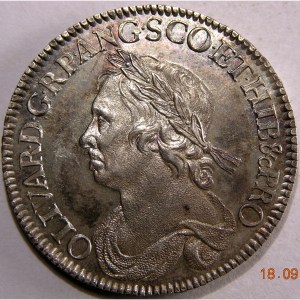
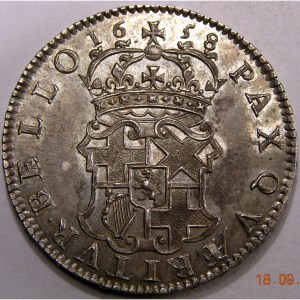
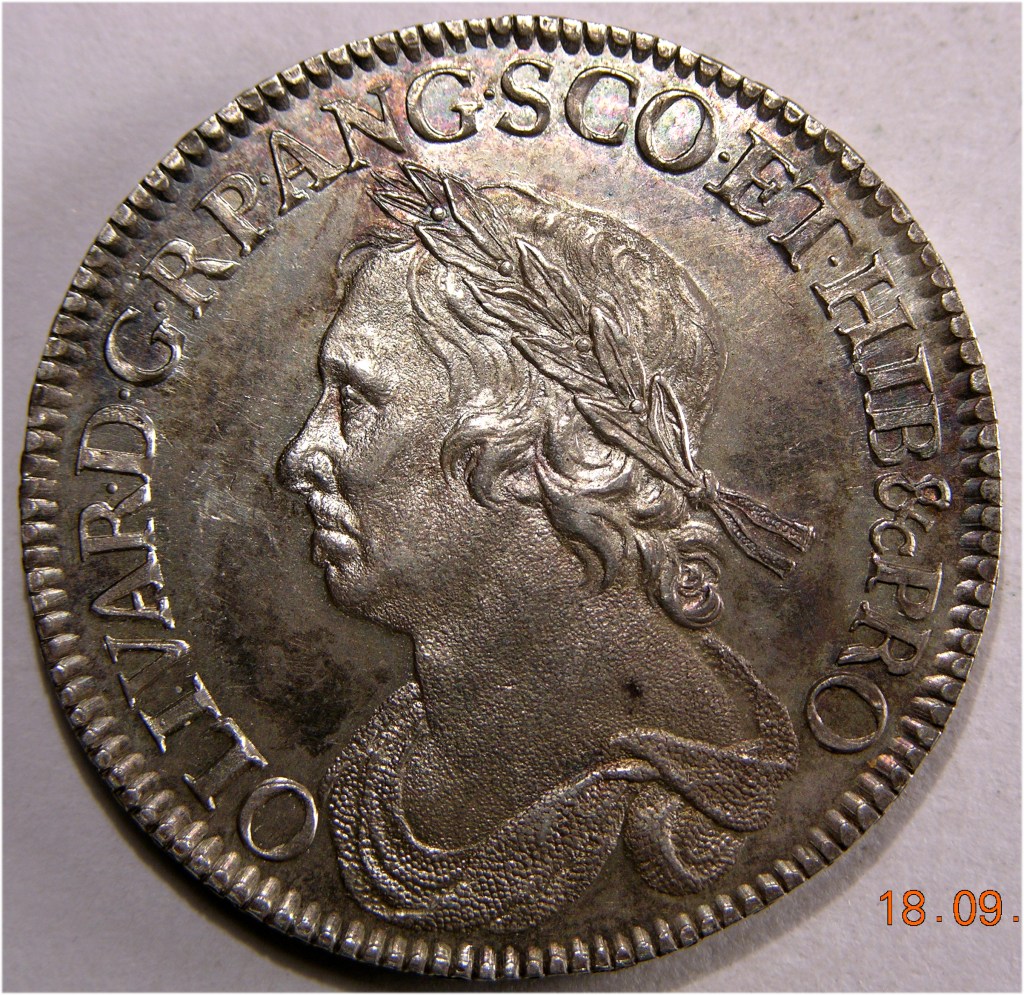
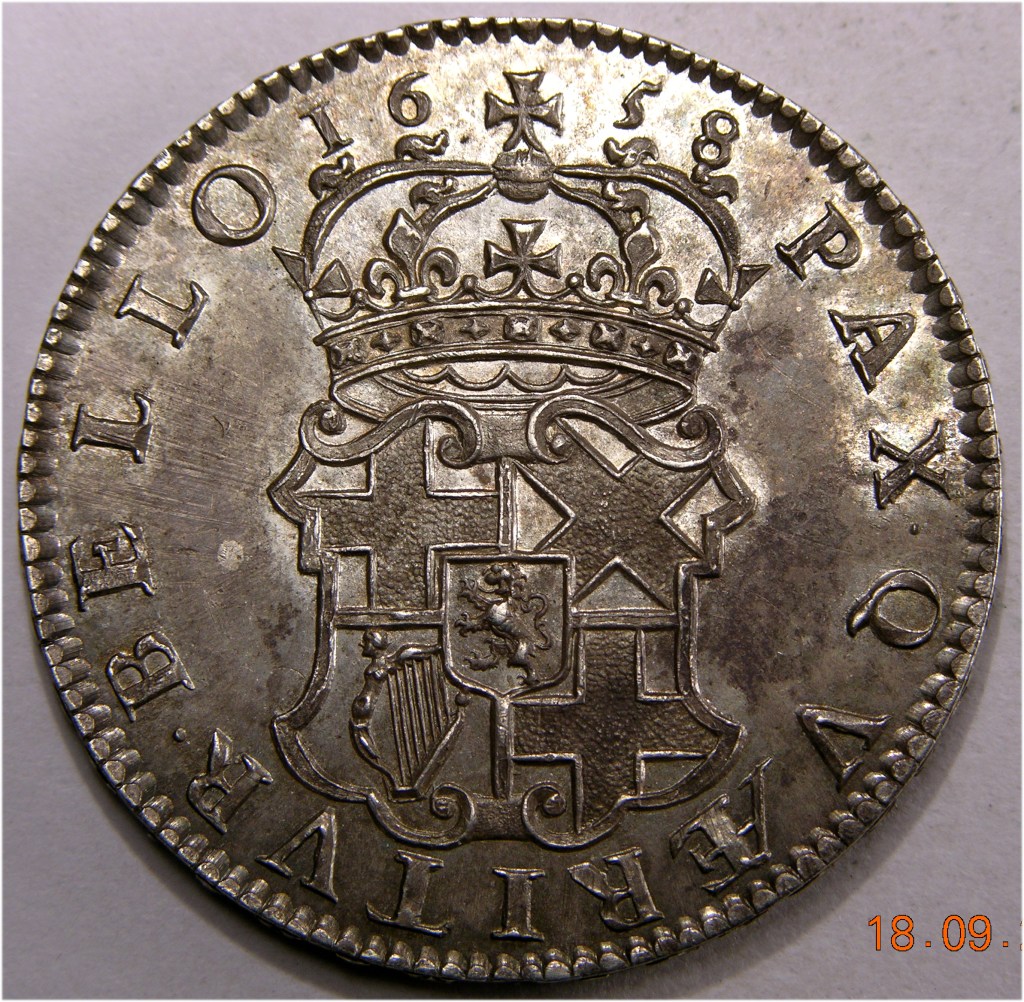
Cromwell, 1658, Half Crown, A SUPERB CROMWELL PIECE FROM AN OLD COLLECTION SOLD
$12,500.00
S3227A/E447 Forty five years ago I had the good fortune to stumble on a collection of coins that had been in one family for centuries. This particular coin was on an inventory list from 1731. I purchased this coin and a number of others from this collection. The provenance is not provable, and I mention it only because this coins is in such great condition. Its long repose in one place is the obvious reason. The Cromwell coinage was designed by Thomas Simon and machine struck by Blondeau. Two dates are known 1656 and 1658 . The 1656 issues which are very rare and today are considered patterns or presentation pieces. The 1658 issue is more common, yet still rare. Interesting to note that there are three known gold examples of the 1658 issues, two of which remain in private hands. The 1658 issue has a raised lettered edge which reads “+.HAS. NISI. PERITVRVS. MIHI. ADIMAT. NEMO.” or “Let no one remove these from me under penalty of death.” The mintage of the 1658 half crown is unknown, but since the Commonwealth hammered “two britches” style continued to be minted in quantity, the mintage of the Cromwell pieces was certainly small and intended as a “trial balloon”. Simon produced dies for all silver Cromwell denominations, crown through sixpence. Approximately L2000 in silver was coined into these denominations starting in August 1658 and into September when Cromwell died. A shop in Drury road was fitted with the screw presses that coined all of the Cromwell coinage. As would be expected for an trial issuance meant to impress the upper middle class, the large format crowns and halfcrowns seem to have constituted the bulk of silver coined and are most commonly seen today. After that comes the shilling which is usually found worn and the sixpence which seem to have been minted, but not released by the time Cromwell died on the 3rd of September 1658. They were most certainly remelted. As a result, all sixpences are extremely rare today. Cromwell’s death and the collapse of the Commonwealth insured that all coinage bearing Cromwell’s effigy immediately disappeared from circulation. Since no official warrant was ever issued allowing the Cromwell coins to circulate most examples went into the melting pot with a few being stashed in collections. In 1660 with the return of the monarchy, even carrying one of these cons as a pocket piece was not a good idea. On January 30th 1661, Charles II had Cromwell’s body disinterred and stand trial for treason. Convicted (naturally), the body was carried to Tyburn where it was hung in chains. Cromwell’s severed head was put on display outside Westminster Hall where it remained until 1685. A superb coin carefully preserved for over 360 years. Prooflike fields shimmer thru colorful cabinet toning. The strike is complete and even across the coin. One of the finest examples I have seen. An NGC MS65 sold for $12600 in the January 2018 NYI sale. This piece is at the very least equivalent. FDC
S3227A/E447 Forty five years ago I had the good fortune to stumble on a collection of coins that had been in one family for centuries. This particular coin was on an inventory list from 1731. I purchased this coin and a number of others from this collection. The provenance is not provable, and I mention it only because this coins is in such great condition. Its long repose in one place is the obvious reason. The Cromwell coinage was designed by Thomas Simon and machine struck by Blondeau. Two dates are known 1656 and 1658 . The 1656 issues which are very rare and today are considered patterns or presentation pieces. The 1658 issue is more common, yet still rare. Interesting to note that there are three known gold examples of the 1658 issues, two of which remain in private hands. The 1658 issue has a raised lettered edge which reads “+.HAS. NISI. PERITVRVS. MIHI. ADIMAT. NEMO.” or “Let no one remove these from me under penalty of death.” The mintage of the 1658 half crown is unknown, but since the Commonwealth hammered “two britches” style continued to be minted in quantity, the mintage of the Cromwell pieces was certainly small and intended as a “trial balloon”. Simon produced dies for all silver Cromwell denominations, crown through sixpence. Approximately L2000 in silver was coined into these denominations starting in August 1658 and into September when Cromwell died. A shop in Drury road was fitted with the screw presses that coined all of the Cromwell coinage. As would be expected for an trial issuance meant to impress the upper middle class, the large format crowns and halfcrowns seem to have constituted the bulk of silver coined and are most commonly seen today. After that comes the shilling which is usually found worn and the sixpence which seem to have been minted, but not released by the time Cromwell died on the 3rd of September 1658. They were most certainly remelted. As a result, all sixpences are extremely rare today. Cromwell’s death and the collapse of the Commonwealth insured that all coinage bearing Cromwell’s effigy immediately disappeared from circulation. Since no official warrant was ever issued allowing the Cromwell coins to circulate most examples went into the melting pot with a few being stashed in collections. In 1660 with the return of the monarchy, even carrying one of these cons as a pocket piece was not a good idea. On January 30th 1661, Charles II had Cromwell’s body disinterred and stand trial for treason. Convicted (naturally), the body was carried to Tyburn where it was hung in chains. Cromwell’s severed head was put on display outside Westminster Hall where it remained until 1685. A superb coin carefully preserved for over 360 years. Prooflike fields shimmer thru colorful cabinet toning. The strike is complete and even across the coin. One of the finest examples I have seen. An NGC MS65 sold for $12600 in the January 2018 NYI sale. This piece is at the very least equivalent. FDC
Related products
-

Anne, 1707E, Halfcrown
$229.00 -

Anne, 1709, Shilling
$226.00 -
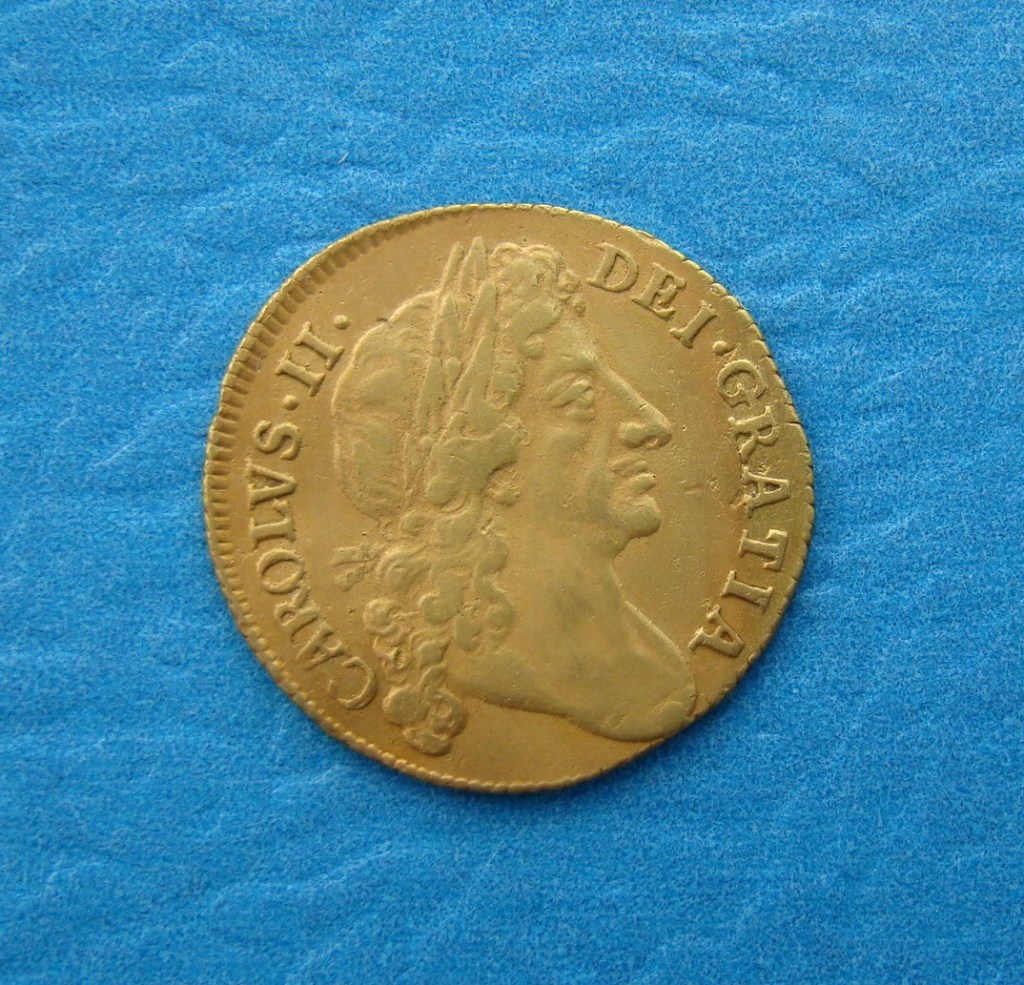
Charles II 1679 1/2 Guinea
$1,240.00 -

Charles II, 1662, Crown
$249.00