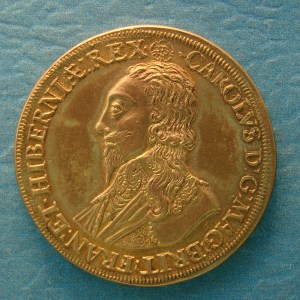
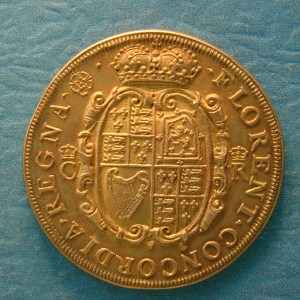
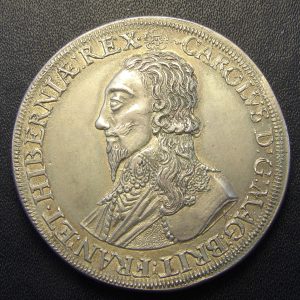
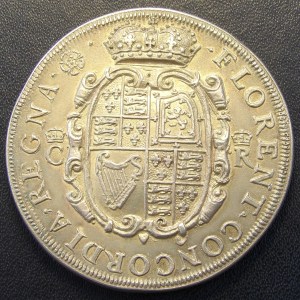


CHARLES I, 1649, UNITE, THE JUXON MEDAL
$1,890.00
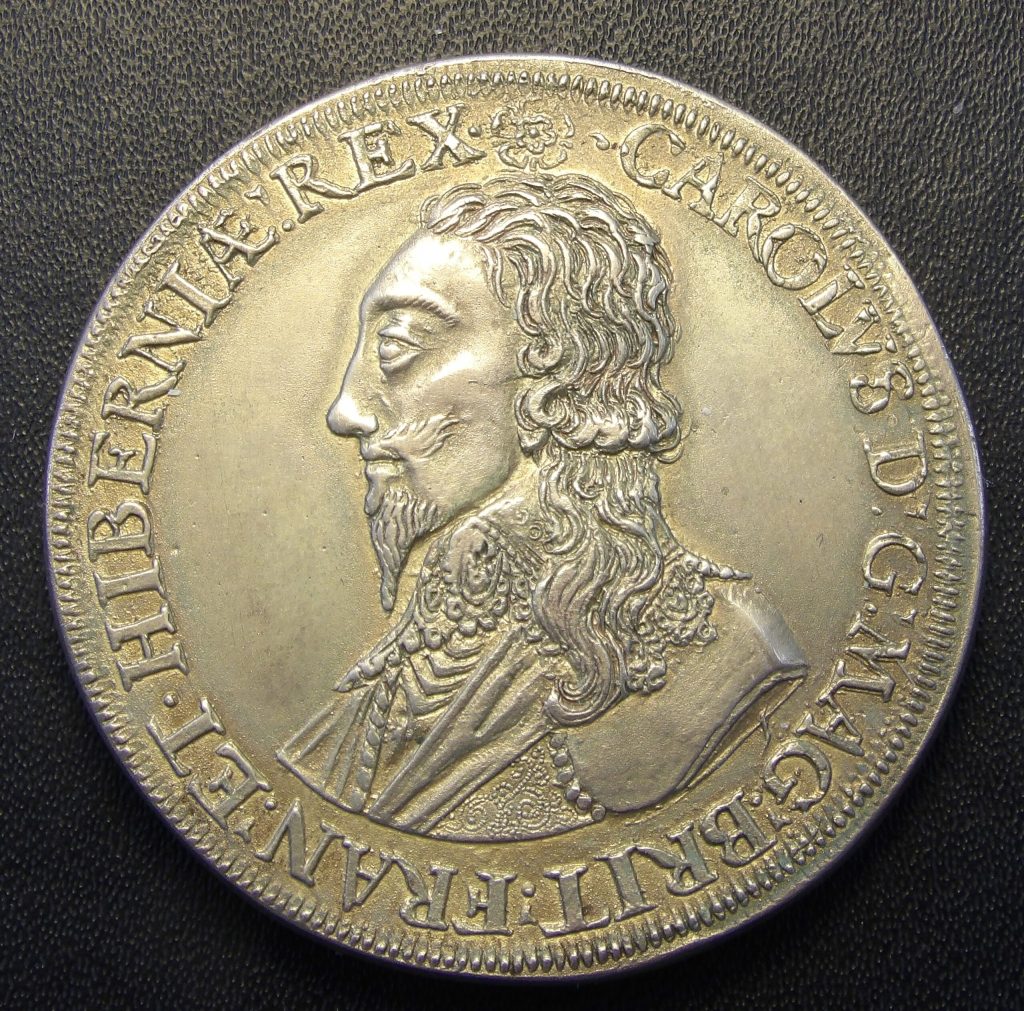
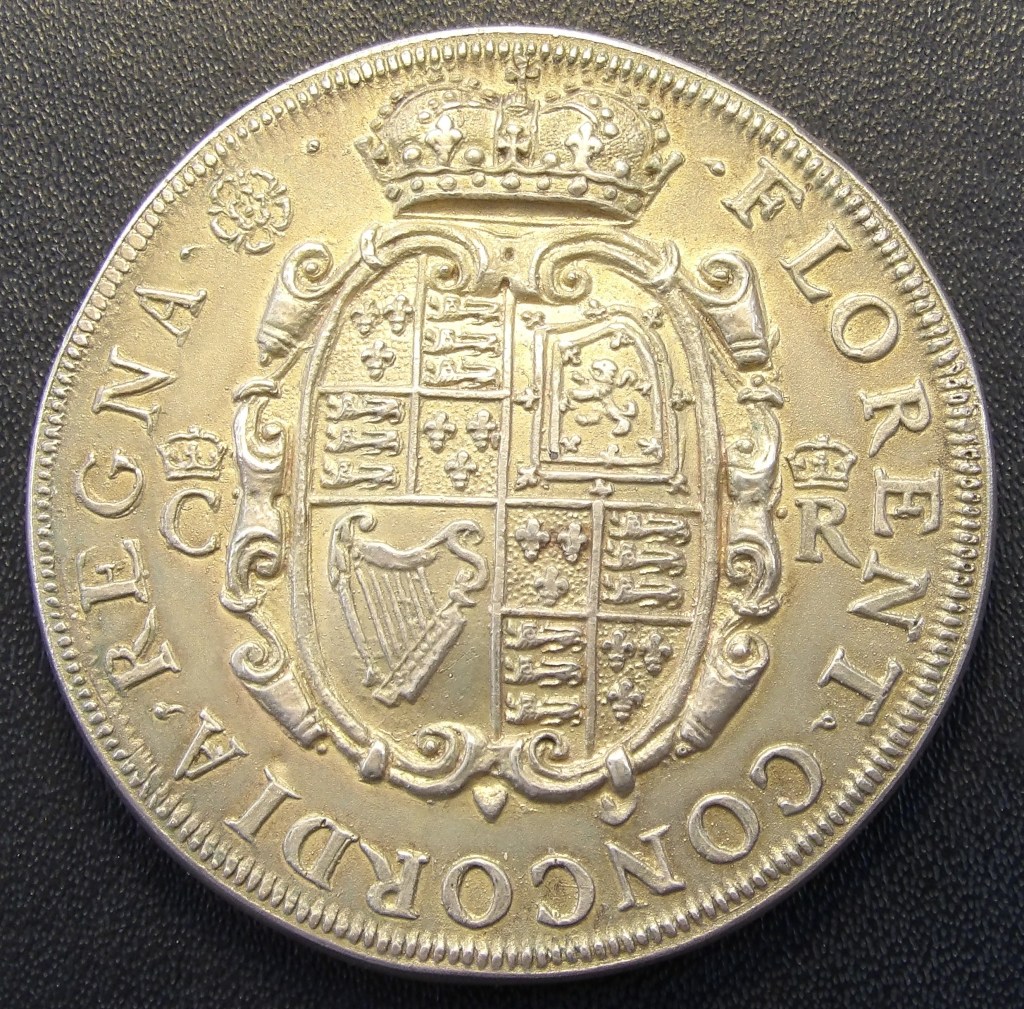
MI374/270 Gilt silver. wt. 34.7gr A rare 19th century electrotype of the famous Juxon Medal which is actually a pattern five unites by Vanderdoort or Van der Doort (see North 2653). The unique original gold piece was given to Bishop William Juxon by Charles I just prior to his execution on 30 January 1649. A gibbet was erected outside the Banqueting Hall in Whitehall in clear view of the King. In attendance at the execution was Bishop Juxon who received from the king his final possessions including a unique pattern unite. This coin was passed down thru the Juxon family and a number of collectors before it was bought by the famous collector, Hyman Montagu. In 1896 he donated this coin to the British Museum. This example is similar to a pattern unite struck in 1630 and designed by Thomas Rawlins. The actual engraver of this later Juxon pattern has been contested over the years, but experts now consider Abraham Vanderdoort was its creator. Vanderdoort was an artist and medalist but his primary purpose at the court was as the keeper of the royal art collection. He was responsible for expanding the king’s painting collection and having the likes of Dutch artists such as Rembrandt execute paintings for the royal court.
This piece is one of an unknown number of electrotype copies were made in a variety of metals in the late 19th century for inclusion in museum cabinets. The royal collection has a silvered copper example. Another museum has a copy in gold. They show up at auction every few years or so. Noonan’s Auctions sold a very fine gilt example for 2000 pounds plus buyers fee in July 2023 or $3325.00. This particular coin was bought in a Glendining’s auction in October 1984 lot 39 and is sold with an old collector’s ticket. Obv: Bare head of Charles wearing a jacket with a high lace collar. CAROLVS D: G: MAG: BRIT: FRAN: ET: HIBERNIAE: REX legend ending in a double rose initial mark. The reverse depicts the crowned quartered arms of Great Britain on an oval shield surrounded by scrolled ornamentation with a crowned C and R on either side. Legend reads . FLORENT . CONCORDIA. REGINA. and once again ends with a double rose. Struck in high relief. Rare. AU-UNC
Related products
-

AETHELHEARD, 798-805, 1D, A PEDIGREE COIN
$6,529.00 -

Aethelweard, 845-55, 1D, near MINT STATE EXAMPLE
$7,450.00 -
Australia Sovereign 1927P*
$1,315.00 -

Australia, 1871S, Sovereign
$1,159.00