


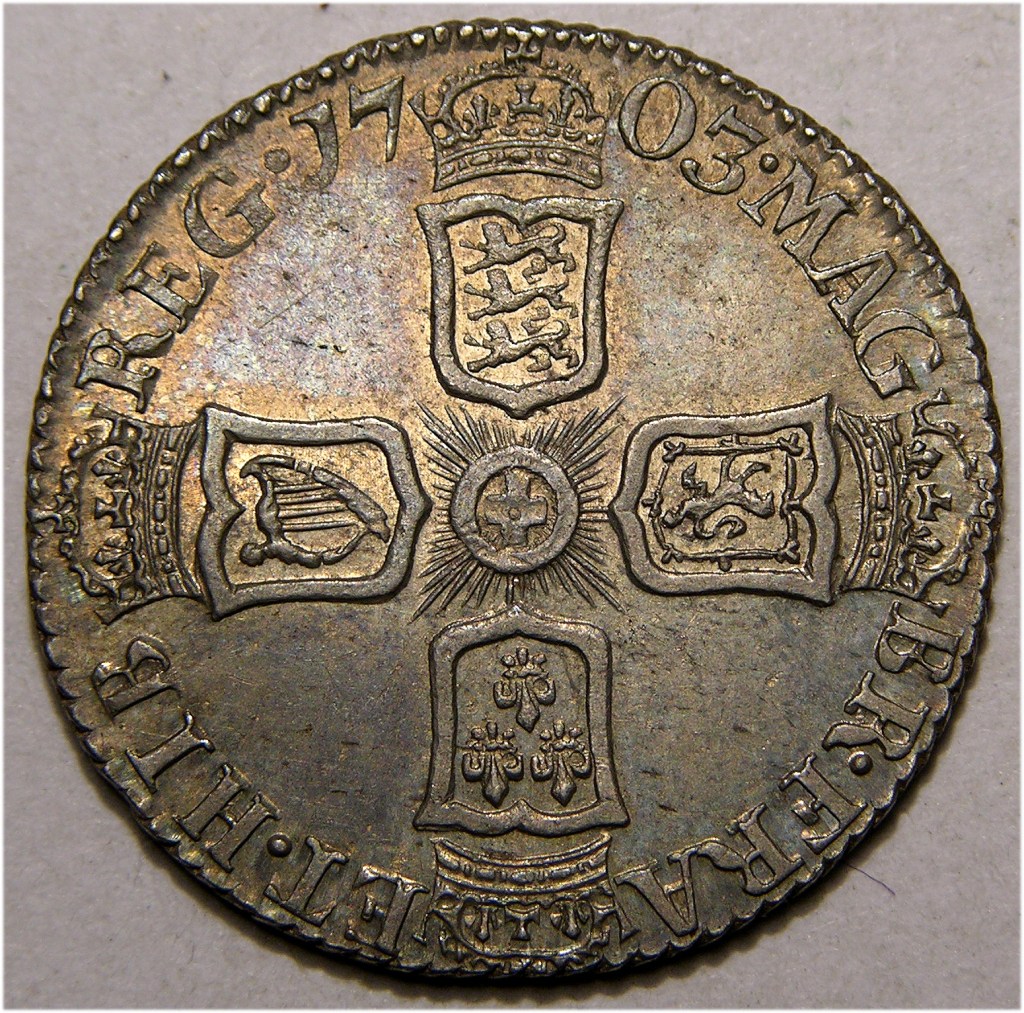
Anne, 1703 Vigo, Sixpence SOLD
$1,420.00
VIGO SIXPENCE CAPTURED FROM THE 1702 SPANISH PLATE FLEET
S3590/E1582 VIGO below bust, plain reverse. Struck from Spanish silver captured at the battle of Vigo Bay on 23 October 1702. The reign of Queen Anne was marked by a succession of wars fought on the European continent and on the high seas. In 1700 the childless King of Spain, Carlos II, died. In his will the throne of Spain along with its considerable territories in the Americas and the Low Countries went to Philip of Anjou, grandson of Louis XIV, King of France. This destroyed the shaky balance of power in a Europe already fractured by nearly a century of religious wars. Britain felt its commerce was threatened while the Dutch feared a resurgence in Spanish/French control of the Low Countries (modern Luxembourg, Belgium and Flanders). So the English formed an alliance with Dutch against the forces of Spain and France to contest the inheritance. In October 1702 a combined Anglo Dutch fleet was returning from a disastrously, unsuccessful attempt to seize southern Spanish port of Cadiz. One of these ships, the Pembroke, left the fleet and pulled into the Portuguese harbor of Lagos to take on fresh water. While ashore, the Pembroke’s chaplain struck up a friendship with the French consul, who was obviously bored with his backwater diplomatic post and more than happy to converse with the French speaking chaplain, even if he was the enemy. The consul let slip that the annual Spanish treasure fleet had secretly entered Vigo bay in the north of Spain escorted by a large French fleet. The English chaplain hustled back to his ship which then took off and rejoined the fleet with this new intelligence. The English Dutch force had suffered heavy casualties in their attempted capture of Cadiz and their ships were now damaged and ill provisioned. Yet, the lure of booty was too great and after some discussion between the English and Dutch admirals, the Anglo Dutch fleet altered course and headed to Vigo. Despite the defensive preparations made by the French admiral Chateaurenault, the English and Dutch fleet overwhelmed the smaller French force and annihilated them. Unfortunately, for the English, the treasure fleet had arrived a month earlier and most of the treasure had already been offloaded and sequestered safely inland. Most of the silver and gold, bullion and coin that did remain onboard the treasure galleons was lost as the Spanish burned their ships rather than allow them to be captured. In the end the English brought back two prize ships, the Tauro with a cargo of 4504 pounds of silver and a small amount of gold (7.5 pounds) and the Santo Cristo De Maracaibo which unfortunately went down with her cargo after striking a rock while leaving Vigo bay. The haul was melted and coined into various denominations all dated 1702 or 1703 and marked with VIGO on the obverse below the bust. The gold was coined into about 20 five guinea pieces, an unknown amount of guineas, half guineas and some gold commemorative medallions. The silver was coined into crowns, half crowns, shillings, sixpence and silver commemorative medallions. A lovely coin full lustre blazing thru, fantastic tones of gold , red and indigo. Sharply struck with great hair definition even the die centering dot can be seen. A one year type. NGC MS63
NGC 2879956-010
VIGO SIXPENCE CAPTURED FROM THE 1702 SPANISH PLATE FLEET
S3590/E1582 VIGO below bust, plain reverse. Struck from Spanish silver captured at the battle of Vigo Bay on 23 October 1702. The reign of Queen Anne was marked by a succession of wars fought on the European continent and on the high seas. In 1700 the childless King of Spain, Carlos II, died. In his will the throne of Spain along with its considerable territories in the Americas and the Low Countries went to Philip of Anjou, grandson of Louis XIV, King of France. This destroyed the shaky balance of power in a Europe already fractured by nearly a century of religious wars. Britain felt its commerce was threatened while the Dutch feared a resurgence in Spanish/French control of the Low Countries (modern Luxembourg, Belgium and Flanders). So the English formed an alliance with Dutch against the forces of Spain and France to contest the inheritance. In October 1702 a combined Anglo Dutch fleet was returning from a disastrously, unsuccessful attempt to seize southern Spanish port of Cadiz. One of these ships, the Pembroke, left the fleet and pulled into the Portuguese harbor of Lagos to take on fresh water. While ashore, the Pembroke’s chaplain struck up a friendship with the French consul, who was obviously bored with his backwater diplomatic post and more than happy to converse with the French speaking chaplain, even if he was the enemy. The consul let slip that the annual Spanish treasure fleet had secretly entered Vigo bay in the north of Spain escorted by a large French fleet. The English chaplain hustled back to his ship which then took off and rejoined the fleet with this new intelligence. The English Dutch force had suffered heavy casualties in their attempted capture of Cadiz and their ships were now damaged and ill provisioned. Yet, the lure of booty was too great and after some discussion between the English and Dutch admirals, the Anglo Dutch fleet altered course and headed to Vigo. Despite the defensive preparations made by the French admiral Chateaurenault, the English and Dutch fleet overwhelmed the smaller French force and annihilated them. Unfortunately, for the English, the treasure fleet had arrived a month earlier and most of the treasure had already been offloaded and sequestered safely inland. Most of the silver and gold, bullion and coin that did remain onboard the treasure galleons was lost as the Spanish burned their ships rather than allow them to be captured. In the end the English brought back two prize ships, the Tauro with a cargo of 4504 pounds of silver and a small amount of gold (7.5 pounds) and the Santo Cristo De Maracaibo which unfortunately went down with her cargo after striking a rock while leaving Vigo bay. The haul was melted and coined into various denominations all dated 1702 or 1703 and marked with VIGO on the obverse below the bust. The gold was coined into about 20 five guinea pieces, an unknown amount of guineas, half guineas and some gold commemorative medallions. The silver was coined into crowns, half crowns, shillings, sixpence and silver commemorative medallions. A lovely coin full lustre blazing thru, fantastic tones of gold , red and indigo. Sharply struck with great hair definition even the die centering dot can be seen. A one year type. NGC MS63
NGC 2879956-010
Related products
-

Anne, 1707E, Halfcrown
$229.00 -

Anne, 1709, Shilling
$226.00 -
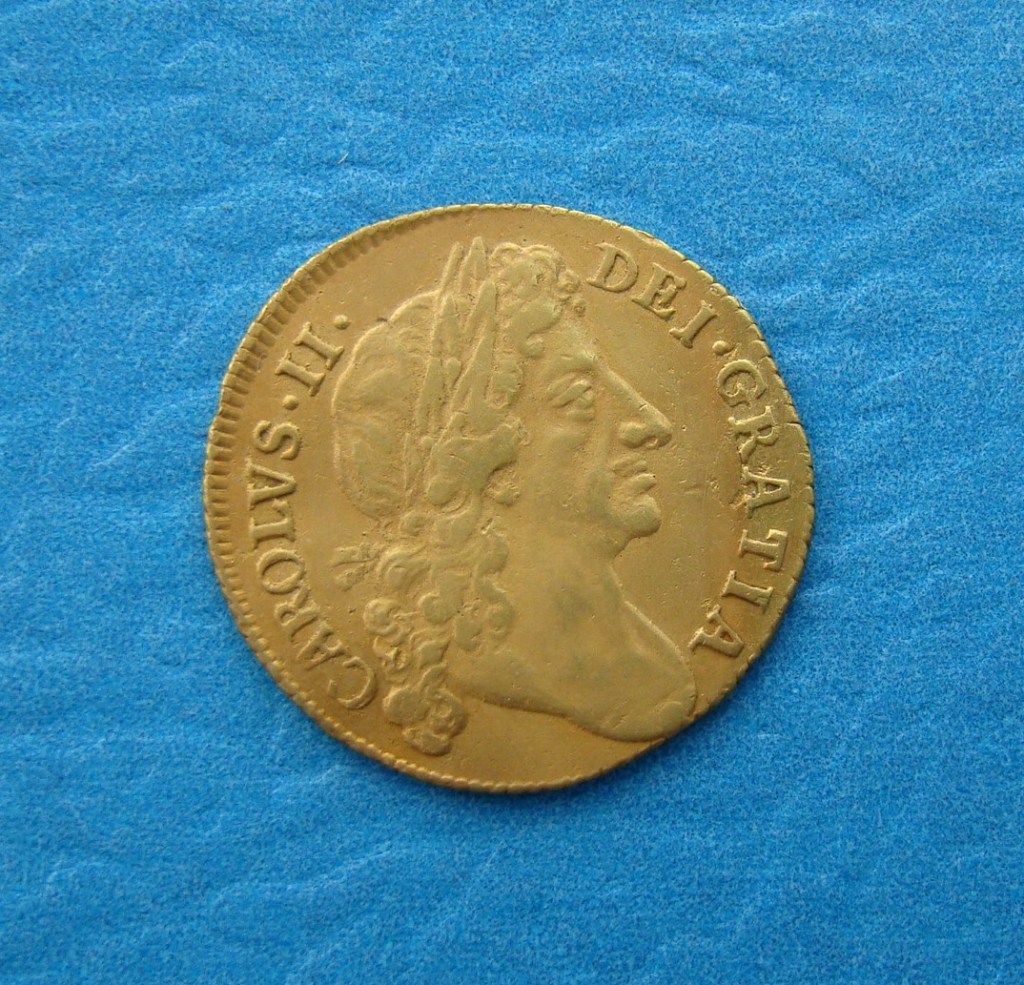
Charles II 1679 1/2 Guinea
$1,240.00 -

Charles II, 1662, Crown
$249.00